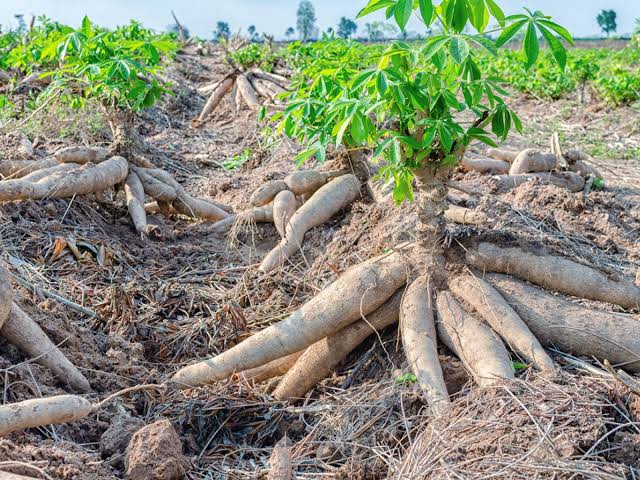
The National Quality Council, NQC, has urged African countries to collaborate and stimulate Africa’s industrialisation through the development of cassava-based products and ensuring quality along the value chain.
Chairman and Chief Executive of NQC, Osita Aboloma, who made the call at a 3-day African Cassava Conference in Abuja, noted that given the prevalence of cassava in Africa, developing the value chain for food security, nutrition as well as industrialisation purposes require the collaboration of governments at local, state and the federal levels.
Aboloma said local, state and federal governments have a role to play in cassava cultivation and processing, availability of land and extension support services, legal instruments and land approvals as well as policy formulation, implementation, review and coordination.
A statement by his Chief of Staff, Bola Fashina, further quoted him as saying that African national governments in collaboration with other arms and the private sector have critical roles to play in promoting local fabrication of machinery and equipment for use along the Cassava value chain to enhance micro, small and medium scale enterprises development, job as well as wealth creation, food security and industrialization on the Continent.
The NQC chief executive noted that optimisation of the cassava value chain in Africa is largely dependent on the efficiency and effectiveness of the national quality infrastructure, namely standards development and harmonization to provide necessary quality benchmarks for all the derivates of the crop; conformity assessment, including product and facilities inspection, testing, verification and certification, to confer third party quality assurance.
Others according to him include, international accreditation and mutual recognition agreements to guarantee the acceptance of the outcomes of the conformity assessment processes across national borders and Metrology, to provide traceability, accuracy and consistency of measurement equipment, thus providing validity of measurement readings in trade and commerce along the Cassava value chain.
“The efficiency and effectiveness of the various institutions hosting the National Quality Infrastructure in both the public and private sectors are thus critical to the development of the Cassava value chain in Africa”, he said.
Speaking earlier, the Minister of Agriculture and Food Security, Sen. Abubakar Kyari described Cassava as a staple food for millions of Nigerians that is grown in the 36 States of the Federation as well as the Federal Capital Territory, FCT.
Kyari said the commodity has several domestic, food and industrial purposes among which are the production of Ethanol; Industrial Starch; cassava flour; sweetener and glucose syrup which are major derivatives that are raw materials to numerous utility items with limitless domestic and export potentials.
He stressed Nigeria’s determination to take advantage of being the largest producer of cassava in the world to substitute large quantity of wheat flour, corn starch and bio-oil which she imports in very large quantities with cassava flour; industrial cassava starch and ethanol respectively.
He said the country will achieve this by tackling the various challenges from the level of activities in production, processing or marketing, including the 2-3-year cycle of glut and scarcity that causes fluctuations in price of the commodity
The minister said major challenges to production of high-quality cassava flour, HQCF, as including high cost of flash dryer, high level maintenance and inefficiency of locally fabricated flash dryers which affect the quality of the output.