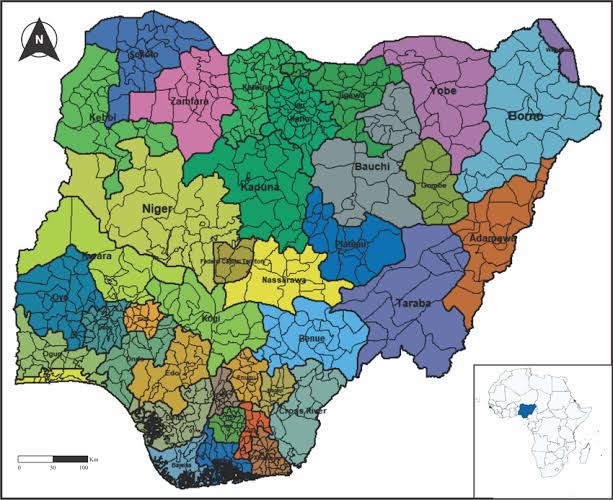
On Thursday, July 11, 2024, Nigeria’s Supreme Court returned fiscal autonomy to the country’s 774 local government areas, ending two decades of hegemonic grip by state governors.
Decades of writhing under the collapse of a failed joint account policy were brought to an end in a unanimous verdict by the 7-man panel of justices led by Justice Emmanuel Agim.
Delivering the far-reaching judgment, the apex court barred governors of all the 36 federating units from receiving, withholding, tampering or utilizing funds that stand to the credit of the local government areas.
The court held that it is illegal and unconstitutional for governors to continue to receive and seize funds allocated to the benefit of LGAs in their states, maintaining that the “dubious practice” which has gone on for over two decades, is a clear violation of Section 162 of the 1999 Constitution as amended.
The ruling restored local governments’ right to directly receive allocations from the federation account into their designated accounts as against the joint state accounts.
While we applaud Supreme Court’s bold steps as the most patriotic gesture done the country in recent years to fix poor governance and varying developmental issues at the grassroots, the failure to hold state governors to account for misappropriated LGA funds encourages a criminal getaway.
It is also urgent for the National Assembly to delete Section 162 that establishes the State and Local Government Joint Account from the Constitution as it begs the question whether the apex court can make laws rather than interpret them.
Also, it is hoped that the historic judgment will not serve as an indication for the Supreme Court to embark on coalescing powers unwittingly to the federal government at the expense of constitutional separation of powers and functions.
It has become imperative for anti-graft agencies must spread their tentacles and set prying eyes on financial operations of states to fend off tendencies that have encouraged fiscal irresponsibility, fish out perpetrators and instil a culture probity and transparency.
As implementation of the ruling is expected to renew the administrative relevance of local governments, with the release of funds from the federation account, it is imperative for every state government to activate and update its auditing practice to ensure proper accountability for funds disbursed to the councils.
Local governments must also initiate, implement, monitor and evaluate programmes, projects and actions that are people-centred to provide justification for the allocation from the federation account. They must be careful to utilise state resources deployed to them with every sense of responsibility, transparency and openness to prove skeptics wrong.
Being the third tier of government, closest to the people, the local government system must be protected by relevant public agencies to ensure it does not become another cesspool to waste away public resources, but function in a manner that benefits local communities.
As apparently observed, the apex court towed that courageous path in the interest of national growth and development, because the joint local government account, however well-intended, turned out to be the most potent tool of deprivation and backwardness for grassroots governance and development.
It defeated the aim of establishing the local government system and reduced them to mere appendages of states, who run cap-in-hand to state governors begging for funds they legally own.
It is clear from the court’s verdict that paying LGAs through states has not worked; therefore, the disbursing agency, the Federation Allocation Account Committee, FAAC, must immediately implement the order of the court by commencing the next disbursement directly to the LGAs as contained in the ruling.
In the interest of stimulating a functional local government system, state governments must also steer clear of political interferences and allow elected officials to serve their full terms. Apart from deepening democratic culture at the grassroots, this ruling by the court will restore confidence in the system and allow ample time for elected officials to offer their services to the people fully.