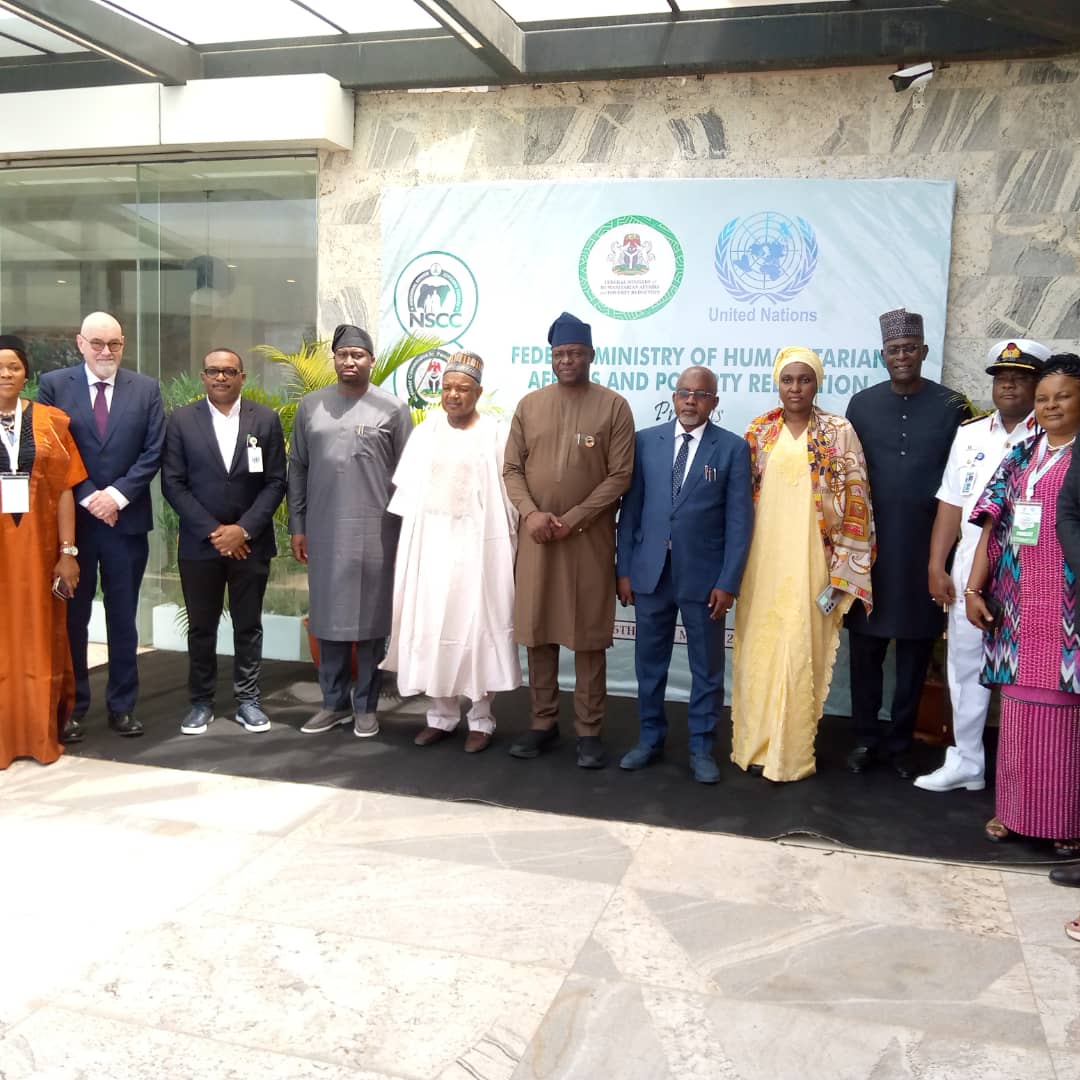
The Federal Government has announced plans to integrate the National Social Register, NSR, with the National Identification Number, NIN, to improve the country’s emergency response to humanitarian crises.
The Minister of Humanitarian Affairs and Poverty Reduction, Prof. Nentawe Yilwatda, speaking during the 2025 National Humanitarian Roundtable Programme on Tuesday in Abuja, emphasized the need for a data-driven approach to streamline aid distribution and ensure swift intervention for vulnerable populations.
“With over 3.5 million displaced persons and countless others affected by crises, integrating the social register with the NIN will help us eliminate duplications and ensure aid reaches those who need it most,” Yilwatda stated.
He explained that linking the two databases would improve transparency and accountability in the allocation of relief materials.
“Too often, aid does not reach the most vulnerable due to discrepancies in records. With this integration, we will have real-time data to track and deliver assistance efficiently,” he said
Yilwatda, in his keynote address titled Bridging Policy and Practice for a Resilient Humanitarian Future, stressed that policies alone are not enough to alleviate the suffering of displaced and vulnerable populations.
He argued that bureaucratic delays in decision-making and inefficiencies in coordination are costing lives.
“The biggest crisis we have is not just people being killed. The crisis we have is a bureaucratic crisis that does not respond to humanitarian needs,” he stated.
The minister called for the use of real-time data and digital innovation to enhance crisis response. He highlighted efforts to link the national social register with national identity numbers and geotag vulnerable households to ensure swift interventions during emergencies.
Yilwatda also underscored the need for flexible and adaptive financing models, urging the Minister of Budget to craft a system that allows for rapid disbursement of funds. He noted that traditional funding mechanisms are too slow to meet the urgency of humanitarian needs.
“We must create flexible financing mechanisms that allow for rapid disbursement and adaptive response, ensuring that aid is not stalled by bureaucratic policies,” he added.
The minister praised the United Nations (UN) system for its continued financial and technical support, acknowledging its role in funding future humanitarian programs, including an upcoming summit expected to host 500 participants.
Also speaking, United Nations Resident Representative in Nigeria, Mohammed Fall, reiterated the need for a comprehensive approach that integrates humanitarian aid, development, and peacebuilding.
He noted that Nigeria, despite its economic potential, is facing multiple humanitarian challenges, including climate-related disasters, violent conflicts, and food insecurity.
Fall highlighted ongoing UN interventions, such as resettlement programs for displaced persons in Borno, Adamawa, Yobe, and Benue states. He also cited the Secretary-General’s Peace-Building Fund, which is addressing inter-communal violence and fostering resilience in conflict-affected states like Kaduna and Katsina.
“Nigeria stands at a moment of immense potential, but addressing these challenges requires not only a humanitarian response but also a focus on tackling the root causes of crises,” Fall stated.
At the event,the Head of the United Nations Office for the Coordination of Humanitarian Affairs, UNOCHA, Trond Jensen, emphasized the need for strengthened partnerships and innovative humanitarian strategies to tackle Nigeria’s growing crisis.
“This forum in many ways represents our shared commitment to address Nigeria’s humanitarian challenges through strengthened partnerships, but also for pushing the envelope in terms of finding innovative and new ways of providing humanitarian assistance,” Jensen noted.
He acknowledged the increasing global challenges to humanitarian work, including reduced funding and threats to multilateralism. Jensen expressed concerns about the drastic decline in funding for humanitarian needs and response plans, particularly in conflict-ridden regions like the Northeast, where almost 8 million people require urgent aid.
“The funding that we were expecting this year is collapsing, and we are setting new targets. But the most important aspect is the process that underpins humanitarian response—consulting with affected communities, local organizations, and government stakeholders to ensure a collective approach,” he added.
Jensen stressed the need for efficiency in aid delivery, emphasizing that women and girls remain the most vulnerable groups in humanitarian crises. He urged stakeholders to explore alternative funding sources, including private sector investments, to bridge the financing gap.
Earlier, in his welcome address, the Minister of State for Humanitarian Affairs and Poverty Reduction, Dr. Tanko Sununu, also called innovative solutions to address Nigeria’s growing humanitarian challenges.
He stressed the need for a comprehensive strategy that not only responds to immediate humanitarian needs but also provides sustainable, long-term solutions.
Sununu highlighted the urgency of scaling up humanitarian activities, particularly in light of global funding challenges and donor fatigue. He emphasized that Nigeria must develop internal solutions to effectively address its humanitarian needs, moving beyond reliance on international aid.
“The role of the United Nations in Nigeria is not just to provide aid but to help the country develop self-sustaining solutions,” Sununu stated.
He underscored the importance of collaboration and a unified approach, calling on government agencies, international partners, and local communities to work together in strengthening the country’s humanitarian response.