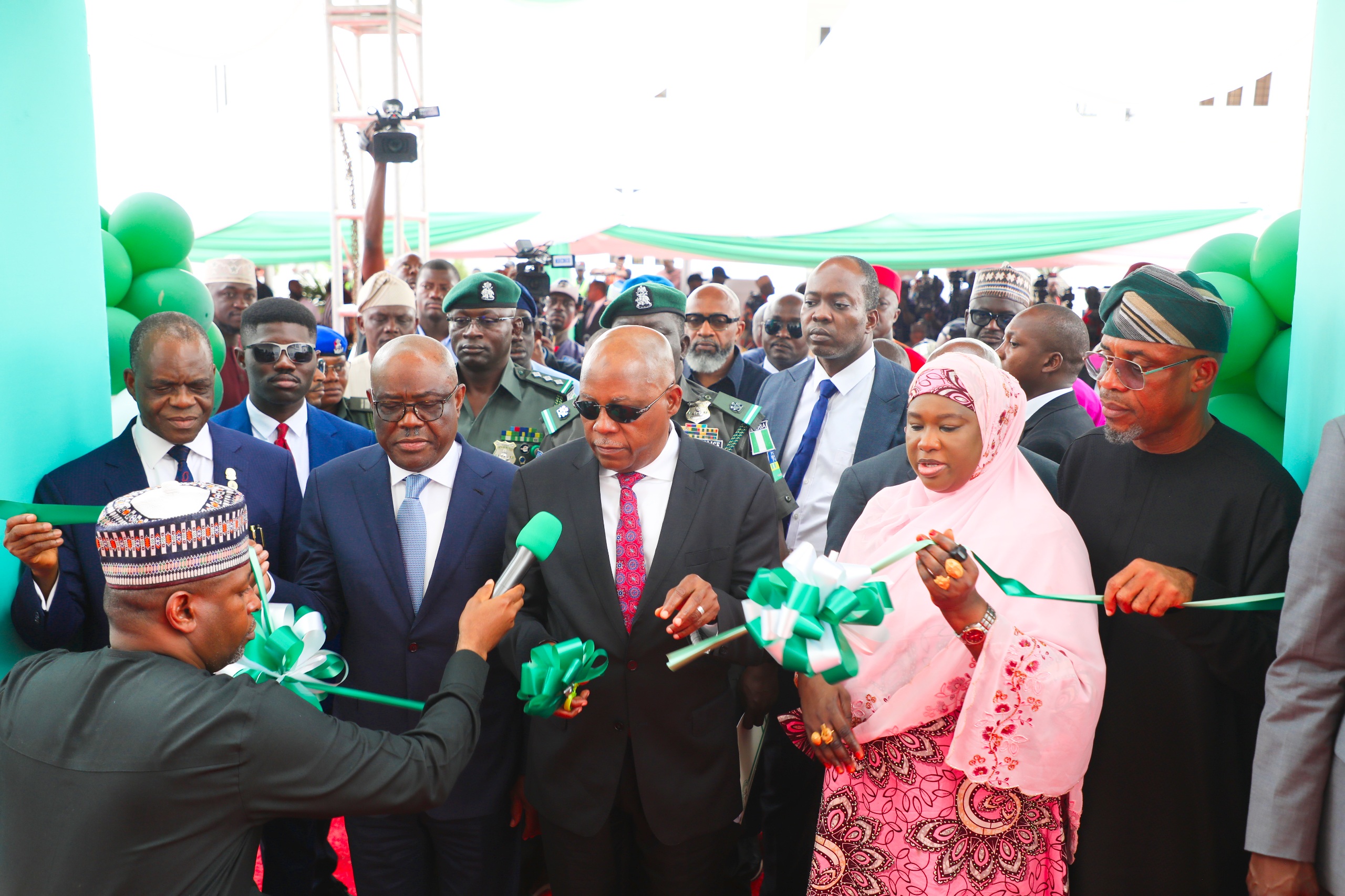
President Bola Tinubu has said the provision of housing for judicial officers is part of his administration’s efforts to strengthen the judiciary and fortify a vital pillar of Nigeria’s democracy.
Tinubu, stated this on Wednesday, when he commissioned 10 units of residential houses built for judges of the Federal High Court in Katampe District, Abuja.
The President who was represented by Vice President Kashim Shettima, described the project as more than a housing intervention, but a deliberate investment in the nation’s justice system and the rule of law.
According to the President, “We are here not just to commission buildings but to fortify a vital pillar of our democracy the judiciary.”
He maintained that the newly completed quarters represent a concrete step towards fulfilling his administration’s commitment to strengthening public institutions and restoring confidence in governance under the Renewed Hope Agenda.
“When we embarked on the Renewed Hope Agenda, we made a sacred covenant with the Nigerian people. We promised to revive our institutional trust, secure our nation, and ensure that the rule of law is never compromised nor delayed.
“Today, with the official commissioning of these 10 housing units for judges of the Federal High Court, we are taking a definitive physical step towards fulfilling that promise.”
Tinubu said judicial independence could not thrive where judges were left to contend with uncertainty over their welfare and security.
“For too long, we have talked about the independence of the judiciary in abstract terms, but independent thought requires an independent and secure environment.
“You cannot expect judges to dispense justice without fear or favour when their basic comfort, security, and peace of mind are left to chance. True judicial independence is rooted in the dignity of our judicial officers.
“By providing this set of residential quarters, we are ensuring that our Federal High Court judges operate from a place of security, comfort, and stability. This project is a deliberate shield against vulnerability, a statement that Nigeria values those who interpret her laws.”
The President also commended the Minister of the Federal Capital Territory, Nyesom Wike, for what he described as his commitment to transforming Abuja through the delivery of critical infrastructure.
“When I gave Minister Nyesom Wike the assignment to transform Abuja into a world-class city, I knew his capacity to deliver. Nyesom Wike, you have not disappointed me.
“In fixing critical road networks and ensuring the timely completion of projects like these judges’ quarters, you have proven that performance is the only currency that matters in public service.”
Tinubu praised the growing collaboration between the executive and judicial arms of government, describing it as an example of institutional partnership working in the national interest.
“The collaboration between the executive and the judiciary under this administration remains a proud example of intergovernmental harmony for the collective good of our people,” he said.
He urged the judges who would occupy the quarters to remain committed to justice, fairness and transparency.
“The Renewed Hope Agenda is anchored on equity and justice. As we provide infrastructure to make your lives easier, we ask in return for an unwavering commitment to the swift, fair, and transparent dispensation of justice.”
The President added that ongoing reforms across key sectors were beginning to yield results, assuring Nigerians that his administration would sustain efforts to improve governance, infrastructure, security and the economy.
“Abuja is changing. Nigeria is changing. The reforms we are putting in place across all sectors might require patience, but the proofs are beginning to show,” he said.
Earlier, FCT Minister Nyesom Wike said the project formed part of President Tinubu’s commitment to strengthening the independence of the judiciary through improved welfare for judicial officers.
“Yesterday, we inaugurated the Court of Appeal Judges’ Quarters. Today, we are here for the Federal High Court and in July, we will inaugurate the housing units for the FCT High Court,” he said.
Wike disclosed that the entire district had been designated a Judges’ Zone and directed the Abuja Geographic Information System, AGIS, to effect the change.
Chief Judge of the Federal High Court, Justice John Tsoho, said the project would help address the longstanding accommodation challenges faced by judges and improve their welfare.
“It is deeply encouraging and gives immense hope to the judiciary and the nation at large to see that the welfare of career professionals is being taken seriously,” he said.