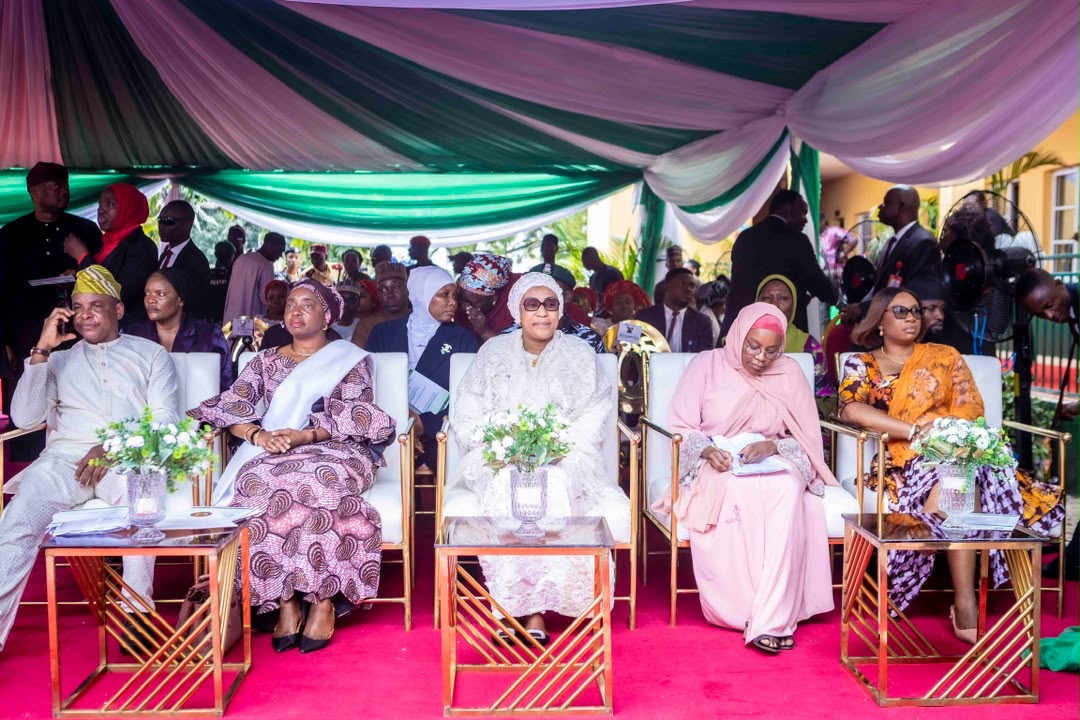
The Executive Secretary of the Universal Basic Education Commission, UBEC, Dr Aisha Garba, has stressed that no girl’s circumstances should constitute a barrier to her accessing quality education, insisting that every Nigerian child deserves the opportunity to learn, develop their abilities and realise their potential.
Garba made the assertion at the formal commissioning of the rehabilitated Alternative High School for Girls in Agboju, Lagos State.
The rehabilitation of the school, undertaken with UBEC support through its UBE Direct Intervention, goes beyond the provision of physical infrastructure, offering renewed opportunities to girls and young women whose education had been disrupted for various reasons.
Garba said girls who had dropped out of school should not be regarded as having lost their chance at a better future, while young mothers seeking to resume their education should not be made to feel that they had missed their opportunity.
She said every girl whose circumstances had prevented her from completing her education deserved another chance, adding that alternative pathways should be provided to enable children and young people acquire the education and skills needed to succeed.
According to her, the Alternative High School for Girls was established to provide girls and young women with opportunities to return to learning, acquire relevant skills and build productive and fulfilling lives.
“Let this not simply be a place where girls attend classes. Let it be a place where hope is restored, confidence is built and the future is renewed,” she said.
The UBEC boss commended President Bola Ahmed Tinubu for prioritising education and human capital development under the Renewed Hope Agenda, while also praising the First Lady, Senator Oluremi Tinubu, for her commitment to the education and empowerment of girls and young women.
Garba said the First Lady’s support demonstrated the importance attached to ensuring that every girl has the opportunity to learn, develop her abilities and fulfil her potential.
Represented at the event by the wife of the Vice President, Hajiya Nana Shettima, the First Lady, Garba noted, had continued to support initiatives aimed at ensuring that no child was left behind.
She maintained that children affected by conflict, displacement and other difficult circumstances still possessed dreams, talents and enormous potential and should be given every opportunity to thrive.
Garba said the Federal Government, through the Nigeria Education Sector Renewal Initiative, NESRI, was implementing reforms designed to improve education quality, expand access and ensure that no Nigerian child was excluded from learning opportunities.
She said the rehabilitation of the Agboju Alternative High School was in line with UBEC’s commitment to advancing inclusive education across the country.
According to her, the intervention included the rehabilitation of school infrastructure and academic facilities, provision of furniture for pupils, teachers and school managers, ICT equipment, laboratory and vocational tools, WASH facilities and environmental improvements.
“We believe that investment in education should be visible, not only in figures and reports, but in the classrooms where children learn, in the facilities they use and, most importantly, in the lives they are able to transform,” she said.
Garba disclosed that UBEC had formally handed over the rehabilitated facility to the Lagos State Government, urging the state to preserve the investment, maintain the facilities and ensure that the school continues to fulfil the purpose for which it was established.
She added that construction of the second Alternative High School for Girls in Ikorodu was at an advanced stage, noting that the facility would further broaden opportunities for girls and young women seeking alternative routes back into education.
The UBEC executive secretary also announced that the Commission would provide a school bus and digital smart boards for the classrooms before the end of 2026.
She, however, emphasised that the real value of the intervention would not be measured by the appearance of the school but by its impact on the lives and futures of the girls who pass through it.
“The true measure of our success will be the girl who walks through these gates and discovers that she still has a future.
“It will be the girl who acquires a skill, finds employment, starts a business or becomes a leader in her community. That is why this investment matters,” Garba said.
She urged members of the Agboju community to take ownership of the school by protecting and maintaining its facilities, while also supporting the girls enrolled in the institution.