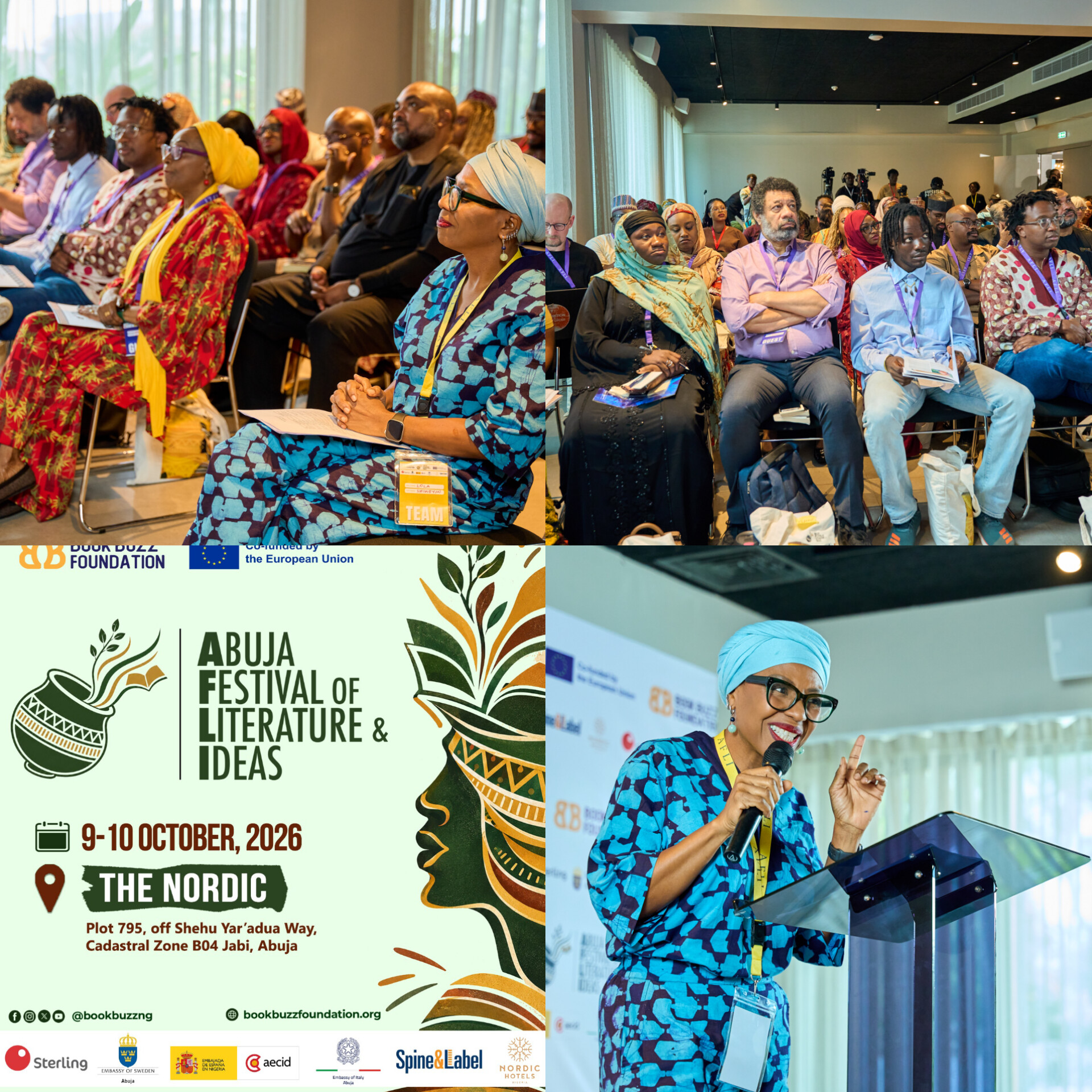
The inaugural Abuja Festival of Literature and Ideas has opened with calls for greater investment in reading culture, stronger international cultural partnerships and critical engagement with emerging technologies, including artificial intelligence.
The two-day festival, organised by the Book Buzz Foundation and co-funded by the European Union, held on October 9 and 10, 2026, in Abuja, with support from Sterling Bank, the embassies of Sweden, Spain and Italy, the Spanish Agency for International Development Cooperation (AECID), and other partners. It brought together writers, thinkers and cultural practitioners to explore issues shaping contemporary society, including literature, culture, democracy, identity and artificial intelligence.
Speaking at the opening, Festival Director, Lola Shoneyin, said Abuja deserved a world-class literary festival, insisting that culture should occupy a central place in national life rather than remain at the margins.
The festival director said its logo paid tribute to Ladi Kwali, the renowned Nigerian potter from the Gbagyi community in the Federal Capital Territory, whose work combined traditional pottery techniques with modern studio methods while retaining its cultural roots.
According to Shoneyin, Kwali’s ability to bring local heritage into conversation with international artistic practices reflected the festival’s vision of creating a global platform with a distinctly Nigerian identity.
“That is exactly what we want the spirit of this festival to be: a forum for international thinkers and global figures, with a character and a vibe that are unmistakably Nigerian,” she said.
She said the programme covered a broad range of subjects, including freedom, artificial intelligence, the future of cultural creation, science, poetry and the internet’s influence on how people think and interact.
The sessions also provided opportunities for young people from Northern Nigeria to discuss their aspirations, while women writers from the region were given a platform to contribute to the literary landscape.
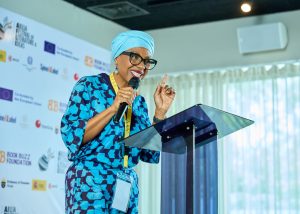
Shoneyin said the range of subjects reflected the need for people to encounter perspectives beyond their own amid profound technological, political and social changes.
“We are living through a time of profound technological, political and social change. AFLI exists because creating spaces where people can encounter perspectives beyond their own matters more than ever,” she said.
On reading culture, Shoneyin rejected the assertion that Nigerians did not read, arguing that many people already engaged with religious texts and could be encouraged to extend that interest to other forms of literature.
“The phrase I hear often about, you know, Nigerians don’t read, is a lie. Nigerians actually read quite a bit,” she said.
She said reading novels, particularly works by authors from other countries, could broaden people’s understanding of society and help develop more empathetic leaders.
“That’s how we develop our minds. That’s how we become better leaders,” she said.
The festival director also called on the Federal Government to review taxes on books, arguing that their cost could discourage reading in a country grappling with literacy challenges.
“We need our government to do something about the tax, for instance, on books. It has no place in a country that is struggling with literacy,” she said.
While acknowledging the distractions associated with digital technology, Shoneyin said social media should not be dismissed entirely because it also provided access to information and opportunities for communication.
She advocated a balanced approach that would allow people to benefit from digital platforms without abandoning sustained reading.
Shoneyin expressed hope that the festival would become an annual event, attracting greater support from the literary community and other stakeholders.
Also speaking, European Union Ambassador to Nigeria and ECOWAS, Gautier Mignot, said the festival was an opportunity to expand cultural and literary activities beyond Lagos, particularly to Abuja and northern Nigeria.
Mignot said the EU and its member states regarded culture as an important instrument for promoting mutual understanding and shared values, while creating economic opportunities for creative professionals.
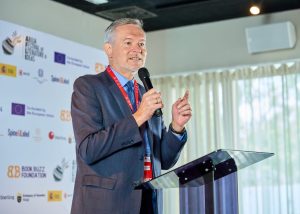
“The EU and its MS see culture as a key vector of mutual understanding, of cross-fertilization and shared values, but also a major source of economic opportunities for the many creative people and institutions in Nigeria,” he said.
The envoy said European diplomatic missions had supported cultural initiatives across Nigeria, including film festivals, creative industry events and contemporary arts exhibitions.
He also highlighted cooperation projects aimed at strengthening Africa’s creative economy, empowering artists and encouraging collaboration between African and European creatives.
Mignot said the festival’s international reach extended beyond Europe, noting that the participation of Colombian peacebuilding expert Sergio Jaramillo provided an opportunity to build connections between Nigeria and Latin America.
Jaramillo, Colombia’s former High Commissioner for Peace, was invited to share insights from his country’s experience of conflict and peacebuilding, as well as the importance of dialogue in divided societies.
Mignot said literature and ideas could provide the inspiration and moral strength needed to confront destructive ideologies and build a better world.
“Evil ideas can kill when they turn into action, but literature and ideas can also give us the inspiration, the strength and the moral resources to build a better world together,” he said.
In her remarks, Sweden’s Ambassador to Nigeria, Anna Westerholm, who spoke on behalf of Sweden, Italy and Spain, said literature enabled people to question established beliefs, encounter different experiences and imagine possibilities beyond their immediate circumstances.
She described literature as an expression of freedom and a means of challenging injustice and oppression, citing Nigerian literary figures such as Chinua Achebe and Wole Soyinka as examples of the influence of words on society and historical understanding.
Westerholm said the festival would examine the impact of technology on communication, the circulation of information and cultural production.
She raised questions about who controls digital spaces, whose voices are heard and how society can ensure that emerging technologies serve people rather than dictate how they live.
The Swedish envoy also highlighted concerns about artificial intelligence, including its implications for originality, human imagination and creative expression.
She said the speed at which misinformation could be generated and circulated made critical thinking and the ability to distinguish facts from falsehoods increasingly important.
Westerholm further linked the discussions to democracy, saying democratic values required continuous attention and renewal by each generation.
“Every generation must strengthen and adapt it to change the reality,” she said.
She added that Nigeria’s democratic development had implications beyond its borders, given the country’s position as Africa’s most populous nation, while noting that European countries also had lessons to learn from African experiences.
Adding an artistic dimension to the
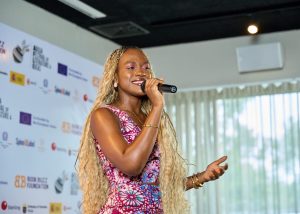
festival, Deborah Johnson, known as the Global Poet, delivered a spoken-word performance exploring African identity, inherited disadvantage and the responsibility to build a better future for younger generations.
The slam poet and performance artist, whose work focuses on African stories and the use of art to inspire change, challenged persistent stereotypes about Africa and questioned why narratives of disadvantage continued to shape the expectations of younger generations.
Her performance emphasised the need to look beyond familiar narratives of limitation and recognise the creativity, resilience and capacity for innovation across African societies.
Beyond the opening speeches and spoken-word performance, the festival featured sessions examining how societies could rebuild dialogue across divisions, the continuing effects of colonialism and the implications of artificial intelligence for cultural creation.
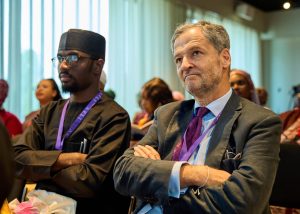
A session titled Improbable Dialogues: How divided societies learn to speak again explored how communities could rebuild trust and communication across social and political divisions, drawing on experiences associated with Colombia’s peace process.
Another session, Chasing Freedom: Coming of Age at the End of Empire, examined liberation history, colonial legacies, identity, migration and the meaning of freedom after independence.
The programme also examined artificial intelligence’s implications for creative industries, including intellectual property, privacy, artists’ rights and the place of human imagination in an increasingly automated world.
Young people’s aspirations and opportunities in Northern Nigeria were explored during YouthSpeak: What does the future look like for Northern Nigerian youth?, which considered representation, creativity, technology and the conditions needed to translate young people’s ideas into social and economic progress.