The International Press Centre, IPC, has cautioned Nigerian journalists against sacrificing verification for breaking-news speed, warning that unverified political claims and digital falsehoods could destabilise the 2027 general elections.
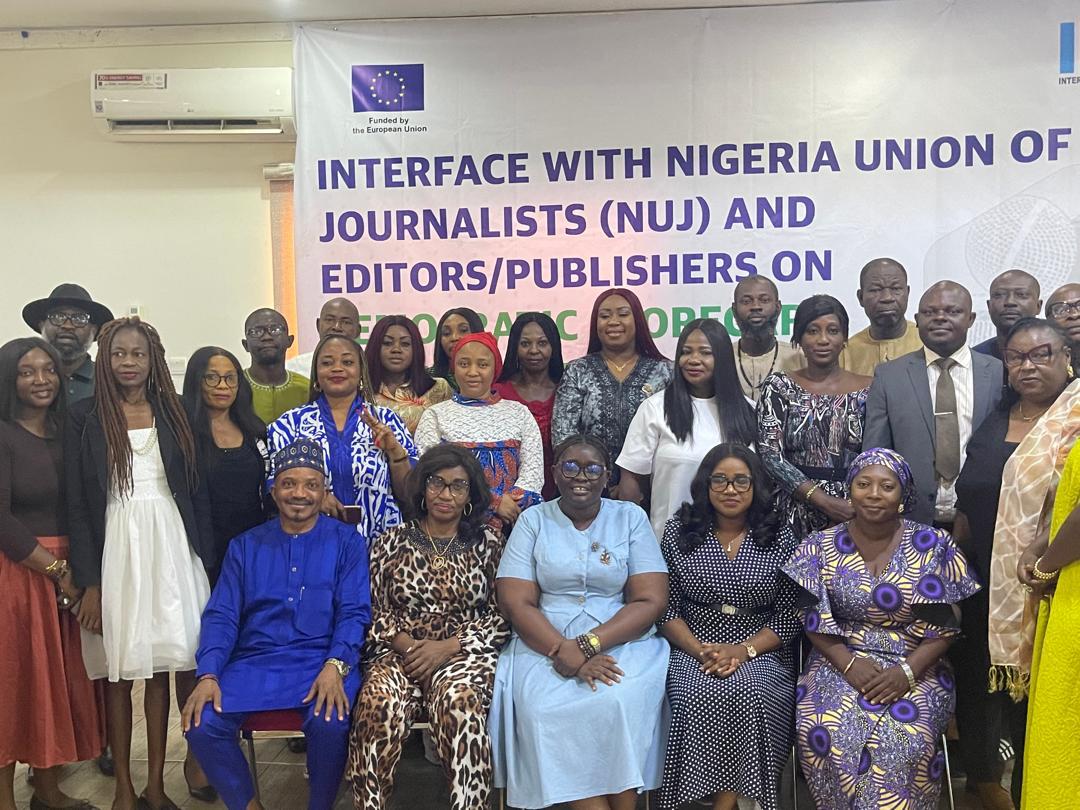
Executive Director of the IPC, Dr. Lanre Arogundade, gave the warning in Abuja during a one-day interface on professional and democratic accountability journalism, organised under Component 4 (Support to Media) of the European Union Support to Democratic Governance in Nigeria, EU-SDGN III, programme.
The engagement, themed “2027 General Election in the Context of Democratic & Accountability Reporting: Scanning the Electoral Environment and Reporting Citizens’ Priority Concerns,” gathered about 35 print, broadcast and online journalists, alongside editors and publishers in the Federal Capital Territory.
Arogundade, noted that while social media and digital platforms have expanded public engagement, they have simultaneously accelerated the circulation of manipulated content, hate speech and divisive narratives.
The Executive Director who was represented by a Programme Officer at the IPC, Melody Akinjiyan, stressed that fact-checking can no longer be treated as an optional add-on in newsrooms, urging editors and reporters to thoroughly verify politically sensitive claims, before going to press.
According to him, an election cycle driven by sensationalism and unchecked falsehoods only deepens societal fractures and erodes public confidence in democratic institutions.
In his words, “A media environment built on accuracy, fairness, verification and accountability can help deliver peaceful, credible and inclusive elections.”
Beyond verification, Arogundade called for issue-based, citizen-centred reporting that interrogates campaign promises and amplifies the voices of women, youths and underrepresented groups, while insisting that journalists must be guaranteed safety and independence from unlawful interference.
Reinforcing the call for strict verification, a researcher and information disorder analyst, Ahmad Aluko, warned that publishing unverified rumours heightens public tension and can destroy the credibility of an entire media organisation.
In her presentation, Head of the Department of Broadcasting, Film and Multimedia Studies at the University of Abuja, Dr. Sarah Gambo, tasked journalists to “scan the electoral environment” across legal, administrative and security fronts to detect risks early, while spotlighting citizens’ everyday realities such as the cost of living, insecurity, healthcare, power and inclusion for persons with disabilities.
Also speaking at the event.
Chairman of the Nigeria Union of Journalists, NUJ, FCT Council, Grace Ike, backed the push for verification over sensationalism, pledging the council’s collaboration to strengthen members’ capacity ahead of the polls.
At the end of the session, participating journalists and media executives pledged to embed rigorous fact-checking into their newsroom workflows and resist political propaganda ahead of 2027.