By Laraba MUREY
Life expectancy in Nigeria has been put at 55 years, data.worldbank.org. While it varies from one country to the other, one of the strains of life expectancy in any society, depends on social welfare. This could be built on the basic challenges of life, food, shelter, health and clothing. Genetic reality is strong, however, access to health care nutrition plays important roles,
A robust social welfare system in any country would address these challenges and better the lives of the people, particularly, the vulnerable. This category of people, when empowered would increase public access to good health care services and ensure basic nutritive value to their diet. Advanced climes with a high life expectancy rate of between 70 and 80 years conveniently become examples of this.
In Australia, life expectancy hit 83, same with Norway. Living in the United Kingdom, offered 81-years life expectancy, while the United States and Algeria offered 79 and 77, respectively.
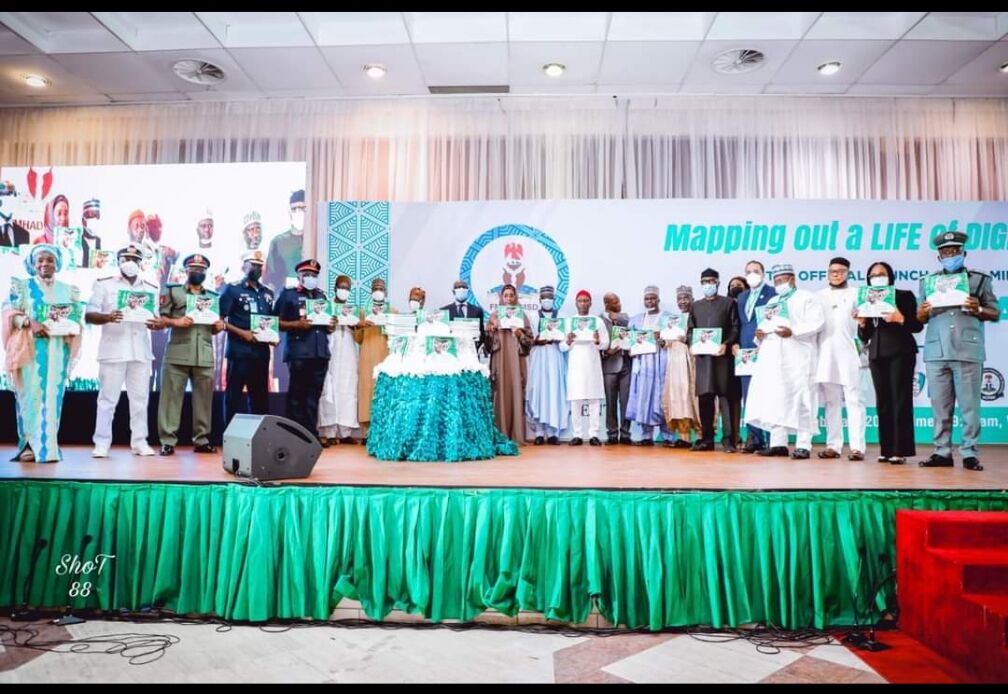
To boost the quality of life of Nigerians, the Ministry of Humanitarian Affairs Disasters Management and Social Development has developed a 5-year strategic plan for social development.
The strategic plan, built on seven pillars, focuses on gearing the Nigerian vulnerable persons to “Lead an Inclusive and Innovative Futures-Thinking Ecosystem, (L.I.F.E).”
This is composed of seven tools to re-tweak the social infrastructure and strengthen it to make the social welfare space responsible and relevant to the Nigerian vulnerable population.
In the 86-page Strategic Road Map document, the ministry listed; strengthening policies and institutional frameworks; building evidence-based systems for transparency and accountability and ensuring enhanced programme delivery through effective monitoring and evaluation mechanisms.
The other aspects of retooling the social framework, according to the strategic plan was to: “Optimize funding and resourcing opportunities: create and maintain strategic partnerships, collaborations and disability inclusion and implementation of a robust humanitarian coordination system for improved strategic communication and governance.”
An important aspect of the strategic plan was it’s mainstreaming of the sustainable development goals and integration of social initiative and investment programmes. The scientific approach was designed to simplify the complex maze of social welfare needs in the country.
Significantly, the Roadmap recognises that the success of the ministry and the actualization of the enumerated strategies was dependent on effective coordination and synergy of actions, else, the beautiful document, like all others before it, would be ineffective but massed-up with dust of history in various shelves.
There is a marriage of the various stakeholders national and relevant international support for its realization. The strategic document noted that “This framework establishes clear linkages and relationships of every stakeholder involved in the humanitarian sector that forms the focal point of the ministry’s mandate.
“The Roadmap also includes a section that aligns the ministry’s strategies and humanitarian projects with the priority areas of the Federal Government captured in the National Development Plan (NDP). In addition to the above, the Roadmap also establishes a link amongst the seven strategic pillars with the Sustainable Development Goals (SDGs), the National Social Investment Programme and other humanitarian initiatives.
“The expectation is that the full implementation of the strategic thrusts/pillars of the Roadmap, will ensure that the Ministry delivers on its core objectives and ensures that a significant verifiable number of the poor are lifted out of poverty within the implementation time frame.
All these highlighted the need to build a seamless structure, which would ensure effective outputs and outcomes within the ministry and across its agencies, thereby, emphasizing the smooth implementation of interventions that will support the mandates and objectives of respective agencies and social development programmes.
It would be important to note that the ministry which was established in August 2019, has deployed about N4.5 billion for research and development in the social welfare sector and has gotten the approval of the President in assent to the 2022 appropriation Act, to plow N7.6 billion for research and development purposes for the economic subsector in Nigeria.
This would be because an efficient structure would also enable the integration & localization of the Humanitarian Peace Development Nexus targeted at facilitating the provision of long-term development assistance in Nigeria.
Some of these interventions captured in the 2022 budget include: national counselling strategy; definition of social protection floors; empowerment programmes for Persons with Disabilities (PWD) development of national unified social register; upkeep of trainees and strengthening activities at social welfare, rehabilitation and other centres.
These interventions and other programmes are expected to bring succor and relief to the vulnerable citizens of this nation and also boost socio-economic development through enhanced service delivery.
Arising from various in-depth analysis and extensive national engagements, dialogue and critical brainstorming with all tiers of government and humanitarian actors to adopt a pragmatic way forward, was a unanimous decision to produce a working document that will serve as a clear plan with an all-encompassing capacity of coordinating, promoting, monitoring and guiding the ministry.
The network, on the government side, encapsulates for implementation of the social welfare programmes through, National Agency for the Prohibition of Trafficking in Person, NAPTIP; National Commission for Refugees, Migrants and Internally Displaced Persons, NCFRMI; National Commission for Persons with Disabilities, NCPWD and the newly created National Senior Citizens Centre, NSCC.
To lead an Inclusive and Innovative Futures-Thinking Ecosystem for the Nigerian vulnerable population has the Northeast Development Commission, NEDC; National Emergency Management Agency, NEMA; the National Social Investment Programme, N-SIP, and the National Sustainable Development oals.
These agencies and programmes are what would be the drivers of what the Vice President Yemi Osibanjo, who lauded the five-year development plan, said was the cornerstone of the President Muhammadu Buhari’s administration to boost the social structure of Nigeria.
It would be a waiting session for keen observers, to note the impact of these in projects in the next few years, starting from the record at the end of this year, would mark an investment of N7.660 billion into social welfare market geared towards research and development.
This year would be special to observers, who are aware that for this year alone, the ministry has earmarked N7,660,196,307 for its research and development to bolster social welfare programmes and initiatives.
The impact on the social welfare firmament in the nation and the life of Nigerians who would have been mainstreamed to its programme and would be less strained as the vulnerable population would have less pressure on other members of the family that are burdened by their vulnerable realities.
An investment of this magnitude would change the narrative of access to better health conditions to Nigerians, particularly, the vulnerable community scattered around the country.
Sustained development agenda on a carefully planned social service as has been done by the Federal Ministry of Humanitarian Affairs, Disaster Management and Social Development, would no doubt contribute to the social stability of some vulnerable persons.
It would be impactful, when implemented, as targeted programmes are geared towards various categories of Nigerians in these categories.Nigerians would want to see the impact of a N7.660 billion budget on research and development of the sector with empirical evidence of the investment especially in various sectors of life, as it relates to access to health care, good nutritional valued access and care.
Photo: Launch of the 5-year strategic plan in Abuja by Vice President Yemi Osinbajo in Abuja.