By Godfrey AKON
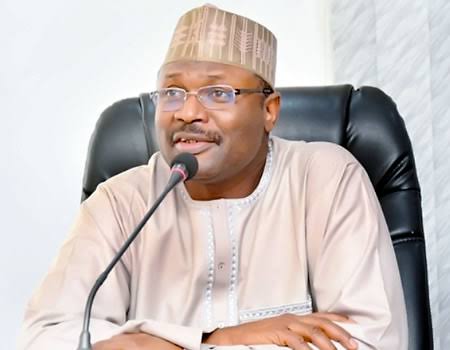
The Chairman of the Independent National Electoral Commission, INEC, Prof. Mahmood Yakubu, has called on the National Assembly to approve an increase in the Commission’s 2025 budget, arguing that the current allocation of N40 billion is inadequate to sustain its operations.
Speaking on Friday, January 10, 2025, during a budget defense session with the Joint Committee on Electoral Matters, Prof. Yakubu outlined the financial challenges INEC faced in 2024, emphasizing the insufficiency of its budget to cover essential activities.
“While we received all the funds allocated for 2024, the N40 billion was only enough to pay consolidated salaries, allowances, and statutory social contributions,” he said. “Unfortunately, many operational activities had to be shelved.”
The INEC Chairman revealed that the Commission had to request supplementary funding of N10.5 billion to conduct the Edo and Ondo governorship elections. However, the funds were insufficient, leaving 11 bye-elections unaddressed.
For 2025, the Ministry of Finance has again capped INEC’s allocation at N40 billion, despite increasing costs driven by the Commission’s workforce of over 14,700 personnel, including 51 political office holders, and the impact of a new minimum wage.
Yakubu stated that INEC has proposed a revised budget of N126 billion to address critical needs. He highlighted key areas requiring immediate funding, including off-cycle elections, the resumption of Continuous Voter Registration, CVR, and the replacement of damaged election materials.
INEC’s plans for 2025 include preparations for governorship elections in Anambra, Ekiti, and Osun states, as well as Area Council elections in the Federal Capital Territory. Prof. Yakubu said the CVR process, which will take place at over 8,800 centers nationwide, is essential to ensure newly eligible voters can register.
The Chairman also noted the need to replace over 440 Bimodal Voter Accreditation System, BVAS, machines, ballot boxes, and voting cubicles destroyed in attacks on INEC facilities. He disclosed that insurance claims of N205 million were remitted to the federal treasury, leaving INEC to source additional funding for replacements.
INEC facilities nationwide, including 774 local government offices and 37 state offices, require urgent rehabilitation. Prof. Yakubu underscored the importance of early preparations for the next general election, including voter redistribution and the procurement of materials.
Yakubu advocated for sustainable funding mechanisms to address the high cost of elections in Nigeria. He proposed dedicating a percentage of the Federation Account allocation to electoral activities and streamlining bye-elections through legislative reforms.
“We must find a more cost-effective way of dealing with elections,” he said, citing examples from countries like the United States, where gubernatorial appointments fill legislative vacancies instead of costly bye-elections.
He also urged lawmakers to act on eight legislative reforms identified in INEC’s 2023 General Election Review Report, part of 142 recommendations aimed at improving Nigeria’s electoral system.
“As we look ahead to 2025 and beyond, we must confront the realities of our electoral system and ensure adequate funding to uphold the credibility and integrity of elections,” Prof. Yakubu concluded.
The INEC Chairman’s appeal highlights the urgent need for increased financial and legislative support to strengthen Nigeria’s electoral processes.
As preparations for upcoming elections gain momentum, the conversation about sustainable election funding and reforms remains a critical issue for the nation.