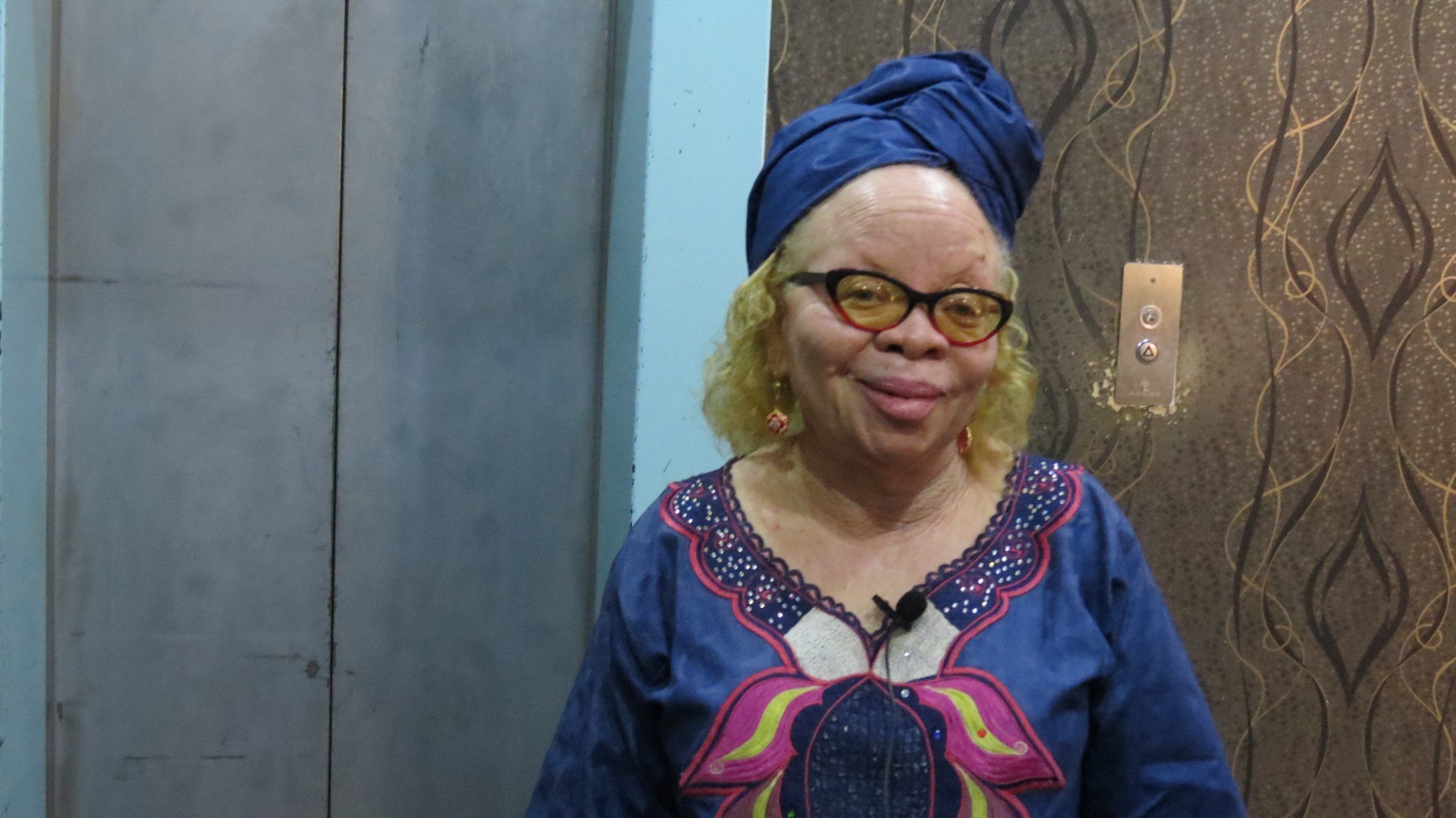
Executive Director, Albinism Association of Nigeria, AAN, Bisi Bamishe, speaks to Laraba MUREY in Abuja on climate change, increase skin cancer risks for persons with albinism, free skin cancer treatment, education for children with albinism, sunscreen, protective gear, and regular skin check-ups. Excerpts:
What factors contribute to the rise of skin cancer cases among persons with albinism in Nigeria?
The rise in skin cancer cases among persons with albinism in Nigeria is primarily due to their lack or inadequate melanin, which makes them highly vulnerable to the sun’s ultraviolet rays.
When exposed to the sun, their skin turns red, and without proper care, this gradually leads to skin cancer.
The major cause of skin cancer for persons with albinism is sun exposure. With the increasing impact of climate change, extreme heat has worsened the situation.
The effects may not be immediate, but over time, wounds begin to appear on the skin. If not treated early, these wounds develop into skin cancer.
What are the challenges in accessing early diagnosis and treatment for cancer in Nigeria?
Accessing early diagnosis and treatment for cancer in Nigeria faces several challenges. Many hospitals lack skin cancer treatment facilities, forcing patients to travel long distances for care.
For example, some persons with albinism travel from remote areas to the National Hospital, Abuja. Even then, existing healthcare facilities often lack the necessary equipment, personnel, and resources. Currently, a patient has been transferred from National Hospital, Abuja, to Lagos University Teaching Hospital due to a breakdown of the radiation therapy machine.
Financial constraints are another major challenge. Skin cancer treatment is expensive, with radiation therapy costing between N1.5 and N2 million making it unaffordable for many.
Health insurance could help, but the National Health Insurance Scheme (NHIS) does not cover skin cancer treatment, leaving patients to pay out-of-pocket. This burden is especially heavy on persons with albinism, many of whom are unemployed.
Lack of awareness leads to delayed diagnosis. Many individuals do not recognize skin cancer symptoms early, and by the time they seek medical attention, the disease has progressed.
There is also a shortage of specialists, including dermatologists and oncologists, worsened by the “Japa” syndrome, where medical professionals leave Nigeria for better opportunities abroad. Inadequate data collection and surveillance further hinder effective intervention.
Nigeria lacks a comprehensive cancer registry, making it difficult to track cancer incidence and outcomes.
Limited access to screening and early detection services remains a major issue, particularly in rural areas. Addressing these challenges requires a multi-faceted approach involving the government, healthcare providers, civil society organizations, and individuals.
How does the global cancer burden affect marginalized communities, including persons with albinism?
The global cancer burden disproportionately affects marginalized communities, including persons with albinism, due to limited access to healthcare, lack of awareness, and stigma. In many low- and middle-income countries, cancer services are either unavailable or unaffordable, leading to delayed diagnosis and inadequate treatment, which ultimately results in higher mortality rates.
In Nigeria, several challenges hinder early diagnosis and treatment for cancer. Many regions lack cancer treatment centers, forcing patients to travel long distances to access care. The absence of adequate health insurance coverage further exacerbates the issue, as cancer treatment is not covered by the National Health Insurance Scheme, NHIS, leaving patients to bear the costs out-of-pocket.
To improve cancer care and prevention for vulnerable populations, governments and NGOs can take several steps.
Increased funding for cancer treatment facilities, equipment, and healthcare personnel would help expand access to care. Public awareness campaigns can educate people on cancer symptoms, risk factors, and prevention, promoting early detection and intervention.
Developing a comprehensive national cancer control plan that addresses prevention, early detection, diagnosis, treatment, and palliative care is also crucial.
Additionally, investment in research and innovation can lead to improved cancer treatments, diagnostics, and prevention strategies, particularly for low- and middle-income countries.
Through these collective efforts, governments and NGOs can work toward reducing the impact of cancer on marginalized communities and ensuring better healthcare access for all.
How can the government and stakeholders support efforts to reduce the prevalence of skin cancer among persons with albinism?
The government and stakeholders can support efforts to reduce the prevalence of skin cancer among persons with albinism by providing essential preventive mechanisms.
One crucial measure is ensuring the availability of sunscreen, wide-brimmed hats, and umbrellas specifically designed to protect against the sun’s ultraviolet rays.
Besides the government, development partners, NGOs, and philanthropists can contribute by making these protective items accessible.
Beyond prevention, regular medical screenings are essential. The government can facilitate quarterly or monthly dermatology check-ups at federal medical centers nationwide, allowing persons with albinism to receive early diagnosis and treatment for any skin conditions before they develop into serious issues.
Awareness creation is another critical area of intervention. People with albinism need to be educated on sun protection, and parents must be informed about shielding their children from excessive sun exposure.
However, media publicity is expensive, making it necessary for the government and development partners to support television and radio campaigns to spread awareness.
Advocacy efforts have already begun in some states, where persons with albinism visit mosques, churches, and public spaces to educate people about their challenges and how they can be assisted. Despite these efforts, more extensive awareness programs are needed to reach a broader audience. Public institutions, such as schools, should also be sensitized.
Teachers should be aware that children with albinism should not be subjected to prolonged sun exposure as a form of punishment, as it harms their skin.
Additionally, many parents fail to acknowledge their children’s low vision issues, which is a significant concern in the disability community.
Early identification of vision problems can help children with albinism receive proper support, such as sitting at the front of classrooms to improve their learning experience. Creating awareness at all levels among persons with albinism, caregivers, parents, and the general public is crucial in reducing the health risks they face, particularly skin cancer.
How can governments and NGOs collaborate to improve cancer care and prevention for vulnerable populations?
Governments and NGOs can collaborate in several ways to improve cancer care and prevention for vulnerable populations.
NGOs can support research into new cancer treatments, diagnostics, and prevention strategies, promoting innovation in cancer care.
They can also provide training for healthcare workers and community health workers, enhancing their capacity in cancer diagnosis, treatment, and patient care.
Governments, on the other hand, can play a crucial role by including skin cancer treatment in the National Health Insurance Scheme (NHIS), reducing the financial burden on patients. They can also develop and implement policies that support cancer control, increase funding for services, and invest in research.
Infrastructure development is another key area where governments can make a difference by building and equipping hospitals, clinics, and radiation therapy facilities to expand access to treatment.
Regulation and quality assurance are essential in ensuring effective cancer care. Governments can oversee cancer care services to maintain quality and safety while monitoring programs for efficiency.
Additionally, launching public awareness campaigns can help educate people about cancer symptoms, risk factors, and prevention strategies, encouraging early detection and treatment.
Through these combined efforts, governments and NGOs can significantly improve cancer care and prevention, particularly for marginalized communities
What measures is your association advocating to address this health challenge?
The Albinism Association of Nigeria, AAN, is advocating for several measures to address the health challenges faced by persons with albinism.
One key focus is ensuring inclusive education for children with albinism. The association has engaged with the National Assembly and the Committee on Disability Affairs to push for policies that require teachers to seat children with albinism close to the blackboard, enabling them to see properly.
AAN is also actively addressing the impact of climate change on their skin and the rising cases of skin cancer.
The association is fighting to restore the federal government’s previous policy, which allowed persons with albinism to receive free skin cancer treatment at the National Hospital, Abuja a policy that was discontinued after President Goodluck Jonathan’s administration.
Due to the high mortality rate from skin cancer among its members, AAN is advocating for federal teaching hospitals across the six geopolitical zones to provide regular skin screenings and treatment for persons with albinism, reducing the burden of traveling.