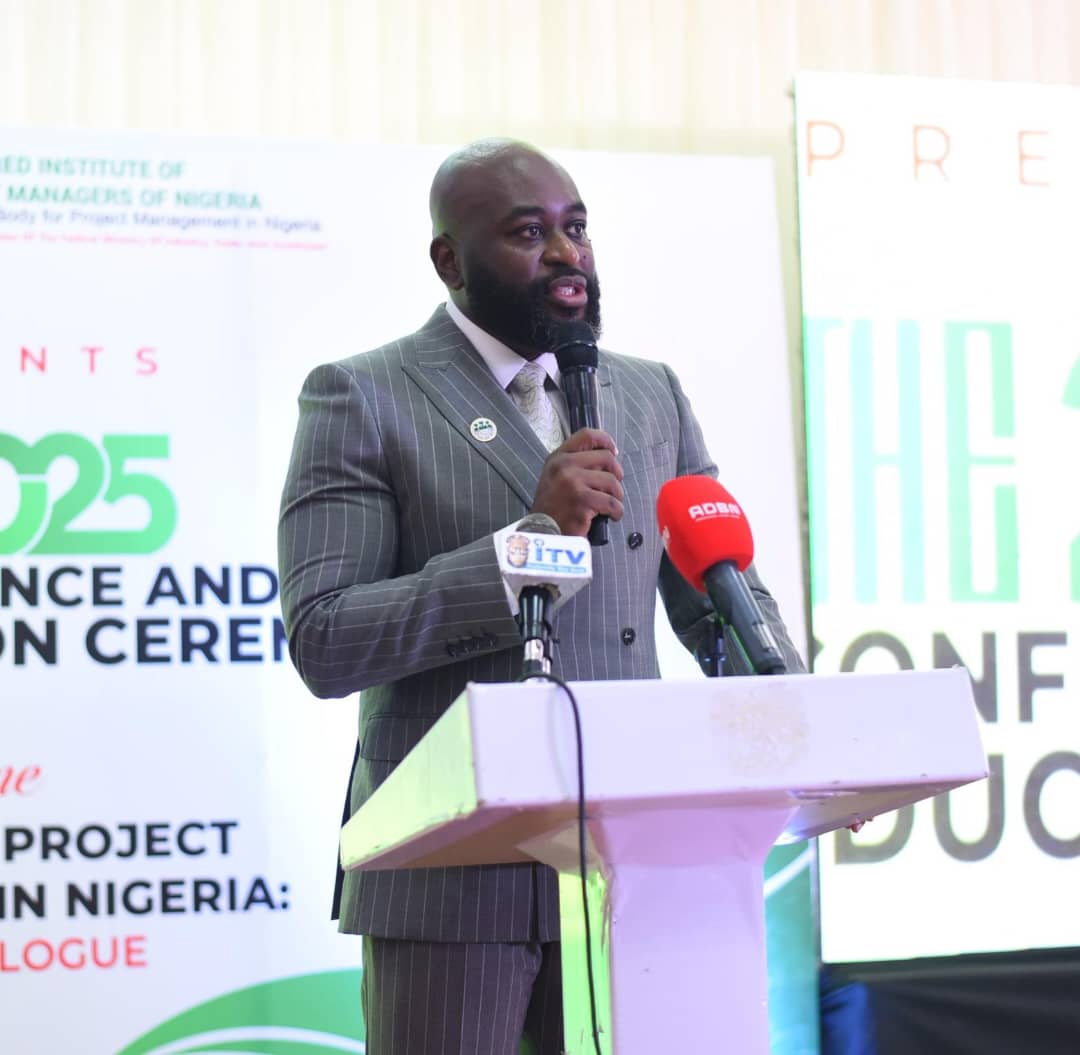
The Chartered Institute of Project Managers of Nigeria has warned about the growing danger associated with the rising global and domestic financial waste on projects that require corrective works or adjustments after commissioning.
The Registrar-General of the institute, Henry Mbadiwe, raised the alarm while delivering his keynote remarks at the CIPMN 2025 Annual Conference and 6th Induction Ceremony, themed “Regulating Project Management In Nigeria: Policy Dialogue,” in Abuja.
He warned that the trend has become a major drain on public finances and a threat to development planning.
He cited a World Bank report estimating that $4bn is lost globally every year to corrective work on newly completed projects, projects that were supposedly finished, commissioned, and paid for.
Mbadiwe described the figure as “ridiculous and unacceptable,” insisting that weak regulation and the use of unlicensed personnel in project execution were at the heart of the problem.
He added that the revelation comes at a time Nigeria is still grappling with an estimated N17tn worth of abandoned projects, according to national audit reports.
He said, “The project management profession is one that is still growing in Nigeria. It’s not as saturated or as respected as it should be in this country. We need to grow this profession. You cannot manage a project in Nigeria or lead a project in Nigeria if you are not licensed by this institute. A report was published recently that said the cost of abandoned projects has reached N17tn in Nigeria.
The CIPMN say such corrective spending mirrors concerns raised and underscores the need for unified standards.
Mbadiwe further warned that the law now criminalises the management of any project, public or private, without a valid CIPMN licence, stressing that the era of unregulated project execution was over.
He said many organisations attempt to bypass the law by claiming they have no designated project manager.
He noted that the institute was admitting a new set of licensed project managers into its fold, stressing that the profession was still evolving in Nigeria.
He added, “This act has been signed into law by the National Assembly, assented by Mr President, to ensure that we regulate the project management space, that you don’t teach project management, you don’t practice project management if you are not licensed. If you go to a particular company and you tell them, Who is the project manager? Some proudly say they don’t have a project manager and are not in breach of the law. That’s not true. Do you perform any project management function?
“That’s how you ask the question. We have been working on our enforcement team, and once the team is fully set up. We will go out. This will be concluded in the next three months. The law has made it very clear. You cannot be employed, you cannot get involved in leading or managing or working with any project if you do not have experience, if you do not have the license from CIPMN.”
He disclosed that the institute has set up an enforcement team empowered to visit project sites and verify compliance, adding that even foreign-trained professionals must be licensed locally before handling projects in the country.
“CIPMN will determine how to license the project management practitioners in Nigeria. Not only that, the law says that if you are a project manager abroad, you have certificates abroad, and you come to Nigeria to practice, the law says that you must go and register as a member of the Chartered Institute of Project Managers of Nigeria and get licensed to deliver the project, to deliver a project in Nigeria, no matter where you are. The law has made it clear that CIPMN is to accredit all project management learning in Nigeria, whether it leads to a degree, a higher national diploma, or any other certification course.
“Two and a half years in, we have built a strong foundation. Imagine where we will be in five years when only licensed professionals manage Nigeria’