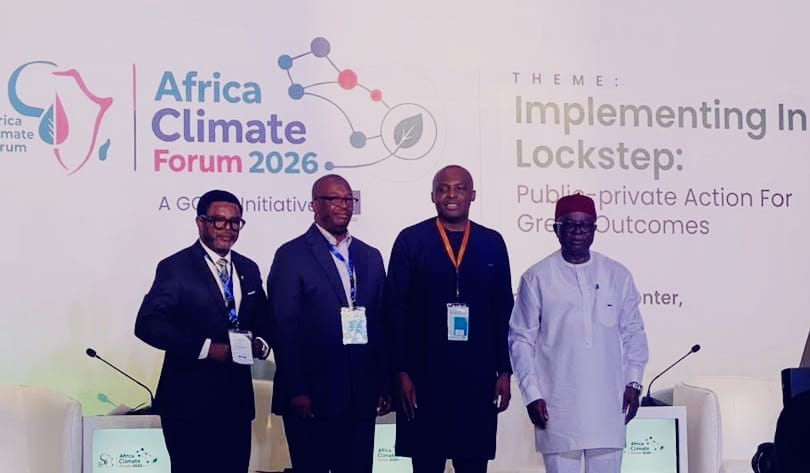
African governments must turn climate pledges into measurable results through stronger policies, private investment and accessible funding, speakers said at the Africa Climate Forum 2026.
The fourth edition, a Global Centre for Law, Business and Environment (GCLBE) initiative, held on October 13 under the theme, “Implementing in Lockstep: Public-Private Action for Green Outcomes.” Convener, Prof. George Nwangwu, called for partnerships that deliver practical climate solutions.
Fred Odika, Director of Environment Management at the Ministry of Regional Development, represented Engr. Abubakar Momoh, FNSE, Minister of Regional Development. The address also acknowledged Dr. Perry Aganbobe, Permanent Secretary of the ministry, as speakers stressed climate-resilient infrastructure, renewable energy and sustainable agriculture.
Olasupo Shasore, SAN, Senior Partner at Africa Law Practice, called for stronger carbon market regulation in Nigeria. He said mandatory carbon trading could turn verified emissions reductions and gas-flaring cuts into certified carbon credits.
Benjamin Mukoro, Centre Co-Coordinator of GCLBE, said the forum featured seven plenary sessions, a climate finance deal room, an innovation marketplace and a Climate Stories Challenge to connect stakeholders and promote practical solutions.
Dr. Reuben Bamidele, National Programme Officer at the United Nations Industrial Development Organization (UNIDO), representing Abaka Johnson, Regional Director of UNIDO, said government policy, private capital and technology must work together. He cited Nigeria’s 2024–2028 Country Partnership Programme, valued at about $175 million.
Dr. Fatima Alkali, Dean of the Faculty of Arts at Nile University of Nigeria, said research and legal frameworks were essential to climate action, stressing the need for “a just and sustainable energy transition.”
Hon. Sam Onuigbo, President of GLOBE International, blamed weak climate delivery partly on inconsistent funding commitments by developed economies. He urged African countries to use their critical minerals, solar resources and youthful population to drive green industrialisation.
Dr. Obinna Ugochukwu, Special Adviser on Climate Finance to the Presidential Initiative on Compressed Natural Gas and Electric Vehicles, said pension resources total about ₦35 trillion, with less than one per cent invested in climate projects. He added that banks held more than ₦40 trillion in cash.
Ugochukwu called for grants to prepare viable climate projects and reduce investment risks. Speakers urged stronger regulation, accessible finance and closer public-private cooperation to move Africa from climate commitments to measurable results.