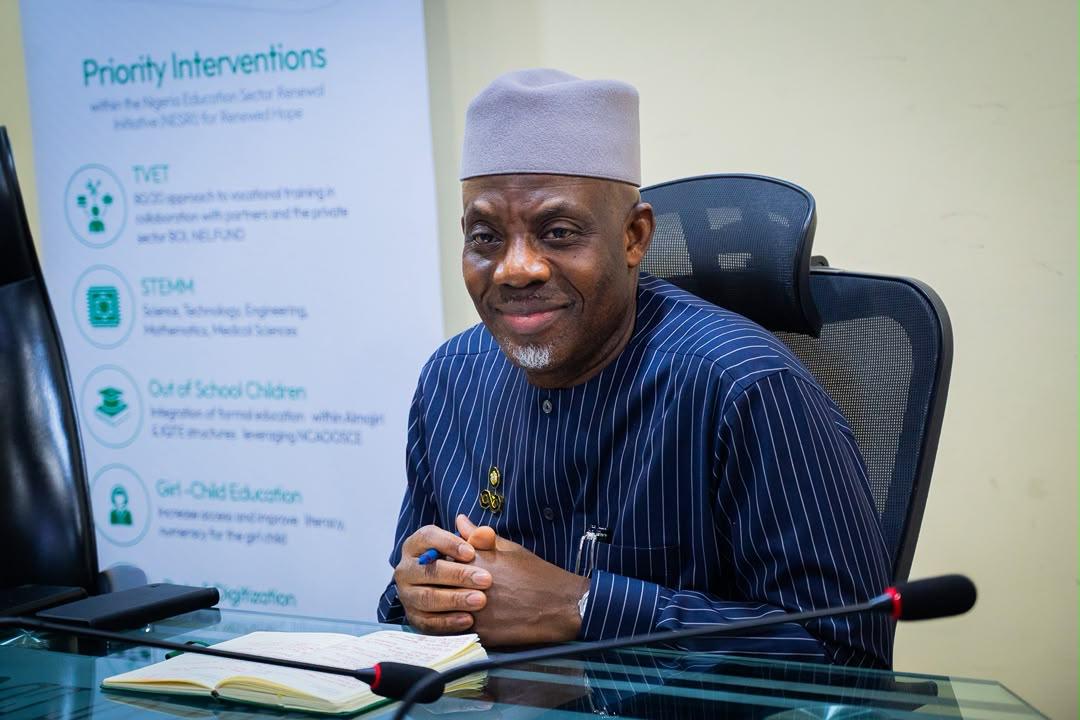
The Federal Government’s chief negotiator with tertiary education unions, Alhaji Yayale Ahmad, has said the new wage agreements were reached because the government team chose to see itself as part of the unions’ cause rather than their opponent.
Ahmad, who disclosed this at the unveiling of the renegotiated agreements between the Federal Government and staff unions in universities, polytechnics and colleges of education in Abuja on Tuesday, said the talks were tough but ended in goodwill.
“We were friends, we were never enemies. You gave us a tough time, we retaliated. Not we versus the unions,” he said.
Ahmad, who chairs the government’s negotiating team, said his approach was to understand the unions’ position.
“I decided that I should not see myself, nor should our team see itself, as we versus the unions; I tried my best to make sure that I was part of the union, to think what they are thinking,” he said.
He said union leaders often told him they had no confidence in him, but he was never intimidated.
He praised them as “really responsible leaders” who, while defending their members, also sympathised with the government’s position.
He said the real work now begins, stressing the need for an agreement with the government to be implement “to the letter.”
Ahmad cautioned unions against rushing into industrial action over payment delays, saying some had threatened to strike if not paid within 14 days.
“Processes in government are not always easy,” he said, adding that unions “should not take the commitment and political will of Mr. President for granted.”
He disclosed that discrepancies had been found in the agreements, and that the Education Ministry and the Salaries and Wages Commission were willing to harmonise them.
“We are not here to cause further disagreement between unions; If we make a mistake, we simply come and correct it,” he said.
He credited the Education Minister with finding a way to deliver pay increases despite a government policy of no salary increases for five years, including a special professorial allowance that was never part of the negotiations.
Also speaking, the Minister of Education, Dr Tunji Alausa, announced the establishment of an expanded implementation and monitoring committee by the Federal Government to oversee agreements with academic and non-academic staff unions across tertiary institutions in the country,
Alausa said the establishment of a monitoring committee was part of efforts to prevent industrial disputes and ensure uninterrupted academic calendars.
He said the existing Implementation and Monitoring Committee set up for the agreement with the Academic Staff Union of Universities would be expanded into a single committee responsible for monitoring all agreements with academic and non-academic staff unions across tertiary institutions.
The Minister said the committee’s membership would be broadened to accommodate the unions and relevant stakeholders, providing a common platform to track implementation, assess progress, resolve challenges and ensure accountability.
“This expanded Committee will provide a common platform for Government and the Unions to monitor agreed milestones, assess progress, address implementation challenges and ensure accountability through periodic reports on achievements and outstanding obligations,” the minister said.
He stressed that the success of the agreements would depend on effective implementation, warning that government must address difficulties promptly rather than allow unresolved concerns to undermine trust or disrupt academic activities.
“For decades, agreements between government and staff unions were followed by delayed, incomplete or unfulfilled commitments,” Alausa said, noting that repeated disputes had weakened trust and triggered prolonged industrial actions.
According to him, the disruptions had cost students valuable academic time, imposed additional financial burdens on families and affected teaching and research, with four-year degree programmes frequently extending beyond their stipulated duration.
The minister said the new agreements were intended to restore confidence in government-union negotiations and advance President Bola Tinubu’s pledge that students should complete four-year programmes within four years.
“Our duty now is to sustain this achievement through faithful implementation. Let me state clearly, on behalf of the Federal Government: We will fulfil our own part of these historic agreements,” he said.
The agreements cover the Consolidated Academic Tools Allowance for members of the Academic Staff Union of Polytechnics and the Colleges of Education Academic Staff Union, as well as the Consolidated Non-Teaching Tools Allowance for eligible non-teaching personnel in universities, polytechnics and colleges of education.
The allowances take effect from January 1, 2026, in accordance with the agreements and applicable implementation guidelines.
Alausa said the allowances recognised the professional and operational needs of eligible staff, adding that workforce welfare was essential to improving the quality of tertiary education.
He urged government agencies, governing councils and institutional managements to comply with implementation guidelines, maintain accurate records and cooperate with the monitoring committee.
He added that union leaders should keep their members informed and channel emerging concerns through agreed mechanisms.
The minister also called for stronger consultation, mutual respect and constructive dialogue, stressing that industrial harmony was necessary for effective planning, uninterrupted research and students’ academic progress.
The unveiling was attended by representatives of the participating unions, including the Academic Staff Union of Polytechnics, Colleges of Education Academic Staff Union, Senior Staff Association of Nigerian Universities, Non-Academic Staff Union of Educational and Associated Institutions, and other academic and non-academic staff organisations.
On his part, the President of the Academic Staff Union of Polytechnics, ASUP, Comrade Shammah Kpanja, said this was the quickest renegotiation his union had experienced, adding that talks began in December 2025, and the agreement was signed in April.
According to Kpanja, implementation of the Consolidated Academic Tools Allowance, CATA, has already started as members received January and February arrears after June and July salaries, six months’ arrears after August salary, and September arrears after September salary.
He said other components remain unimplemented, and he welcomed the inauguration of the Joint Implementation and Monitoring Committee by the Ministry of Education, scheduled for the following day.
“I want the government to ensure that the content of this agreement is implemented before the end of this year,” he said, noting that “by next year, there will be an election, and we want everything to be done before that election.”
Also speaking, the President of the Colleges of Education Academic Staff Union, COEASU, Dr. Lawal Ahmed Bazza, said colleges of education had already benefited substantially.
“Even without the inauguration of the implementation committee, I can tell you as of today, we have achieved over 70% of the agreement that has been signed with the federal government,” he said.
He praised the dual-mandate arrangement under which colleges of education work with the National Universities Commission, calling it a move “several governments were shy to implement.”
He also said the calibre of the government team “removed some level of mutual suspicion.”
Bazza urged the government to deliver for the other unions and to honour non-monetary provisions.
“It’s not just about the money; some of the agreements that we signed before, when they give the money, they throw the other side of the agreement,” he said.