By Chuks Nzeh
Abia State Governor, Dr. Alex Otti, has reaffirmed the commitment of the Abia State Government to partner with the Federal Government and the International Labour Organisation, ILO, in addressing the challenges hindering the inclusion of vulnerable groups in social protection coverage.
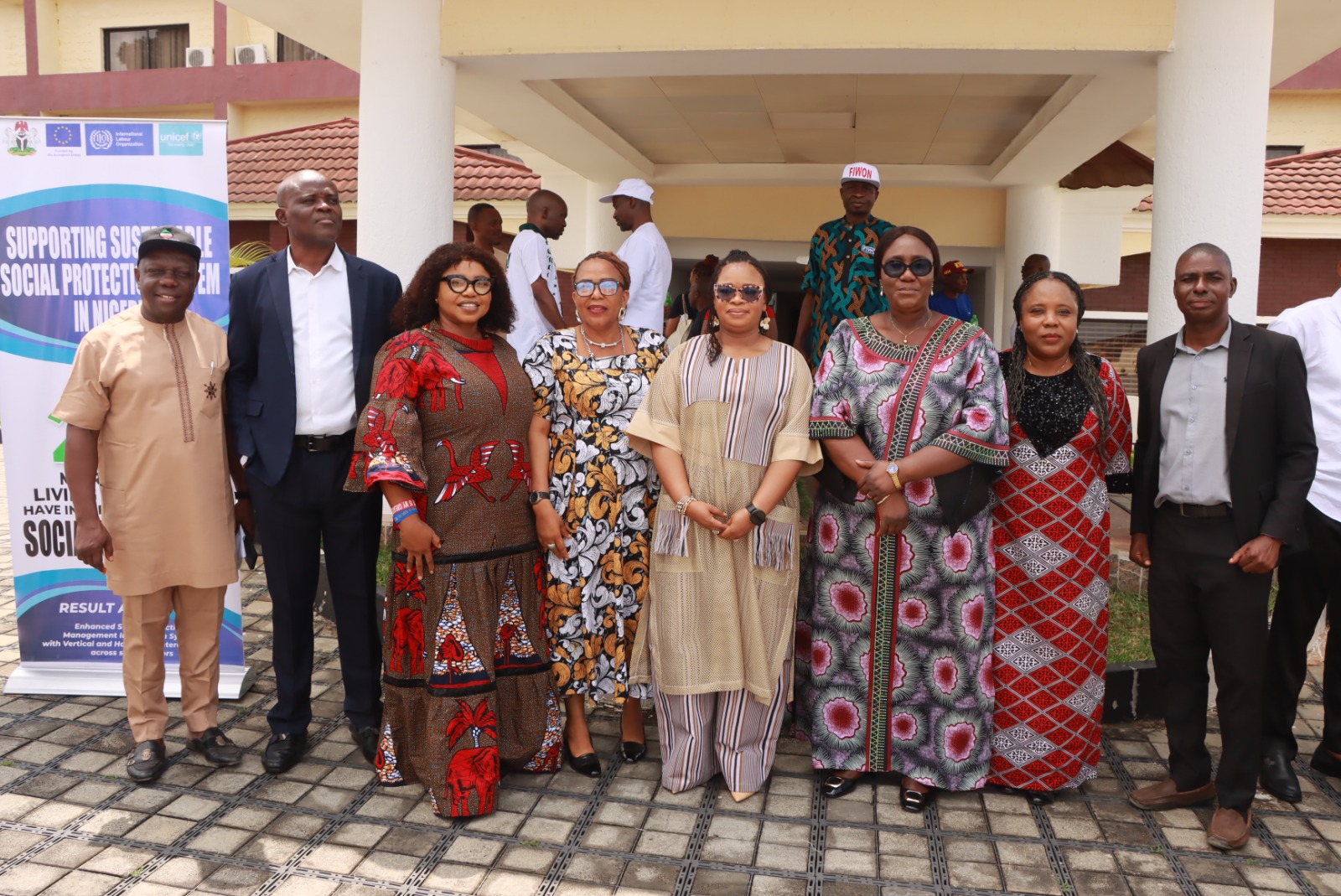
He made this known at a Social Dialogue Engagement on Extending Social Protection to Workers in the Informal Economy, held in Abia State, where government representatives, employers, trade unions, informal sector associations and other relevant stakeholders converged to discuss sustainable approaches to addressing the social security challenges confronting millions of informal economy workers.
This is contained in statement by the Head of Press/Public Relations, Federal Ministry of Labour and Productivity Comrade Annah Daniel, adding that the event was aimed at promoting inclusion for the most vulnerable in the social safety net.
The Governor, represented by the Commissioner for Poverty Alleviation, Hon. Ngozi Blessing Felix, said the Abia State Government recognises social dialogue as an effective instrument for developing policies that respond to the needs of workers, employers and other stakeholders.
He assured of the state’s readiness to collaborate with the Federal Government and the ILO towards establishing practical and sustainable social protection mechanisms.
He noted that workers in the informal sector constitute a significant component of the state’s economic activities and must not be excluded from the benefits of social protection simply because their employment arrangements fall outside the conventional formal employment structure.
In his remarks, the Minister of Labour and Employment, Dr. Maigari Dingyadi, represented by the Director of Social Security and Cooperative Development, Franca Adiekweh, emphasised that extending social protection to workers in the informal economy remains a critical priority of the Federal Government’s labour and employment policy agenda.
The Minister stated that social protection must not be restricted to workers in the formal sector, noting that millions of Nigerians engaged in informal employment contribute significantly to national productivity, economic growth and wealth creation, yet remain exposed to economic shocks, occupational risks, inadequate healthcare and limited retirement security.
Dingyadi added that the Federal Government, in partnership with the ILO and state governments, is committed to promoting inclusive social protection systems that will address these gaps through policy reforms, stakeholder engagement and effective implementation strategies.
He further observed that social dialogue provides an important platform for building consensus, strengthening trust and ensuring that policies are developed through the active participation of workers, employers and government.
The Minister called on all stakeholders to move beyond discussions and develop actionable recommendations that would guarantee wider access to social protection, particularly for women, young people, artisans, traders, agricultural workers, domestic workers, transport operators and other categories of informal economy workers.
He also acknowledged the technical expertise and continued support of the ILO in advancing decent work, social security and inclusive labour governance in Nigeria.
The representative of the ILO Country Director, Mr. Emmanuel Danjuma, reaffirmed the organisation’s commitment to supporting the Federal Government and subnational governments in strengthening social protection systems and advancing the principles of decent work.
He noted that social protection is essential for reducing poverty, promoting social justice, improving workers’ welfare and building resilient economies. He stressed the need for stronger institutional frameworks, sustainable financing mechanisms, improved awareness and effective coordination among government institutions, employers’ associations and workers’ organisations to ensure that informal economy workers are adequately covered.
On his part, the representative of the Nigeria Labour Congress (NLC), Comrade Chris Onyeka, called for the ratification of ILO Convention No. 102, which deals with the welfare of workers, adding that Nigerian workers deserve better than they are currently getting, especially those in the informal sector who are more vulnerable to the pressures of an ailing economy.