The Independent National Electoral Commission, INEC, has announced plans to conduct a nationwide mock accreditation and voting exercise on November 28, 2026, as part of efforts to test new technological safeguards and strengthen preparations for the 2027 general elections.
The exercise, according to the Commission, will simulate key aspects of the presidential election, particularly voter accreditation and electronic transmission of results, amid renewed efforts to address public concerns arising from the controversies surrounding the 2023 general elections.
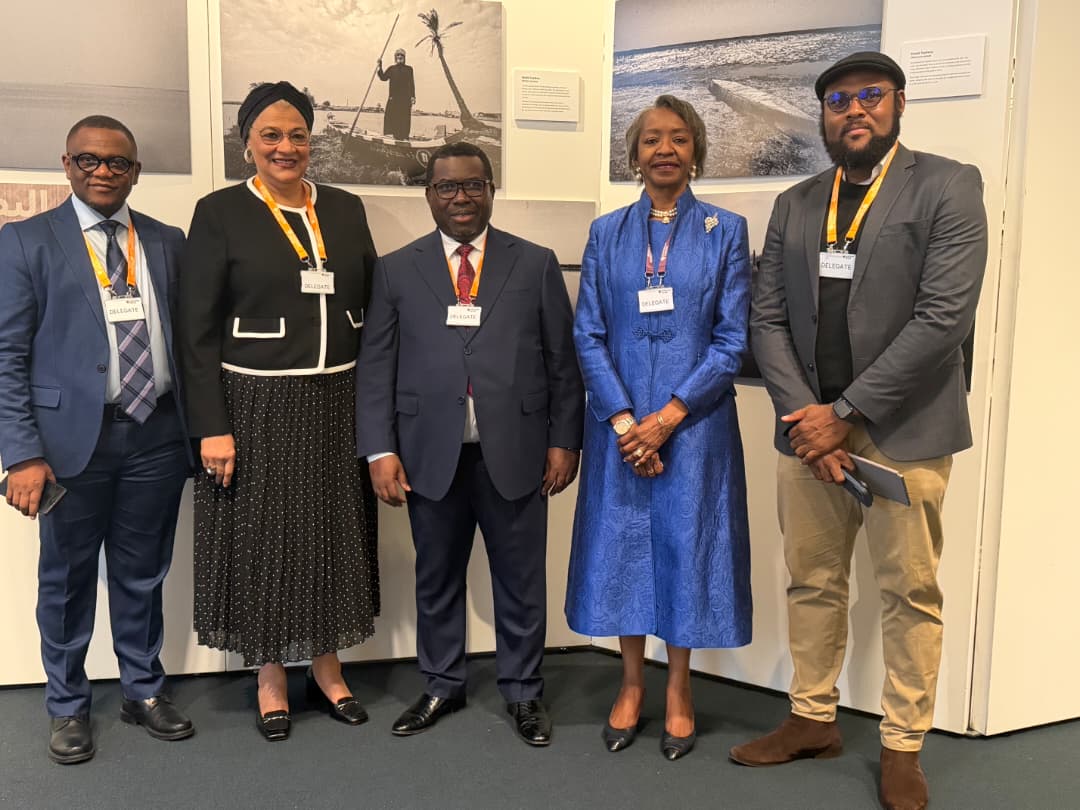
INEC Chairman, Prof. Joash Amupitan, SAN, disclosed this on Thursday during an engagement at Chatham House, London, organised in partnership with the Kimpact Development Initiative, KDI.
The dialogue, themed “Nigeria’s 2027 Elections: Democratic Trajectory and Regional Stability Beyond the Ballot,” provided an opportunity for the electoral chief to outline measures being introduced to restore public confidence in the electoral process, according to a statement issued by his Chief Press Secretary and Media Adviser, Mr Adedayo Oketola.
Amupitan said the Commission had introduced stringent technical controls to prevent inaccurate election results and figures reflecting over-voting from being uploaded to its Result Viewing Portal, IReV.
He explained that an assessment of the 2023 elections identified weaknesses at collation centres as a major source of discrepancies in election result management, rather than at polling units.
According to him, the new safeguards would ensure that results failing the prescribed validation checks at polling units would not be transmitted to IReV.
The INEC chairman maintained that the measures would strengthen the credibility of electronically transmitted results and make the collation process more transparent.
“The moment a result appears on IReV, citizens can trust what they see. By eliminating inconsistencies at the source, collation will become a transparent formality,” he said.
Amupitan acknowledged that the 2023 presidential election had significantly undermined public confidence in the Commission, admitting that INEC was still working to overcome the resulting trust deficit.
However, he argued that improvements recorded in subsequent off-cycle elections demonstrated the Commission’s capacity to learn from previous shortcomings and strengthen its operations ahead of 2027.
He cited the governorship elections in Anambra and Osun states, the Federal Capital Territory Area Council elections, the Ekiti governorship election and 16 legislative by-elections as evidence of progress.
The chairman particularly highlighted improvements in Anambra and Osun, where previous governorship elections had experienced prolonged and inconclusive processes.
He recalled that the 2021 Anambra governorship election took approximately five days to conclude, whereas administrative improvements introduced under his leadership enabled INEC to declare results in both states the day after voting.
Amupitan, who assumed office in October 2025, said the Commission had approached every election conducted since then as an opportunity to identify operational gaps and improve voter accreditation, voting procedures and result management.
On the reliability of the Bimodal Voter Accreditation System, BVAS, he disclosed that INEC was addressing equipment malfunctions experienced during the 2023 elections, some of which were attributed to extreme temperatures and inadequate storage conditions.
He said the Commission was establishing climate-controlled storage facilities across the states to protect sensitive election equipment.
INEC has also procured additional BVAS devices and reduced the maximum number of voters assigned to each machine from 1,250 to 850.
Under the revised arrangement, polling units with more than 850 registered voters will be provided with additional devices to minimise delays and operational difficulties during accreditation.
The chairman said the Commission had considered deploying an entirely new electoral technology for the 2027 elections but opted to strengthen its existing infrastructure because of the limited time available before the polls.
He identified insecurity, logistics and election result management as the three major operational priorities requiring sustained attention ahead of the 2027 exercise.
On funding, Amupitan disclosed that INEC had received a substantial portion of its budget for the 2027 general elections but was still awaiting the release of the outstanding balance.
He explained that part of the outstanding funds was required for the recruitment and welfare of ad hoc election personnel, adding that the Commission had received assurances that the money would be released before the end of November.
The INEC chairman also addressed allegations questioning his political neutrality, particularly claims on social media linking his telephone number to a controversial account on X, formerly Twitter.
He categorically denied operating an X account, disclosing that an independent forensic examination had been obtained and the matter referred to the Department of State Services and the Inspector-General of Police for investigation.
He equally dismissed concerns that his previous involvement in political disputes as a legal practitioner could compromise his neutrality, insisting that his professional engagements before his appointment were undertaken strictly in his capacity as a Senior Advocate of Nigeria.
Amupitan maintained that his allegiance remained with the Constitution and the Electoral Act, stressing that all institutions and political office holders must operate within the framework of the rule of law.
On allegations of irregularities in the voter register, including claims of an 85 per cent increase in registered voters in a ward in Ebonyi State, he said the Commission had investigated and addressed the complaint in accordance with established procedures.
He noted that the Electoral Act provided statutory opportunities for citizens to raise objections, make claims and request certified true copies of the voters’ register.
The INEC chairman also called on Nigerian youths to take greater responsibility for protecting the country’s democratic process, warning that misinformation and digital disinformation posed serious threats to electoral credibility.
He urged citizens to verify information before sharing it and remain actively involved in democratic activities rather than allowing false narratives to undermine public confidence.
The 2027 presidential and National Assembly elections are scheduled for January 16, while governorship and State Houses of Assembly elections will hold on February 6, 2027.