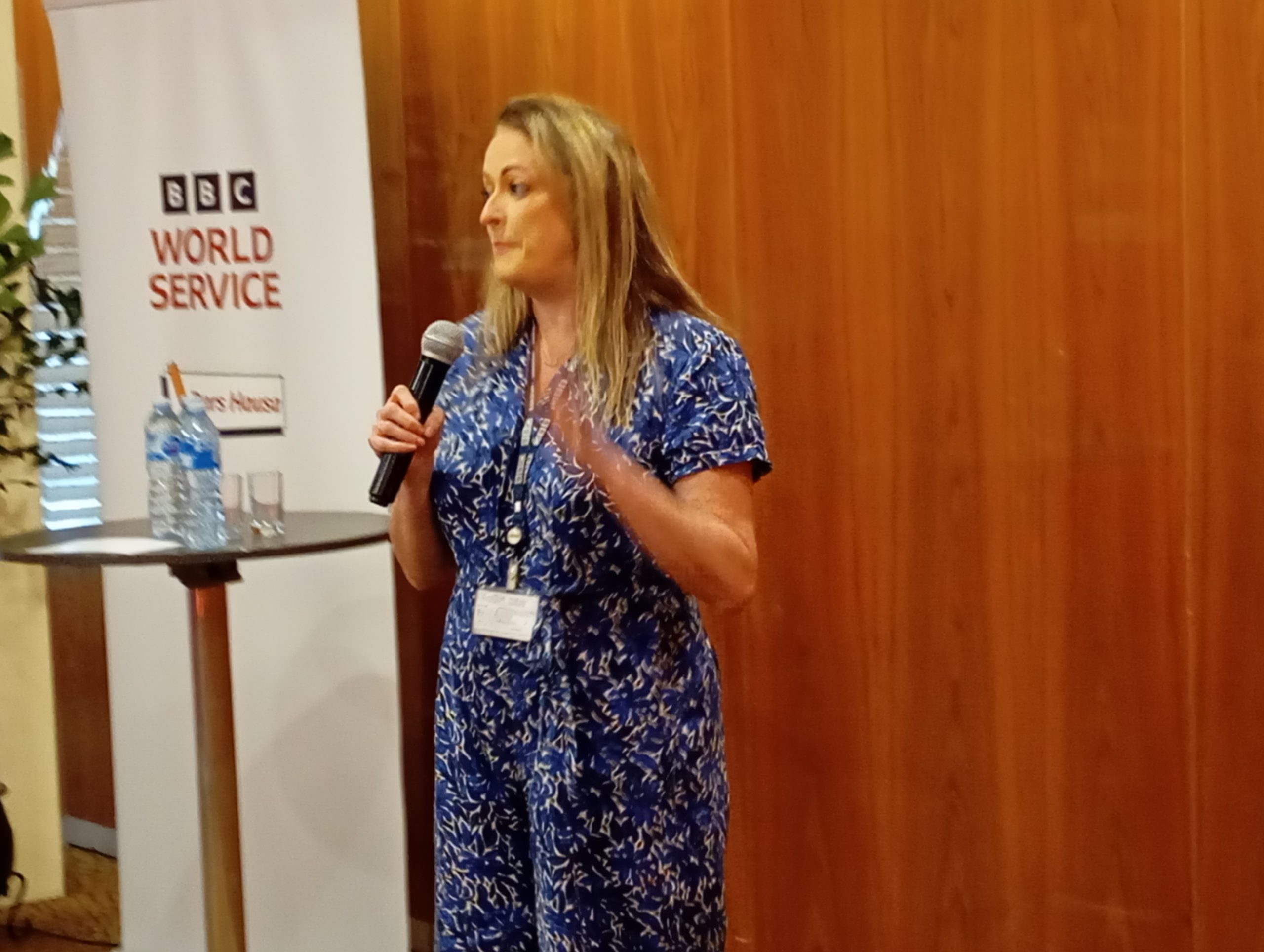
The British Broadcasting Corporation, BBC, has rolled out a Hausa-language educational programme, Dars Hausa, aimed at reaching millions of children in Nigeria, especially those unable to access formal education because of insecurity, poverty and other socio-economic challenges.
Speaking at the launch on Tuesday in Abuja, BBC Global Director, Fiona Crack, said the initiative, which uses television, radio and digital platforms to deliver educational content, was designed to provide children with opportunities to continue learning outside conventional classrooms.
Crack said the programme was inspired by the need to reach children whose access to education had been disrupted by conflict, displacement and restrictive policies.
She explained that Dars began in 2023 following the Taliban’s decision to prevent girls above the age of 11 from attending school in Afghanistan, prompting the BBC to explore how its educational resources could support affected children.
She said the corporation initially adapted its existing educational materials in mathematics, English, science and geography, working with Afghan educators to develop lessons that addressed the needs of girls excluded from formal schooling.
According to her, the initiative subsequently expanded to include mental health, first aid and media literacy, recognising that children’s educational needs extended beyond conventional academic subjects.
“We didn’t want to stop just at those core school subjects. We did things around mental health, first aid and media literacy. We thought about education beyond its traditional school-based boundaries,” she said.
Crack stressed that the programme was not intended to replace formal education but to provide an alternative learning opportunity for children who could not attend school.
“It wasn’t ever going to replace a proper school education. It never can. But it could support their learning at a time that they needed it most,” she said.
She disclosed that the programme was initially produced in Pashto and Dari, the two major languages used in Afghanistan, before expanding to Arabic in 2025 to support children affected by conflicts and displacement in Sudan, Yemen and Gaza.
The BBC director said the initiative had produced about 700 lessons across its different editions, attracting 14.5 million views on social media alone.
She emphasised that the programme’s delivery strategy went beyond digital platforms such as YouTube, TikTok and Instagram to include television and radio, particularly in communities where internet access remained limited.
On the Nigerian edition, Crack said the BBC was developing content tailored to the country’s educational realities and the specific needs of children, adding that insecurity, poverty and other socio-economic factors had continued to deny many children access to schooling.
She called for partnerships and wider public support to ensure the programme reached as many Nigerian children as possible.
“We must, if we’re going to do it, find every way we possibly can of reaching a child that can’t go to school,” she said.
“Education is a fundamental right, and we’re really thrilled to be able to bring a new version to Nigeria. Our main objective is to get it to as many children as we can,” she added.
Also speaking, BBC Regional Director for Africa, Juliet Njeri, reaffirmed the corporation’s commitment to expanding its reach and providing trusted journalism and public-interest content across the continent.
She disclosed that the BBC reached approximately 121 million people weekly across Africa, describing the continent as its largest audience region globally.
Njeri said Nigeria remained the BBC’s third-largest country market worldwide, expressing the corporation’s determination to deepen its engagement with Nigerian audiences.
She explained that the BBC’s mission went beyond audience growth, stressing that its journalism was designed to inform, enrich and empower people while helping them understand developments in their societies and the wider world.
“As a public service organisation, the BBC does not benefit from financial rewards or profits. I want to grow our audiences because I truly believe in the value of the BBC’s journalism to enlighten, enrich and embolden people, make a difference in their lives and help them make sense of the world around them,” she said.
Njeri added that the BBC remained committed to telling Africa’s stories to Africans and international audiences, promoting the continent’s diversity while holding those in positions of authority accountable.
She urged stakeholders and audiences to support the corporation’s efforts to expand access to credible information and educational content across Africa.
Speaking during an interview with our correspondent, the Team Manager and Senior Journalist leading the Dars Hausa project, Awwal Ahmad, said the project targets children aged 13 to 16 in Northern Nigeria, where more than 19 million children are reportedly out of school.
He said the initiative would use Hausa-language educational content to bridge learning gaps and make learning resources accessible to children.
Amad explained that Dars, derived from the Hausa word Darasi, meaning lessons, would provide educational programmes covering English, Mathematics and Science, alongside mental health education and inspirational stories.
He said the initiative was designed to address the shortage of educational content in indigenous languages and support efforts to tackle the region’s education challenges.
According to him, delivering lessons in Hausa would enable more children to access educational resources in a language they understand.
Ahmad, who previously worked with Radio France Internationale, RFI, before joining the BBC, said the project combined his experience in journalism, digital media and passion for education.
He expressed optimism that Dars Hausa would become a sustainable initiative, citing a similar BBC educational project in Afghanistan, which has attracted more than 14.5 million viewers.
He said the ambition was to expand the programme’s reach and make a lasting contribution to literacy and education in Northern Nigeria.