By Shu’aibu Usman Leman
Nigerian politics has never been short of godfathers. What is increasingly disturbing, however, is the emergence of a political culture in which godfatherism appears to be extending beyond the corridors of power and into the privacy of the bedroom.
For generations, an unwritten understanding governed political relationships in this country and however bitter political disagreements became, certain boundaries were never meant to be crossed. Political adversaries could fight over party leadership, government appointments, public resources and control of political structures, but the family was supposed to remain out of bounds. Politics was politics; family was family. Unfortunately, that distinction appears to be disappearing, and nowhere is this troubling development attracting greater attention than in Kano State.
What we are witnessing raises a fundamental question about the character of our politics. Has the struggle for political control become so consuming that even the sanctity of family relationships is no longer beyond its reach? Godfatherism, in its original conception, was not necessarily a bad thing. Politics, like other spheres of public life, benefits from mentorship.
Experienced politicians have a legitimate role to play in identifying promising individuals, nurturing their ambitions and providing the guidance necessary for leadership. A political mentor offers experience, opens doors and provides counsel. In return, the protégé is expected to demonstrate loyalty, gratitude and respect. There is nothing inherently objectionable about such an arrangement.
The problem begins when mentorship becomes ownership. Across Nigeria, political godfatherism has gradually evolved into a system of control in which a benefactor expects to determine virtually everything about the political life of a protégé.
From securing party tickets and financing election campaigns to influencing cabinet appointments and determining the direction of government, the godfather increasingly assumes the role of an unelected authority behind an elected administration.
Under this arrangement, political support is no longer regarded as an investment in democratic leadership but as a debt that must be repaid through permanent obedience. The beneficiary is expected not merely to remember where he came from but to remain perpetually answerable to the person who facilitated his political emergence.
The consequences are predictable. Sooner or later, an elected leader will seek to exercise the independence of the office to which the electorate has entrusted him. When that happens, the relationship between benefactor and beneficiary can deteriorate rapidly.
What should ordinarily be a disagreement over political direction becomes a struggle over personal authority, loyalty and control. The mentor feels betrayed, while the protégé feels suffocated. Both begin to interpret political differences through the prism of personal grievances. That is where godfatherism becomes dangerous, particularly when the disagreement is no longer confined to political platforms and party structures.
The unfolding political situation in Kano presents a particularly troubling dimension of this phenomenon because the relationship between the principal actors extends beyond politics.
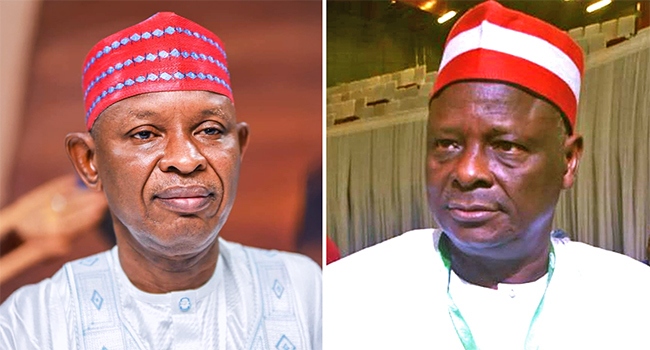
Governor Abba Kabir Yusuf’s political rise is closely associated with the influence, mentorship and political machinery of Senator Rabiu Musa Kwankwaso, the leader of the Kwankwasiyya political movement. Their relationship, however, is not merely that of a political benefactor and his protégé. It is also a family relationship, as the Governor’s wife is Kwankwaso’s niece. This makes the political disagreement between the two men especially sensitive and places the situation in a category that goes beyond the familiar story of a godfather falling out with his political godson.
In Hausa society, the concept of zumunci carries profound cultural and moral significance. It represents kinship, family bonds, mutual obligations and the enduring responsibilities that connect relatives. It is a relationship that ought to transcend temporary political interests and partisan disagreements. Family ties are traditionally regarded as enduring obligations, even when disagreements arise.
This is precisely why developments surrounding the Kano political crisis deserve more than the usual partisan commentary. The intersection of political disagreement and family relationships raises serious questions about the extent to which political ambition should be allowed to influence private lives.
Reports and public speculation suggesting that the political disagreement between the two men has extended into their family relationship have generated considerable concern.
We must, of course, tread carefully here. Marriage is a private affair, and nobody outside the family can claim to know everything happening behind closed doors. Nor should a woman’s dignity, privacy or marital circumstances become material for political propaganda. It would be irresponsible to present speculation as established fact or to make pronouncements about the state of a marriage without reliable evidence.
Nevertheless, the broader concern cannot be dismissed. If political disagreements are allowed to influence family relationships, what remains of the traditional understanding that certain aspects of human life should be protected from the excesses of political ambition?
There must be a clear distinction between political disagreement and personal intrusion, irrespective of who holds political power or who financed whose political journey.
The Kano experience offers an opportunity to reflect on three principles that should guide political relationships across the country. First, the family must remain sacrosanct. No political disagreement should turn a wife, husband, daughter, niece, in-law or any other family member into an instrument of political pressure. Marriage is a personal and sacred commitment. It cannot be treated as an extension of a political alliance, nor should family relationships be made conditional upon political obedience.
Political disagreements may come and go, alliances may collapse and former allies may become opponents, but the dignity and privacy of innocent family members must remain protected.
Second, public office belongs to the people, not the godfather. An elected governor derives his constitutional authority from the law and the mandate of the electorate. He does not hold office in trust for the individual who sponsored his political ambition. This does not diminish the importance of gratitude, consultation or respect for political mentors. Indeed, a responsible leader should never forget those who supported his journey. However, gratitude must not become an instrument of political subjugation.
A governor’s ultimate responsibility is to the Constitution, the electorate and the public interest. Where the expectations of a political benefactor conflict with the demands of good governance, the public interest must prevail. No political godfather, however influential, can legitimately claim a superior mandate over the people.
Third, personal dignity and political independence must be non-negotiable. A protégé is not a political servant, and a mentor is not a permanent political proprietor. The true measure of political maturity is not the ability to obey without question but the courage to disagree respectfully when circumstances demand it. A leader who cannot look his mentor in the eye and say, “No, Sir, I believe this is wrong,” is not necessarily demonstrating loyalty. He may simply be surrendering his judgement.
Democracy requires independent-minded leaders, not political dependants who must seek permission before exercising the responsibilities entrusted to them by the electorate. When these boundaries disappear, godfatherism ceases to be mentorship and becomes political domination.
It would, however, be misleading to suggest that Kano is the only state experiencing the consequences of godfatherism.
From Lagos to Rivers, Kaduna and other parts of the country, Nigerian politics is littered with stories of former political allies who eventually became bitter adversaries. Political benefactors and their protégés have fallen out over party tickets, government appointments, contracts, succession arrangements and the control of political structures.
Such disagreements are not necessarily unusual in a competitive democracy. Political alliances are often temporary, interests change and disagreements are inevitable. What makes the Kano situation particularly sensitive is the intersection of political conflict and family relationships. It brings into focus a dimension of godfatherism that deserves greater national attention, the possibility that political influence, when left unchecked, can undermine relationships that should ordinarily be protected from partisan considerations.
The danger is not simply that two prominent politicians may no longer see eye to eye. The deeper concern is the precedent such developments could create for younger politicians who are watching. What lesson are they expected to learn? That political support comes with an obligation to surrender personal judgement? That family relationships must accommodate political calculations?
Or that an elected office-holder must remain permanently indebted to whoever facilitated his emergence? These are dangerous lessons for a country still struggling to build strong democratic institutions. A democracy cannot flourish where political loyalty is valued above constitutional responsibility, where personal relationships are subordinated to political calculations, and where the interests of powerful patrons take precedence over the collective interests of citizens.
The answer is not to abolish political mentorship. That would be neither realistic nor desirable. Every generation needs experienced political leaders to provide guidance, share institutional knowledge and help nurture emerging talents. What Nigeria must dismantle is the culture of political dependency that makes elected leaders vulnerable to the dictates of individual benefactors.
This requires deliberate institutional reforms. Political party financing must become more transparent, internal party democracy must be strengthened, and candidate selection should reflect credible primaries and the genuine choices of party members rather than the preferences of a single powerful individual.
Equally important, elected public officials must build independent political credibility through performance, accountability and direct engagement with the electorate. A governor who derives his political survival entirely from the goodwill of a godfather will always struggle to establish an independent mandate. But a governor who earns public confidence through responsible leadership is better positioned to make decisions in the public interest without constantly looking over his shoulder.
Political mentors, for their part, must understand that the ultimate reward for nurturing a younger politician is not permanent control over that person’s political decisions. It is the satisfaction of seeing someone they helped emerge become an independent, responsible and successful leader.
The true measure of mentorship is not how long a protégé remains under the control of his benefactor but how well he performs when given the freedom to lead. A godfather who cannot tolerate the political independence of his protégé may have misunderstood the very essence of mentorship. Similarly, a protégé must understand that independence does not mean ingratitude, just as political disagreement does not justify disrespect. Both sides must appreciate that political relationships, like every other human relationship, require mutual respect and clearly defined boundaries.
There is nothing inherently wrong with political gratitude. There is also nothing wrong with respecting those who opened doors, provided support and made sacrifices along the journey to public office. But gratitude has limits, loyalty has boundaries, and political influence must never become a licence to intrude into the private lives of others.
A godfather may help a protégé win an election, but he cannot own the mandate of the electorate. He may offer advice, but he cannot demand unquestioning obedience. He may withdraw political support, but he has no legitimate claim over the protégé’s marriage or family relationships.
Equally, an elected leader must recognise that the freedom to govern independently comes with the responsibility to act in the best interests of the people.
Nigerian politics must learn to respect boundaries. The bedroom must not become an extension of the Government House. Marriage must not become collateral damage in a political struggle, and family ties must not be held hostage to the shifting fortunes of political alliances.
Political disagreements should be settled through political processes, not by dragging innocent family members into the battlefield. The strength of a political leader should be measured by his ability to manage disagreements without destroying relationships, while the character of a political mentor should be judged by his willingness to allow those he has nurtured to grow beyond his shadow.
A godfather may open the door to political power, but he must never claim ownership of the person who walks through it. That is the line Nigerian politics must learn not to cross. Kano is presenting the country with an important test of political maturity, personal dignity and democratic responsibility. How its political actors navigate this delicate situation may well provide a lesson for the rest of the country. The question that should trouble every Nigerian is simple. When a godfather demands allegiance, influence over public office and, ultimately, a say in family affairs, where does the protégé finally draw the line? More importantly, where does society insist that the line must be drawn?
_Leman is a former National Secretary, Nigeria Union of Journalists (NUJ).