Two years into his administration, Governor Prince Bassey Otu of Cross River State has embarked on a strategic move to reposition a state that had, by many accounts, lost its place in Nigeria’s conversation on development.
Without the fanfare of white elephant projects, the Otu administration has focused on a recovery strategy aimed at restoring functionality, reclaiming lost assets, and laying the groundwork for sustainable development.
Cross River State, celebrated for its tourism potentials and beautiful natural environment, had in recent years suffered visible decline, as crumbling infrastructure, stalled government projects, and environmental degradation contributed to a general perception of stagnation.
According to Cross River State Commissioner for Information, Dr. Erasmus Ekpang, the administration inherited a state that was laughed at and talked about in a negative light.
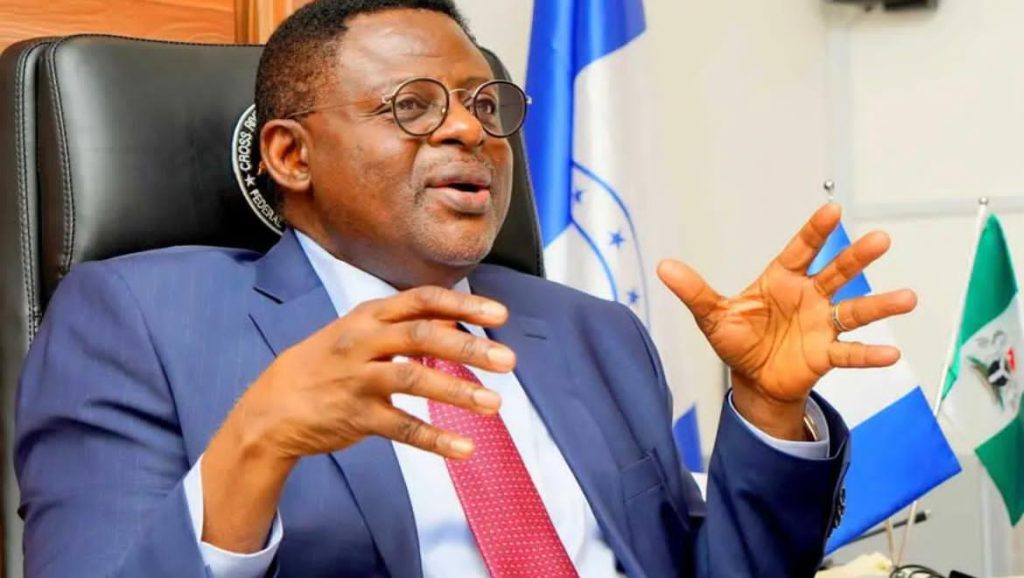
“We came to rebuild Cross River State and return it to its former glory. It wasn’t about discarding the past, but recovering what was lost and strengthening what we have,” Ekpang said during a recent interaction with Cross River State Journalists Forum, CROSSJOF, in Abuja.
Strategic Continuity and Asset Recovery
Rather than initiate a slew of new projects, Governor Otu opted for a more strategic approach, focusing on completing and reviving existing ones, particularly those that had consumed large sums of taxpayers’ money but failed to deliver expected returns.
One of the first moves was to recover state-owned assets such as Tinapa Business Resort, which had been taken over by the Asset Management Corporation of Nigeria, AMCON, and the Obudu Cattle Ranch, which had reportedly changed hands outside the public glare.
Also on the governor’s radar is the Deep Sea Port project, a long-proposed maritime hub that remains largely on paper.
According to Ekpang, by revisiting and recalibrating these legacy projects, the administration seeks to harness their economic potential and reestablish Cross River as an investment destination.
“The Governor is not in office to start afresh with abandoned dreams. He’s here to make those past efforts count,” the commissioner said.
Governor Otu’s commitment to continuity is perhaps most evident in his aggressive asset recovery programme.
In a strategic land recovery move, the government negotiated the buyout of a failed land concession to a private firm, reclaiming 18,000 hectares for potential agribusiness investment. The same land has now been leased to PRC Plantation Ltd, a subsidiary of Wilmar, which employs over 5,000 Cross Riverians.
Also recovered are official lodges for the Speaker and Deputy Governor, once privatized, now fully renovated and reinstated for government use.
Economic Resilience Through Agriculture
According to the commissioner, a cornerstone of the administration’s policy thrust is agriculture. Recognizing the state’s vast arable land and the urgent need for economic diversification, the government launched a comprehensive soil mapping project to assess the fertility and crop suitability of different regions across the state.
He noted that the initiative is designed to boost food production, promote agribusiness, and reduce dependency on federal allocations, adding that the ultimate goal is not just food sufficiency, but export-oriented agriculture that can earn revenue and create jobs.
The administration is also working to provide raw materials for agro-processing plants, such as the cocoa processing facility in Ikom established by a previous administration. By connecting agricultural output to industrial use, the government aims to activate value chains that can strengthen rural economies and reduce poverty.
While noting that Agriculture remains central to the administration’s economic agenda, he said with the completion of a soil mapping exercise to guide crop cultivation and expansion of existing processing plants like the cocoa factory in Ikom, Cross River is aiming for food self-sufficiency and export viability.
Internally Generated Revenue, IGR, has significantly improved, growing from N20 billion in 2022 to over N40 billion in 2024, a result of plugging leakages, automating payment systems, and fostering taxpayer confidence. The state is also partnering with Afreximbank to finance the Deep Seaport project, with a $3.5 billion facility on the horizon.
Infrastructure and Governance Renewal
Another major focus has been on improving the physical state of government institutions. Government buildings, including the ministries and the governor’s office itself, have undergone substantial renovation. Until recently, Governor Otu operated from a temporary office for nearly two years while the official Government House was being refurbished.
Today, the governor occupies a revamped, fully functional office designed to meet the administrative and ceremonial needs of the state’s top leadership.
“This wasn’t just about convenience; it was about restoring dignity to governance. A befitting governor’s office sends a strong message about the seriousness of leadership,” Ekpang said.
A Gradual But Firm Turnaround
In contrast to high stakes political branding, the Otu administration has quietly pursued its objectives. There have been consultative forums such as economic and policy roundtables to engage stakeholders and draw in investors.
The government is also pushing internal reforms to align ministries and agencies with its broader goals of accountability, service delivery, and long-term planning.
Although it is too early to fully assess the long-term impact of these interventions, but the signs of policy consistency, asset recovery, and administrative reorganization are seen as positive indicators.
Healthcare
One of the administration’s early wins is in healthcare delivery. Two new oxygen plants have been established in general hospitals, while over 100 primary healthcare centres are undergoing renovations across the state. In Ikom, a new general hospital is being built from scratch.
Recognizing the terrain challenges in reaching remote communities, the state has introduced drone technology for drug delivery. Additionally, the government has upscaled nursing schools in Itigidi and Ogoja and hired 65 doctors and 135 nurses to boost capacity.
A key partnership with an international organization has equipped health centres with laptops and digital tools for efficient data collection and management, signaling a move toward a more tech-integrated healthcare system.
Aviation
To tackle the age-old challenge of flight cancellations and poor air connectivity in Calabar, the Otu administration is continuing work on the Obudu Cargo Airport, raising the completion rate from 60 per cent to nearly 80 per cent. The runway has been extended, and the tarmac is in place.
While larger aircraft under the Cally Air brand struggled to justify operations due to low traffic volume, the state is now procuring four smaller CRJ-900 aircraft, two have already been acquired, to improve efficiency and revenue generation. The process of regulatory approval and documentation is ongoing.
This recalibrated aviation plan complements ongoing renovations at the German Hospital in Obudu and the broader effort to revive the Obudu Cattle Ranch as a tourism and economic hub.
Security: a Strategic, Technology-enabled Approach
Under the leadership of retired military and police experts, Cross River’s security architecture has been overhauled. Drones are deployed to monitor hotspots, resulting in the recovery of arms and arrests of criminal gangs in previously unsafe zones like Biase and Akamkpa.
The government has invested in 100 new security vehicles under the “Operation No Flaw” initiative, empowering joint task forces across the state.
Education and Digital Governance
The education sector has seen massive renovation of primary schools under SUBEB, automation of student results, and payment of WAEC fees for students all aimed at increasing access and transparency. The state’s digital footprint is growing, with tax payments and other government services increasingly available online.
The government’s prompt salary payments, increase in maternity leave to six months, and digital integration of civil service functions reflect an effort to modernize public service and foster trust in governance.
Social Welfare and Pension Reform
Pensions, long overdue since 2014, are being cleared in batches with a N10 billion approval by the governor. Pregnant workers now receive extended leave, while staff welfare has been prioritized. Despite lean federal allocations, the government was among the first to pay the new N70,000 minimum wage starting December 2024.
Calabar Carnival and Tourism Boost
Governor Otu has revived the state’s signature tourism brand, Carnival Calabar, Africa’s biggest street party. With early planning, route upgrades, and hospitality incentives, including N20 million grants to hotels for renovations, the 2025 edition is set to boost the local economy and tourism visibility.
Ekpang also announced that the mountain race and other cultural events are being reinstated as part of a broader effort to reposition the state as a global destination.
Roads and Electricity
Infrastructure renewal is ongoing, with over 60 kilometers of roads completed and another 120 km under construction across Calabar South, Boki, and other LGAs. Concrete roads, erosion control in Yellow Duke, solar street lighting, and new transformers are part of the effort to restore infrastructure in neglected communities.
BUILDING A CULTURE OF CONTINUITY
One of the most striking features of the Otu administration is its emphasis on continuity. Unlike past transitions marked by abandoned projects, Governor Otu has chosen to complete what was started, respecting the investments made and the hopes tied to them.
With strengthened institutions, expanding infrastructure, and a growing sense of public trust, Cross River appears to be regaining its footing.
As Ekpang puts it: “It’s not about new projects; it’s about finishing what we started and giving people a reason to believe again.”