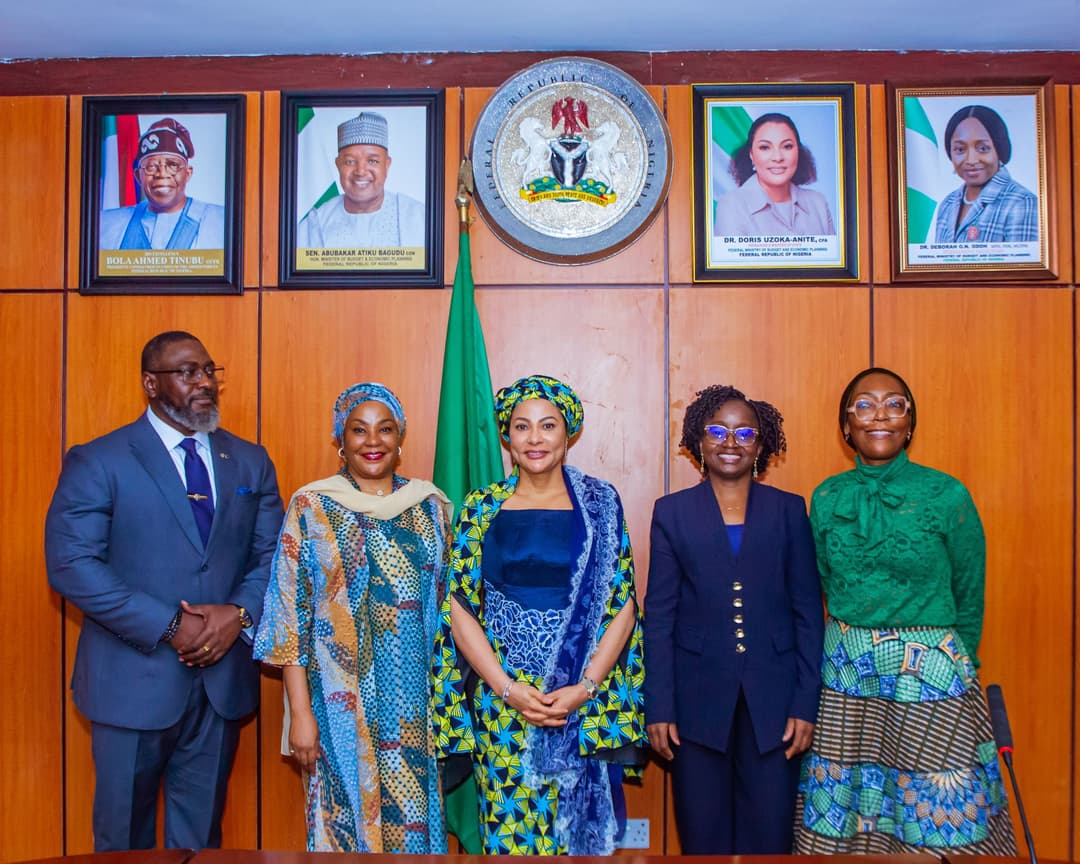
The Nigerian Economic Summit Group and the Federal Government have called for actionable solutions to translate ongoing economic reforms into productive investment, job creation and improved living standards for Nigerians.
The call was made at a World Press Conference organised by the Federal Ministry of Budget and Economic Planning and the NESG on Wednesday, October 7, ahead of the 32nd Nigerian Economic Summit, scheduled for October 26 and 27 in Abuja.
The summit, themed “Growth that Works: Delivering Jobs, Productivity and Shared Prosperity,” is expected to bring together government officials, business leaders, development partners, academics and other stakeholders to develop practical strategies for building a more productive, competitive and inclusive Nigerian economy.
The Minister of State for Budget and Economic Planning, Dr Doris Uzoka-Anite, said the summit must go beyond identifying the country’s economic challenges to building consensus around practical solutions that can deliver measurable improvements in citizens’ welfare.
She noted that the success of the summit should be assessed by how effectively its recommendations translate into tangible economic outcomes and improved living standards.
Uzoka-Anite highlighted government initiatives aligned with recommendations from the 31st Nigerian Economic Summit, including the National Development Plan 2026–2030, results-based monitoring under HOPE-GOV, the Nigeria Industrial Policy and efforts to develop bankable public-private partnership projects across critical sectors.
Also speaking, the Chief Executive Officer of the NESG, Dr Tayo Aduloju, acknowledged that ongoing reforms, including fuel subsidy removal, exchange-rate unification, fiscal restructuring and bank recapitalisation, had supported macroeconomic stabilisation and strengthened investor confidence.
However, he stressed that economic stability alone would not be sufficient unless it translated into productive investment, higher productivity and employment opportunities on a significant scale.
Aduloju said Nigeria’s priority should be to ensure that economic growth creates jobs and expands opportunities for businesses and citizens.
He identified high production costs, infrastructure deficits, low productivity and insecurity as persistent obstacles to economic growth.
Despite these challenges, the NESG chief executive identified Nigeria’s large domestic market, natural resources, youthful population and strategic position within the African Continental Free Trade Area as opportunities to attract investment, strengthen competitiveness and expand production.
The 32nd Nigerian Economic Summit will focus on three strategic pillars: productivity, human capital and resilience.
These will be explored through five thematic areas: Work Nigeria, Produce Nigeria, Invest Nigeria, Scale Nigeria and Secure Nigeria.
The discussions are expected to address productive employment, industrialisation, value addition, investment mobilisation, subnational economic development and the relationship between security and economic resilience.
According to Aduloju, the summit will prioritise practical recommendations, clearly defined stakeholder responsibilities and measurable outcomes, with emphasis on identifying what needs to change, who is responsible for implementation and how progress will be evaluated.
He also called on the media and other stakeholders to sustain scrutiny of commitments made at the summit, noting that its impact should be reflected in better policies, stronger businesses and improved livelihoods.
The NESG reaffirmed its commitment to promoting constructive public-private dialogue and evidence-based policy solutions to strengthen Nigeria’s competitiveness and advance inclusive and sustainable economic growth.
The 32nd Nigerian Economic Summit is scheduled to hold on October 26 and 27, 2026, at the Transcorp Hilton in Abuja.