As the race for the 2023 presidential election draws closer, a lot is happening in the Nigerian political ecosystem as the battle for candidacies within the two major political parties intensifies.
It was indeed an exciting weekend for political watchers, with a lot of permutations as to those likely to emerge as presidential candidates of the ruling All Progressives Congress, APC, and main opposition, Peoples Democratic Party, PDP.
The emergence of former Vice President Abubakar Atiku as candidate of the PDP, solves part of the riddle. The coming days will, however, be tough for the APC, as all eyes are now on the party to see who emerges as its candidate.
Recall that hours to the commencement of the presidential primaries of the PDP, the Independent National Electoral Commission, INEC, announced the extension of the deadline for party primaries and nomination of candidates by an additional six days. INEC claimed that the extension was to give parties time to compile the list and personal particulars of their nominated candidates before uploading same to the INEC Candidates Nomination Portal from 10 – 17 June, 2022.
The APC is however banking on the extension to analyze and restrategise on how to face the presidential election with a political heavyweight like Atiku as a contender.
A section of the APC believes that only another northern candidate can pull the kind of weight that an Atiku will command come 2023, therefore, are bidding in favour of a northern candidate such as the current Senate president Ahmed Lawan.
The other group believes that for fairness sake, the ticket should go to a southern candidate, being that President Muhammadu Buhari, a northerner, will be completing his eight years in office in less than a year, are garnering support for Vice President Yemi Osinbajo.
There is also the Goodluck Jonathan conundrum in the mix as it cannot completely be disregarded owing to the possibility his emergence as the flagbearer of the APC given recent nocturnal meetings between the ex-president and some decision makers within the ruling party.
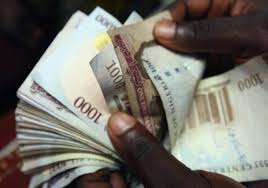
Since the primaries of the parties at state and National Assembly levels, humongous sums of have been mentioned and seen exchanging hands between aspirants and delegates.
In the case of the APC, its decision to postpone its primaries from May 29 to June 6, cost the aspirants more as build ups to elections in Nigeria are usually when monies exchange hands.
The aspirants will need that last minute assurances from delegates that their votes are safely secured.
The last couple of days leading to the presidential primary of the PDP, saw massive monetization of the process whereby aspirants solicited for delegates support by monetary inducements.
Aspirants came prepared with their war chests to satisfy the desires of priced delegates willing to cast their votes to the highest bidder.
It was reported that some delegates at the primaries went home with as much as $35,000 each, which is over N21million going by present parallel exchange rate of over N610/$.
The situation was so bad that the EFCC had to setup base at the venue of the PDP presidential primaries to curtail some form of last minute inducement.
It is reported that the humongous scale of the delegate procurement process is what led to the withdrawal and resignation of former governor of Anambra state, Mr. Peter Obi, from the presidential race of the PDP.
This is not just restricted to the presidential primaries, but also as witnessed in most states primaries where delegates were massively ‘mobilised’ for between N2million to N4million per delegate.
In fact, a viral video online captures the moment an aspirant from Kebbi state was doling out bags of money to local government chairmen of the state for onward distribution to delegates from their local government areas.
The level of vote-buying and inducements witnessed in the recent primaries across parties is appalling and highly condemnable.
The electoral umpire and indeed all financial crime fighting agencies like the EFCC and ICPC have a huge role to play in ensuring that elections in Nigeria do not become mainly transactional.
The country must also do a lot more in prosecuting anyone found engaging in vote buying or selling. The N500,000 fine prescribed in the 2022 Electoral Act is just a slap on the wrist of delegates who may have received millions from aspirants.
While we struggle to enshrine the tenants of democracy in our political lives, Nigerians must resist the urge to drive the country into “lootocracy” or other forms of ideologies that are abhorrent.
We call on the political parties to put in place internal party mechanism to curtail such unwholesome act, and also on INEC to prosecute candidates and or aspirants found to have contravened any part of the Electoral Act.