At least, seven major disasters were said to have rocked the nation’s capital in the last three weeks, resulting in the loss of properties worth billions of naira.
According to the Federal Capital Territory Emergency Management Department, FEMD, the series of incidents occurred between the 24th June to 13th July, 2024.
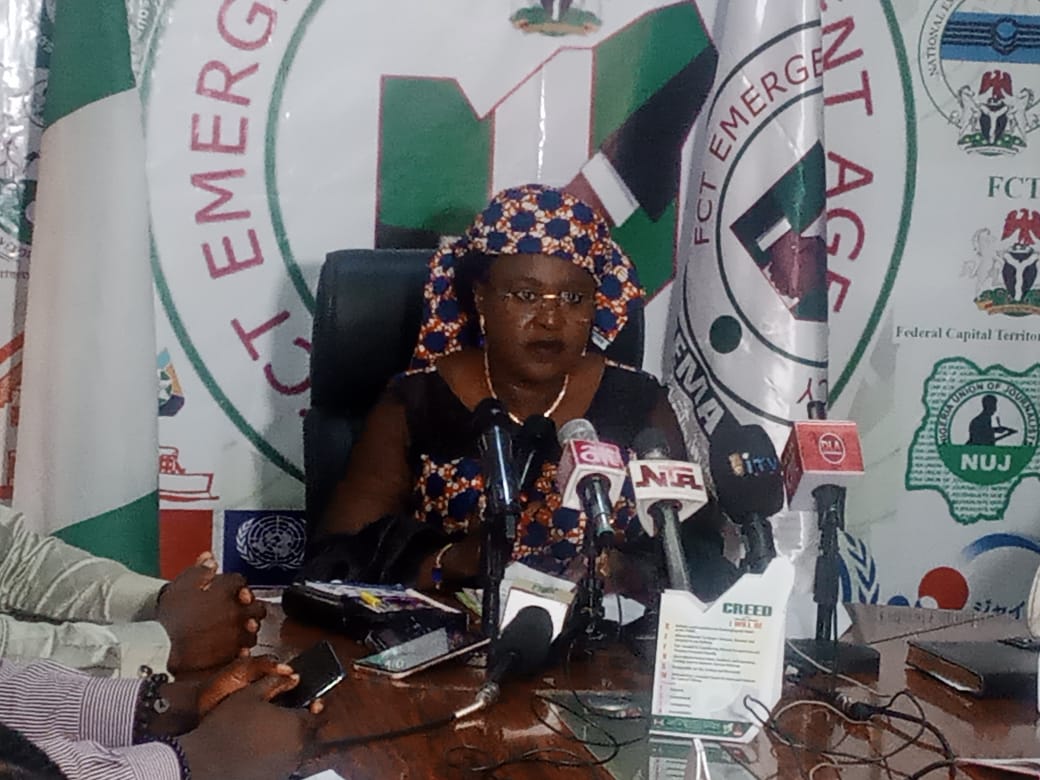
The Acting director-general of FEMD, Florence Wenegieme, said the department responded to the June 24th flooding at Trademore Estate Lugbe, the fire outbreak at popular Karu market on the 28th of June when 800 shops were razed by fire.
Wenegieme, at a press conference on Wednesday, said the department also responded to emergency calls of two separate building collapse at Guzape and at the Prince and Princess Estate, both of which occurred on the 29th of June.
She said on the 8th of July, the FEMD had to rescue a person who had contemplated taking his life by jumping of a mast at Katampe Hills.
Again, on the 13th of July, the FEMD was called to the scene of a building collapse in Kubwa Phase II, and another building collapse at Nkwere Street, Garki.
Though investigations are still ongoing, the FEMD identified indiscriminate building on water ways and flood plains, clogging of water channels, non-adherence to fire safety code, use of substandard electrical materials, illegal electricity connection, storage of inflammable substances in markets, and high use of combustible materials in building construction, as leading causes of the incidents that happened in the last 20 days.
Others, she said includes non-adherence to the National Building code, activities of quacks in building construction, use of sub-standard construction materials, violation of building approval through additional loads, building or carrying out maintenance work without regulatory approvals, non-compliance to the Land Use Act, as well as non-conduct of environmental impact assessment before building construction.
To make the FCT one of the safest capital cities, the FEMD stressed the need for an urgent need to strengthen collective action on some outlined measures.
Wenegieme therefore called for a review of the existing laws in the building industry to tackle the rising trend of building collapse, while also advocating for stiffer punishment for violators, especially when lives are lost.
“There is the need for building regulatory agencies and departments to step up quality assurance in terms of use of standard materials in building construction from start to finish.
“Developers should submit an Environmental Impact Assessment report of the building site together with building plan, to enable proper assessment of the technical specifications side by side the peculiarities of the location to avoid building collapse.
“There is the need to involve professional bodies such as the Nigerian Institute of Architects, Nigerian Institution of Quantity Surveyors, Nigerian Institute of Roads and Building Infrastructure, Nigerian Society of Structural Engineers in building approval and inspection.
“There is the need to carry out integrity test on all storey buildings within the location of a collapsed building, and all developers should provide insurance cover to workers on site throughout the duration of the project.”
She further suggested that the Department of Development Control should make it mandatory that developers submit the professional certification of Site Engineers as part of securing building approval so as to eliminate the activities of quacks and also make the developers more accountable when building collapse incidents occur.
“Developers should submit building plan with clear specifications of construction materials to be used- including electrical fittings and other necessary facilities for the purpose of Quality Assurance compliance monitoring.
“All buildings should be inspected by relevant authorities on completion to see if they meet minimum safety standards before they are certified for human habitation or whatever purpose they are meant for.”