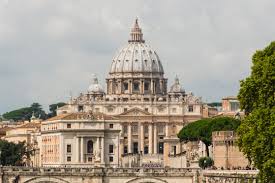
Given the declining nature of Pope Francis’ health, there has been speculation about a potential resignation, though the Vatican has assured the public that there is no cause for alarm. While the Pope remains in office, discussions about papal succession have resurfaced, prompting reflection on the canonical and historical processes governing the transition of papal authority.
The Code of Canon Law on Papal Succession
The Code of Canon Law provides specific guidelines on the succession of the Pope in Canons 331–335, particularly regarding the vacancy of the Apostolic See and the election of a new Pope. Below are the key points:
- The Role of the Pope (Canon 331)
- The Pope (Roman Pontiff) succeeds St. Peter as the head of the Catholic Church.
- He has supreme, full, immediate, and universal authority over the Church.
- The Vacancy of the Apostolic See (Canon 332 §2, Canon 335)
The papal office becomes vacant in two cases: - Death of the Pope
- Resignation of the Pope (Canon 332 §2), which must be:
- Made freely.
- Properly manifested.
- Not accepted by anyone (since the Pope has no superior).
- Example: Pope Benedict XVI’s resignation in 2013.
During the vacancy, the College of Cardinals administers the Church but cannot make major decisions (Canon 335).
- The Election of a New Pope (Canon 349-359)
- The Pope is elected by the College of Cardinals, who meet in a Conclave in the Sistine Chapel.
- The election follows the rules set in the Apostolic Constitution “Universi Dominici Gregis” (1996), established by Pope John Paul II.
- A new Pope is chosen by a two-thirds majority unless the election process is modified by the Pope before his death or resignation.
- Papal Acceptance and Consecration (Canon 332 §1)
- Once elected, the person becomes Pope immediately upon acceptance.
- If not already a bishop, he must be consecrated immediately (Canon 355).
Who Ordains a New Pope?
A newly elected Pope does not require ordination if he is already a bishop. However, if the elected Pope is not yet a bishop, he must be consecrated immediately (Canon 355). In this case, the Dean of the College of Cardinals (or the next senior cardinal) ordains him.
The last Pope elected who was not a bishop was Pope Gregory XVI in 1831.
How Is a New Pope Announced?
Once a Pope is elected in the Conclave, the Cardinal Protodeacon (Senior Deacon of the College of Cardinals) makes the official announcement from the central balcony of St. Peter’s Basilica.
Traditional Announcement Formula:
“Annuntio vobis gaudium magnum: Habemus Papam!”
(“I announce to you a great joy: We have a Pope!”)
The new Pope then appears on the balcony to give his first Urbi et Orbi (“To the City and to the World”) blessing.
Who Announces the Pope’s Death?
The Camerlengo (Cardinal Chamberlain) is responsible for officially verifying and announcing the Pope’s death.
Canonical & Historical Process:
- The Camerlengo confirms the death and declares: “The Pope is truly dead.”
- He then seals the Papal Apartments and destroys the Fisherman’s Ring, marking the end of the Pope’s reign.
- The Dean of the College of Cardinals informs the clergy and faithful.
How Many Days Does It Take to Bury a Pope?
A Pope is normally buried between the 4th and 6th day after death, but no later than the 9th day (Universi Dominici Gregis, 1996).
Burial Practices:
- The body is placed in three coffins (wood, lead, and wood) before interment in St. Peter’s Basilica or another chosen site.
- A 9-day mourning period (“Novemdiales”) follows the funeral.
Examples:
- Pope John Paul II (2005): Died on April 2, buried on April 8 (6 days later).
- Pope Benedict XVI (2022): Died on December 31, buried on January 5 (5 days later).