By Ipole AMAJAMA
For decades, Africa’s relationship with external partners has been marked by a repetitive ritual: summits where leaders gather, exchange pleasantries, issue vague communiqués, and return home with little to show for it. These encounters often resemble diplomatic theatre more than engines of transformation.
The partner hosting the summit seeks to appear friendlier than its competitors, while African leaders endure the ceremony, knowing that little will change. This cycle has bred cynicism, as Africa’s pressing needs—industrialisation, infrastructure, and job creation—remain unmet.
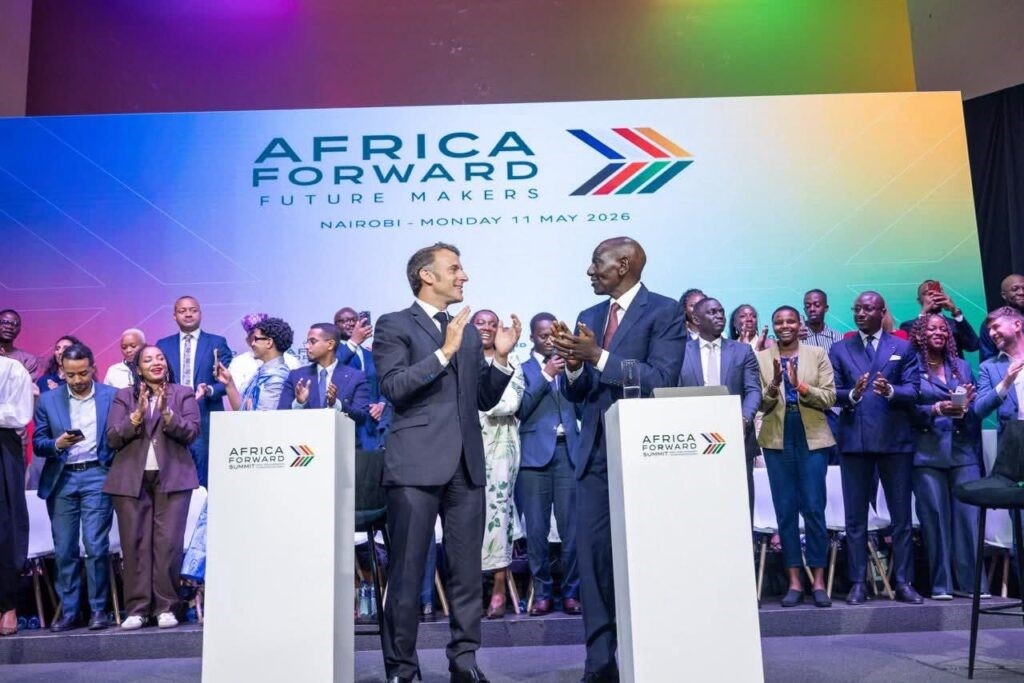
Against this backdrop, the Africa Forward Summit in Nairobi, co‑chaired by Kenyan President William Ruto and French President Emmanuel Macron, stands out as a symbolic departure. For the first time, a major European power has chosen to share the stage with an African leader in Africa itself, signalling a shift from paternalistic diplomacy to genuine partnership. The announcement of $24 billion in new investments adds weight to the symbolism, suggesting that Europe, and France in particular, may finally be listening to Africa’s expectations.
Unlike traditional summits, Africa Forward was presented as a business forum designed to facilitate concrete deals between African and European companies. This pragmatic approach is crucial. Africa does not need more declarations of friendship; it needs factories, roads, energy grids, and digital infrastructure. The most striking element was the emphasis on co‑investment and co‑production—European firms partnering with African companies to build industries on African soil. If implemented, this could mark the beginning of a scramble not for Africa’s resources, but for Africa’s development.
Consider Nigeria, where French hospitality giant Accor and the Pan‑African Shoreline Group signed a letter of intent to create the country’s first national hotel platform, backed by a $300 million investment. This is not charity, nor is it extraction. It is a mutually beneficial venture: Nigeria gains jobs, infrastructure, and tourism capacity, while Accor secures access to a growing market. Such deals embody the principle that a good partner is not the one you like most, but the one who brings tangible advantages.
France’s role in Africa cannot be understood without acknowledging its fraught history. Colonisation may be “old stories,” but its legacy lingers. Many francophone capitals leaned heavily on Paris for security, effectively sacrificing sovereignty in exchange for protection. France, in turn, enjoyed the role of suzerain, maintaining influence long after formal independence. This dependency produced relationships that were often melodramatic, even incestuous.
Mali offers a vivid example. In 2013, French troops were hailed as saviours when they repelled jihadists threatening Bamako. Yet within a few years, successive juntas turned against Paris, portraying France as a plague rather than a protector. Such reversals highlight the dangers of relationships built on military dependence rather than economic partnership. Africa has grown weary of protectorates, mercenary abuses, and economic colonisation through the purchase of strategic assets such as ports and airports. What it seeks now are partners, not patrons.
There are veritable lessons for the future. While Nigeria’s story is different from Mali’s, the lessons resonate across the continent: Extra‑African countries are neither saviours nor devils; they must be treated as partners, judged by the quality of the deals they offer. And Africa should expect nothing but fair negotiations and mutual benefit.
This pragmatic lens is essential. Africa cannot afford illusions of benevolence, nor can it tolerate exploitation disguised as friendship. The continent’s leaders must negotiate with clear eyes, ensuring that every partnership advances Africa’s industrialisation and prosperity.
France’s initiative is significant not only for Africa but for Europe. By positioning itself as a gateway to the European Union, France offers African businesses access to a vast market. Meanwhile, Europe, facing demographic stagnation and economic competition from Asia and the United States, desperately needs new markets. Africa, with its youthful population and untapped potential, is the natural partner.
If Europe truly shifts toward facilitating business negotiations and co‑production, the benefits will be immense. Africa will gain the investments required to lift millions out of poverty, while Europe will secure growth opportunities. This is the essence of partnership: mutual advantage, not dependency.
Yet Africa has learned to be cautious. Promises have been made before, only to evaporate in the heat of political expediency. As the saying goes, like Saint Thomas, Africans will believe only what they see. The test lies in implementation. Will the $24 billion materialise into factories, roads, and digital hubs? Will co‑investment projects proliferate across sectors such as artificial intelligence, agribusiness, and renewable energy? Or will this summit become another entry in the long ledger of unfulfilled declarations?
The scrutiny will be relentless. Africans will be watching for progress in infrastructure, food industries, and technology. They will measure success not by speeches but by jobs created, industries built, and poverty reduced. Only then will Europe’s new approach be validated.
The Africa Forward Summit may prove to be a turning point. By co‑chairing with Kenya, France acknowledged Africa’s agency. By emphasising co‑investment, it recognised Africa’s demand for industrial development. Pledging billions signalled seriousness. If these commitments are honoured, Europe and Africa could enter a new era of partnership—one defined not by dependency or paternalism, but by shared prosperity.
For Africa, the imperative is clear: negotiate hard, demand tangible benefits, and reject protectorates. For Europe, the opportunity is equally clear: embrace Africa as a partner, not a pupil, and invest in its future. The stakes are high, but the rewards are greater. A genuine partnership could unleash Africa’s development while revitalising Europe’s economy.
The question remains: has Europe, and France in particular, finally understood what Africa expects? The answer will not be found in speeches or communiqués. It will be written in the factories rising across African skylines, in the hotels welcoming tourists, and in the digital hubs training young innovators. Until then, Africa will watch, negotiate, and demand proof. Only when promises become reality will Africa believe that Europe has truly understood.
Amajama, a social commentator, writes from Abuja via amajamaip@gmail.com