By Khadija Abubakar Woru
In today’s world, social media has become an inseparable part of daily life, especially among young people. Platforms such as Instagram, TikTok, Facebook, and X — formerly known as Twitter — have transformed the way people communicate, access information, and entertain themselves.
However, behind the glowing screens and endless scrolling lies a growing problem that many families and communities are beginning to feel: social media addiction.
Social media addiction refers to the compulsive urge to check, use, and engage with social media platforms to the point where it interferes with normal daily activities.
Unlike a casual habit, addiction takes hold when a person feels restless or anxious without access to their phone, and when the hours spent online begin to eat into time meant for studying, sleeping, working, or simply being present with the people around them.
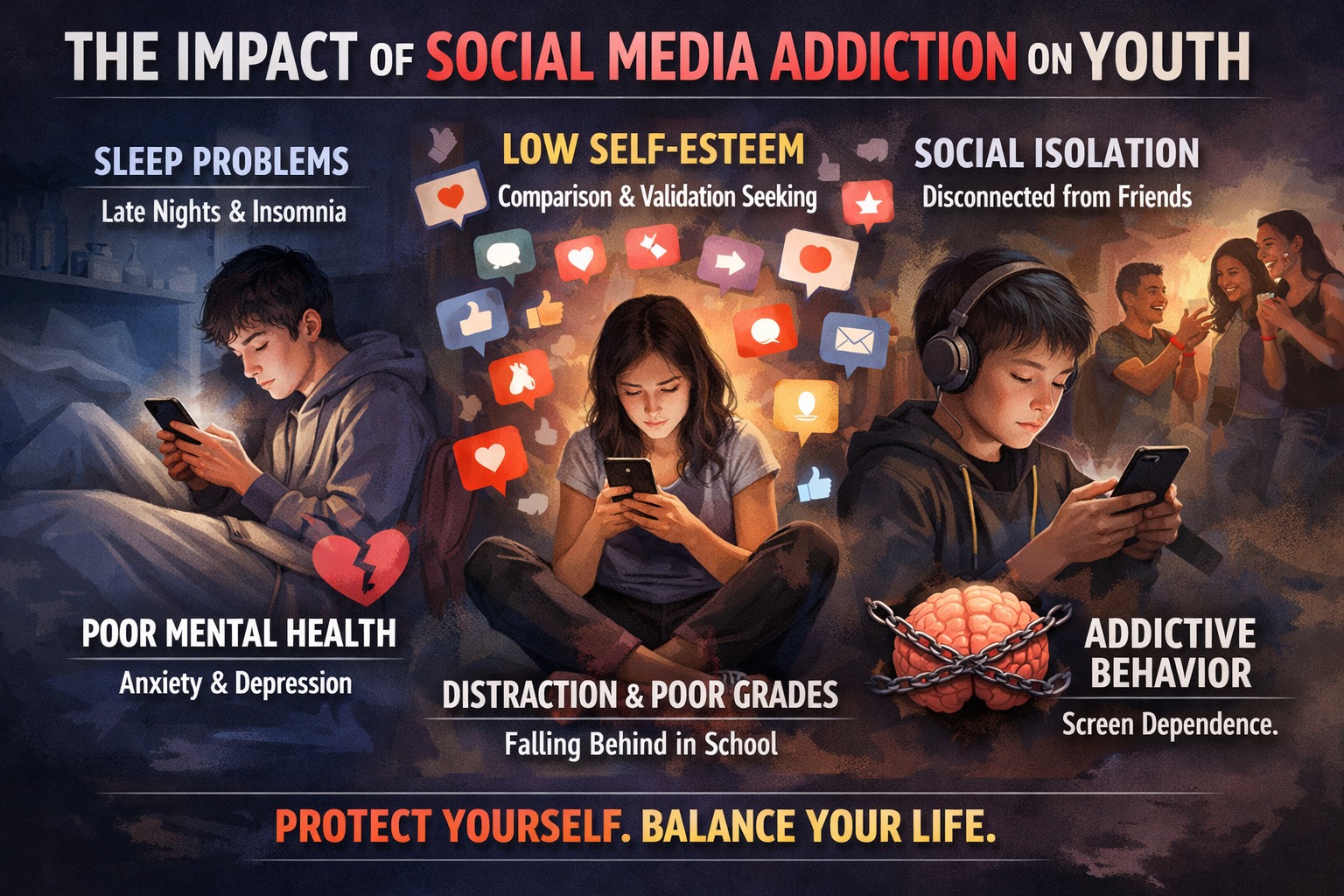
One of the most visible effects of this addiction is the decline in academic and professional performance. Most students today find it difficult to concentrate on their studies because their minds are constantly drawn back to notifications, comments, and trending content.
What begins as a five-minute distraction often stretches into hours, leaving schoolwork abandoned and deadlines are missed.
The impact on mental health is equally serious. Research has consistently shown a link between excessive social media use and increased rates of anxiety, depression, and low self-esteem — particularly among teenagers and young adults.
When young people spend their days comparing their real lives to the carefully filtered highlights of others online, feelings of inadequacy and loneliness are almost inevitable.
Social media addiction also disrupts sleep patterns. Many young people stay up late into the night scrolling through their feeds, unaware that the blue light from their screens suppresses melatonin production and makes quality sleep harder to achieve.
Over time, chronic sleep deprivation affects mood, memory, and overall health in ways that are difficult to reverse.
Beyond the individual, the effects are felt in families and relationships. Dinner tables have grown quieter not because there is nothing to say, but because everyone is staring at a screen.
Conversations that used to happen face to face are now replaced by brief text messages or emoji reactions. The warmth of genuine human connection is quietly being lost.
Addressing this problem requires honest conversations at home, in schools, and within communities. Parents must model healthy digital habits themselves before they can expect the same from their children.
Schools should incorporate digital wellness into their curricula. And individuals must learn to set boundaries with their devices — not because technology is bad, but because life is too short and too rich to be lived entirely through a screen.
Khadija Abubakar Woru is a 400-level student of the Ibrahim Badamasi Babangida University Lapai, Niger State.