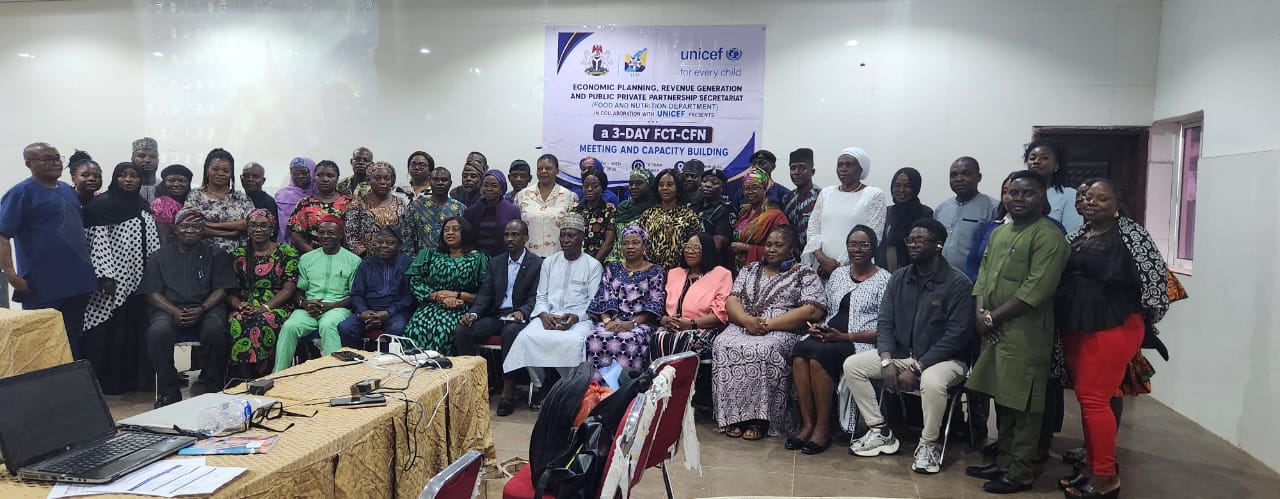
The Federal Capital Territory Administration has stepped up efforts to tackle malnutrition, with the adoption of a new nutrition work plan aimed at strengthening governance, improving accountability and expanding nutrition interventions across the territory.
The 2026/2027 Annual Work Plan was adopted at the end of a three-day second quarter meeting and capacity building workshop of the FCT Committee on Food and Nutrition, where stakeholders also resolved to revitalise the Home Grown School Feeding Programme, operationalise the Child Nutrition Fund and strengthen nutrition-sensitive interventions.
The workshop, held from July 28 to 30, was organised by the Department of Food and Nutrition under the Economic Planning, Revenue Generation and Public Private Partnership Secretariat, EPRGPPPS, in collaboration with the UNICEF-US Department of State MCH Umbrella Grant, Preventing Malnutrition During the First 1000 Days of Life.
Declaring the workshop open, the Mandate Secretary of the EPRGPPPS and Chairman of the FCT Committee on Food and Nutrition, Ubokutom Nyah, reaffirmed the FCT Administration’s commitment to making nutrition a priority for improved health, human capital development and sustainable development.
Nyah who was represented by the Acting Permanent Secretary, Uba Bala, also inaugurated the FCT State Aid Diversion Committee to strengthen transparency and accountability in the management of nutrition resources and commodities.
The Acting Executive Secretary of the FCT Primary Health Care Board, Dr Dan Gadzama, said tackling malnutrition remains central to improving health outcomes in the FCT, noting that addressing nutrition challenges could resolve more than 70 percent of the territory’s health problems.
He stressed that nutrition is a multisectoral issue requiring strong collaboration among the health, agriculture, economic, social and development sectors, while commending UNICEF and other partners for their continued support.
Director of Food and Nutrition, Celina Gaza-Oluwafemi, said the workshop was designed to strengthen participants’ technical capacity and equip them with practical tools for improving programme implementation, enhancing accountability and mobilising sustainable resources for nutrition interventions across the FCT.
In her goodwill message, UNICEF representative, Chizoba Steve-Edemba, urged the FCT Administration to leverage the Child Nutrition Fund to expand nutrition interventions, while strengthening domestic resource mobilisation and partnerships with the private sector and development partners.
Participants identified inadequate financing, weak nutrition information systems, poor dietary practices and capacity gaps as major challenges confronting nutrition programmes in the FCT. They called for stronger political commitment, increased investment and coordinated action across sectors.
The committee also resolved to institutionalise nutrition structures across relevant Secretariats, Departments and Agencies, improve accountability in the management of nutrition commodities and deepen collaboration among the health, agriculture, education and water sectors to improve nutrition outcomes for residents.
In his closing remarks, Bala reaffirmed the FCT Administration’s commitment to implementing the National Policy on Food and Nutrition in support of the Renewed Hope Agenda and improved nutrition outcomes for women, children and other vulnerable.
The workshop brought together representatives of FCT Secretariats, Departments and Agencies, Area Councils, development partners, civil society organisations and other nutrition stakeholders.