By Michael AMAJAMA
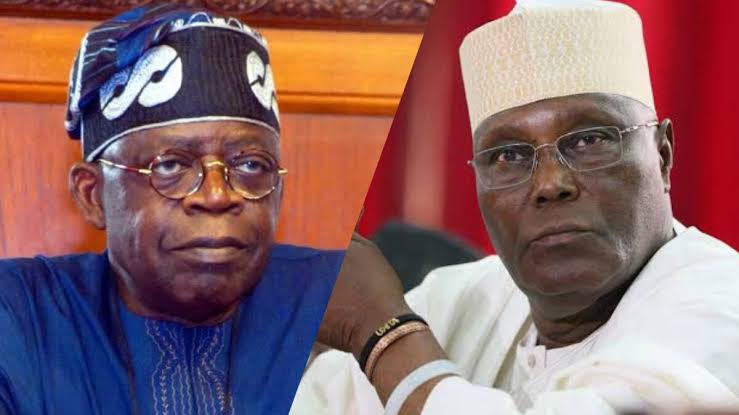
The Presidency and two presidential candidates, Atiku Abubakar of the African Democratic Congress, ADC, and Prince Adewole Adebayo of Social Democratic Party, SDP, traded tackles over the management of the economy.
Atiku and Adebayo both accused the Bola Tinubu-led government of hiding behind statistics over the management of the economy.
However, the Presidency dismissed the claims of the former Vice President and Adebayo, describing their positions as outdated, misleading and politically motivated.
Both candidates in separate statements, alleged that the federal government was using official growth figures to conceal the worsening hardship confronting millions of Nigerians.
Atiku said that “no amount of lying with statistics” can shield the administration from what he described as its worsening economic record.
Adebayo on his part stated that the administration inherited economic challenges but had made them significantly worse through what he called “economic illiteracy.”
Atiku accused the administration of attempting to rewrite Nigeria’s economic realities through what he called “creative accounting” and polished public presentations, maintaining that the daily hardship confronting Nigerians tells a completely different story.
Atiku’s statement issued on Sunday by his Senior Special Assistant on Public Communication, Phrank Shaibu, was in response to comments by the Minister of Finance, Taiwo Oyedele, who had defended the administration’s economic reforms, including the removal of fuel subsidy, debt management strategy and workers’ welfare initiatives.
According to Atiku, the government’s explanation that savings from the removal of fuel subsidy are being deployed to reduce inherited liabilities is inconsistent with publicly available financial records.
He argued that rather than reducing indebtedness to the Central Bank of Nigeria, the Tinubu administration had significantly expanded it.
“As of May 2023, when President Tinubu assumed office, the Federal Government’s exposure to the Central Bank of Nigeria stood at approximately ₦26.9tn. Today, that exposure has ballooned to over ₦40.38tn.
“This administration has not reduced its indebtedness to the CBN. It has merely changed the label on the debt by converting Ways and Means advances into treasury bills and bonds while simultaneously piling up fresh obligations. That is debt restructuring—not debt repayment,” the statement partly read.
Atiku further said that “food prices have spiralled beyond the reach of ordinary families. Inflation continues to erode incomes. Businesses are shutting down. Unemployment remains alarming. The naira has suffered unprecedented depreciation, while poverty has deepened across the country. These are the realities Nigerians confront daily—not the glossy presentations from government officials,” he said.
Adebayo was no less scathing in his rebuke. “The economy is worse than when this administration came in,” he said.
“Poverty wasn’t this severe. Fuel wasn’t over ₦1,300 per litre. More companies were operating. Nigerians are paying more for food, transport, rent, school fees and building materials than they did in May 2023.”
The SDP presidential flagbearer dismissed the government’s reliance on GDP growth and other macroeconomic indicators, arguing that such figures are meaningless if they do not translate into better living standards.
He likened the government’s handling of the economy to “taking a patient to the hospital with malaria and leaving with a broken neck,” insisting that improving statistics after worsening conditions should not be celebrated.
But in a detailed statement titled, “Facts, Not Fear: A Point-by-Point Response to Atiku Abubakar on Nigeria’s Reform Journey,” the Presidency said Atiku’s assessment of the administration’s economic policies was based on 2024 data and failed to reflect developments recorded over the past two years.
The statement accused the former vice president of portraying “yesterday’s data as today’s reality” and argued that economic reforms should be judged over time rather than by their initial pains.
It said, “The Nigerian economy that underwent painful adjustment in 2024 has evolved considerably,” adding that Nigeria’s dollar-denominated Gross Domestic Product (GDP) had recovered from about $253 billion after the exchange rate adjustment to approximately $377 billion, while naira GDP rose from about ₦314 trillion to around ₦530 trillion.
Responding to Atiku’s allegations of fiscal recklessness and excessive borrowing, the Presidency maintained that borrowing should be assessed alongside the country’s economic capacity and the purpose for which loans are obtained.
It argued that Nigeria’s debt-to-GDP ratio remained “barely 40 per cent,” which it described as relatively modest compared to several African and developed economies. The statement also said the country’s debt service-to-revenue ratio had declined from nearly 100 per cent in December 2022 to less than 60 per cent under the Tinubu administration.
On the removal of fuel subsidy, the Presidency insisted the policy had significantly improved revenues accruing to states and local governments through the Federation Account Allocation Committee, FAAC, enabling subnational governments to invest more in infrastructure, healthcare, education and social programmes.
It said previous administrations, including the one in which Atiku served as vice president, failed to end the subsidy regime despite acknowledging its fiscal burden.
The statement also defended the administration’s tax reforms, rejecting claims that the government was imposing heavier taxes on Nigerians.
According to the Presidency, the reforms were designed to ease the tax burden on low-income earners and small businesses while ensuring wealthier individuals and profitable enterprises contributed more through improved tax compliance.
It said the administration remained focused on improving macroeconomic stability, expanding opportunities and strengthening institutions, insisting that “the worst is over” as inflation was projected to continue declining after temporary disruptions caused by the Middle East conflict