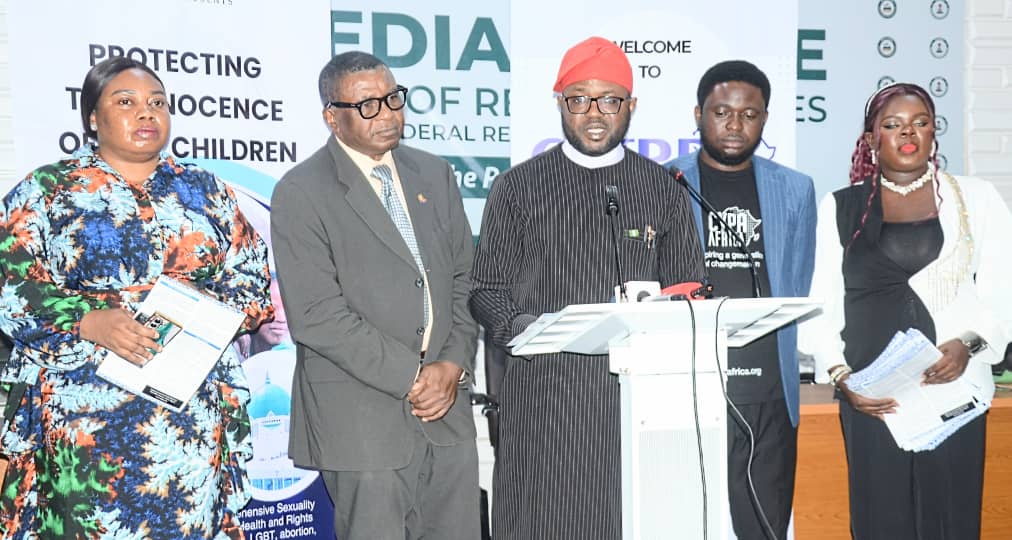
A civil society organisation, the Centre for African Policy Research and Advice, has urged the National Assembly to review government policies, legislative proposals and educational programmes relating to sexuality education and reproductive health.
The organisation made the call during a media engagement in Abuja on Thursday, where it raised concerns about what it described as the influence of foreign interests on policies relating to sexuality, gender and reproductive health in Nigeria.
The Executive Director of CAFPRA, Dr Segun Adebayo, said policies affecting Nigerian children should reflect the country’s social and cultural realities and be subjected to wider consultation.
He said lawmakers should scrutinise relevant bills, policy documents and educational materials, particularly those targeted at children and young people.
“We are dedicated to policies of the land, to be sure that the policies of government in Africa are consistent with the realities of Africa,” Adebayo said.
He argued that parents, educators, civil society organisations and other stakeholders should be consulted before policies affecting children are adopted.
The organisation said the debate surrounding sexuality education should go beyond conventional health education to include careful examination of concepts associated with comprehensive sexuality education and sexual and reproductive health and rights.
CAFPRA specifically raised concerns about terms such as “bodily autonomy,” “sexual rights” and “gender identity,” saying their meaning and implications for children should be examined by policymakers.
Speaking on behalf of the organisation, human rights lawyer and public affairs analyst Sonnie Ekwowusi said changing public opinion was increasingly being used to build acceptance for policies that might otherwise face resistance.
“Public opinion change is currently where they are going, because if public opinion does not change, it will never be passed as a law,” Ekwowusi said.
CAFPRA disclosed that it had written to the Presidency and the leadership of the National Assembly over its concerns and planned to engage relevant legislative committees and circulate its policy recommendations among lawmakers.
A policy researcher and media personality, Gold Boms, said the organisation was examining proposed legislation and government policies to determine whether they were consistent with Nigeria’s social environment.
Another representative of the organisation, Chris Iyama, described the issue as one requiring wider public discussion because of its potential implications for families and children.
A child rights advocate with InnerCity Missions for Children, Jane Chukwu, said her organisation’s work with vulnerable children had highlighted the need for adequate information and support for children facing difficult circumstances.
She said the organisation was establishing a free school in Abuja for children from vulnerable backgrounds and had implemented educational and vocational programmes to support young people.
CAFPRA also called for greater transparency in the development, funding and implementation of sexuality education programmes, particularly those involving children and vulnerable communities.
The organisation said it had referred to developments in countries including Liberia and Zimbabwe, alleging that some sexuality and reproductive health initiatives had received external support. It urged Nigerian lawmakers to examine the origin, funding and implementation of such programmes.
However, the claims concerning specific foreign organisations, funding arrangements and the alleged content of some educational materials were not independently substantiated at the briefing.
CAFPRA also announced plans to present an African charter on family values and sovereignty to the National Assembly.
Adebayo said the charter was intended to contribute to discussions on national policy interests.
The organisation urged lawmakers to ensure broader consultation and public scrutiny of policies affecting children and education, while calling on the media to investigate the origin, funding and implementation of programmes relating to sexuality education and reproductive health.
It pledged to continue engaging lawmakers, government institutions and other stakeholders on policies affecting Nigerian children.
CSO urges N’Assembly to review sexuality education, reproductive health policies

- Advertisment -