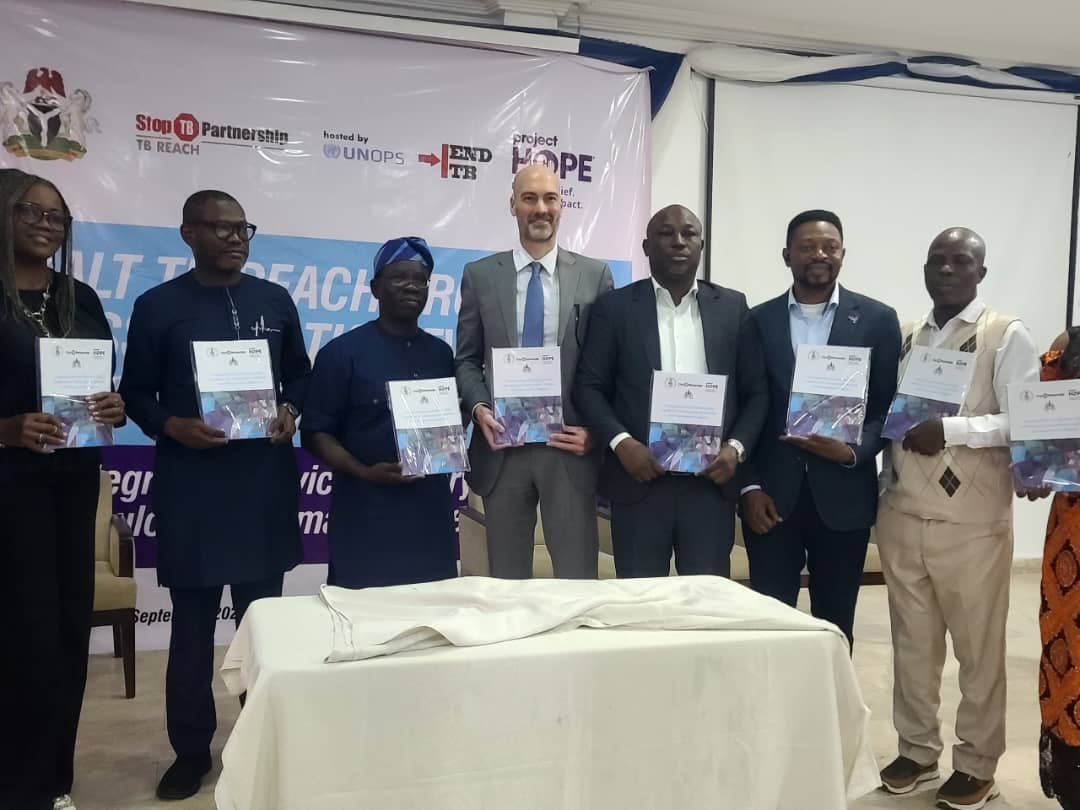
The Expanding Access to Lung Health and Tuberculosis Coverage, EXALT TB REACH Project, said the screening of 113,935 people in Niger State has expired gaps in tuberculosis, asthma and pneumonia responses in Nigeria.
In response, stakeholders have called for stronger government’s ownership and integration of lung services in the country’s primary healthcare system.
The call was made on Monday in Abuja at the dissemination of the 22-month project implemented by Project HOPE Nigeria in Paikoro, Gurara and Suleja Local Government Areas of Niger State.
The intervention integrated screening, diagnosis, treatment and referral for tuberculosis (TB), asthma and pneumonia through primary healthcare facilities and community platforms, seeking to bridge gaps between people with respiratory symptoms and timely access to care.
According to the project data, 113,935 people were screened during the implementation period, leading to the diagnosis of 263 TB cases, 468 asthma cases and 805 pneumonia cases. Of the TB cases, 233 were bacteriologically diagnosed, while 259 patients were linked to treatment.
The project also recorded a 91 per cent treatment success rate among 82 TB patients who commenced treatment between January and June 2025, exceeding the project’s 80 per cent benchmark.
Speaking at the event, the Country Representative, Project HOPE Nigeria, Dr Chidimma Anyanwu, said the project demonstrated that integrated lung health services could be delivered closer to communities through existing primary healthcare structures.
He, however, stressed that the end of donor funding should not translate into the end of the services provided under the intervention.
“Every project will have a beginning and an end, but diseases don’t get that memo,” Anyanwu said, urging government to take ownership of the strategies and evidence generated through the project.
He said the project deliberately worked with existing government and community structures, including local health workers, to ensure that capacity and equipment remained within the communities after the project ended.
According to him, sustainability would depend on government becoming more intentional about financing and integrating the approach into existing health systems.
The Executive Director, Niger State Primary Health Care Development Agency, Dr Inua Junaidu, said the intervention had strengthened primary healthcare facilities by providing an integrated approach to respiratory diseases.
He described the model as an “advanced integrated care” approach, where patients presenting with respiratory symptoms could be assessed for TB, pneumonia and asthma rather than being managed through separate disease-specific services.
Junaidu urged Nigerians to seek medical attention when they experience persistent cough, particularly where coughing lasts for more than two weeks.
“TB is real, and it still exists in our community,” he said, noting that TB diagnosis and treatment remain available free of charge through government-supported services.
Also speaking, Project HOPE Regional Director, Steven Neri, identified integration of TB services into primary healthcare and sustainable financing as important components of effective TB control.
He said the EXALT model could be adapted and expanded to other local government areas and states.
“There’s no reason why TB cannot be controlled in Nigeria because you’ve got the people, you’ve got the will and the energy,” Neri said.
Despite the gains recorded, the project identified persistent challenges, including long distances to molecular diagnostic centres, transportation costs, intermittent diagnostic commodity stock-outs, staffing shortages, incomplete referrals and follow-up, and limited availability and affordability of asthma and pneumonia medicines.
The project also noted cultural beliefs that could delay healthcare-seeking, while health workers required continued mentoring in the use and interpretation of spirometry.
As part of efforts to sustain the gains, the project developed an Integrated Service Delivery Handbook for TB, asthma and pneumonia in Nigeria, providing guidance on prevention, screening, diagnosis, treatment, referral, patient education, reporting and monitoring.
Project HOPE said the final version of the handbook is expected to be published after completion of technical review, with stakeholders expected to consider how lessons from the Niger State intervention can inform broader efforts to strengthen integrated lung health services across Nigeria.