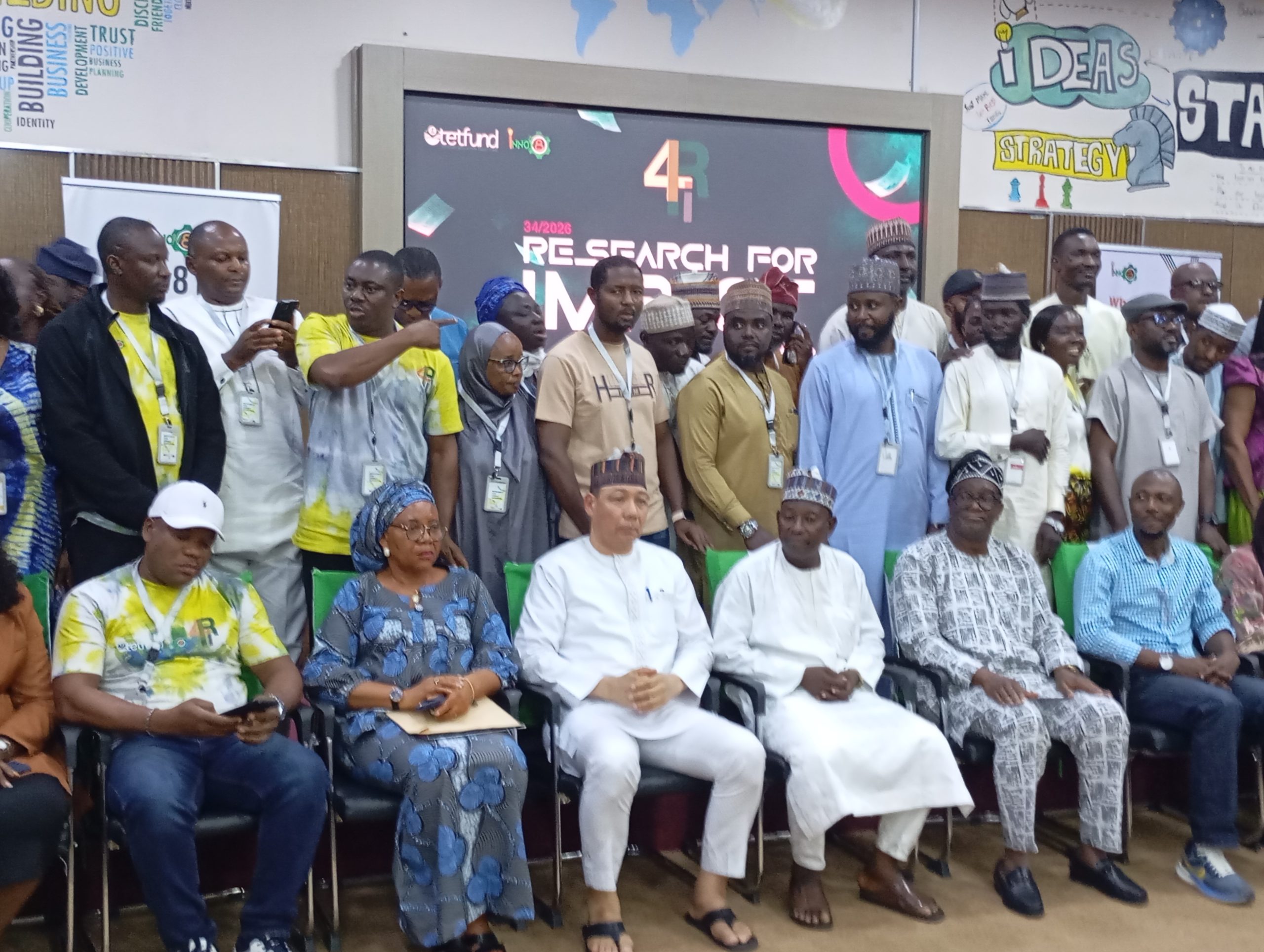
The Tertiary Education Trust Fund, TETFund, is funding the establishment of innovation hubs in 45 tertiary institutions across Nigeria to accelerate the commercialisation of research findings, promote indigenous technology and turn academic ideas into marketable products.
The facilities, which will be spread across the six geopolitical zones, are expected to provide researchers with the infrastructure needed to develop prototypes, refine innovative ideas and transform research outputs into practical solutions to the country’s socioeconomic challenges.
Executive Secretary of TETFund, Arc. Sonny Echono, disclosed this at the closing ceremony of the Research for Impact, R4i, initiative in Abuja on Friday.
Echono was represented by the Director of Monitoring and Evaluation at TETFund, Arc. Babatunde Olajide.
The TETFund boss said the innovation hubs would provide a sustainable environment for researchers trained under the R4i programme to apply their knowledge and develop solutions beyond the training period.
“In line with the commitment of the Fund to provide the enabling environment for problem-solving research, the Fund is funding the establishment of Innovation Hubs in 45 beneficiary institutions across the six geopolitical zones,” he said.
He explained that the facilities would help entrench innovative practices in tertiary institutions, enabling researchers to continue developing solutions and pursue the commercialisation of their products.
The R4i initiative, implemented in collaboration with Innov8 Technology Hub, is designed to equip academics and researchers with the skills required to conduct impact-driven research and develop solutions to pressing societal problems.
According to Echono, the programme forms part of TETFund’s broader strategy to institutionalise research and development across tertiary institutions and support the transition towards a knowledge-driven economy.
He noted that participants from previous cohorts had developed several prototypes, some of which had been patented, expressing optimism that the latest cohort would record similar achievements.
The Executive Secretary said the positive feedback received from previous participants and their institutions had encouraged the Fund to expand participation in the programme.
He disclosed that the number of nominees from each institution had increased from one at the programme’s inception to four, with participants drawn from complementary scientific backgrounds.
“The essence is to build a team of innovative researchers who will mentor upcoming scholars, thereby promoting the entrenchment and sustainability of collaborative and innovative research practices for commercialization,” he said.
Echono charged participants in Cohort 34 to build on the knowledge acquired during the two-week intensive programme, stressing that completing the training marked the beginning of efforts to commercialise the products they had developed.
He added that TETFund would sustain its support for the initiative, expressing confidence that continued collaboration among researchers, institutions and industry partners would advance Nigeria’s technological development.
Also speaking, the Deputy General Manager of Innov8 Technology Hub, Dr. Deji Ige, described the partnership with TETFund as an example of how collaboration could strengthen research and development and promote national development.
Ige said the R4i initiative was creating opportunities for academics to move beyond generating ideas to developing innovations, practical solutions and enterprises.
“Research for Impact means more than an initiative. It is a lamp onto the path of Nigerians, especially members of the academia, who have long awaited an opportunity to begin the journey of translating ideas into innovation, solution and enterprise,” he said.
He commended TETFund for its sustained investment in research and development, adding that an environment that encourages collaboration is essential to innovation.
Ige also urged participants to embrace experimentation and learn from setbacks, describing failure as an inevitable part of the innovation process.
He expressed optimism that the initiative would help strengthen indigenous technological capacity, encourage venture creation and generate wealth, while positioning Nigerian researchers to develop solutions that could compete internationally.
He urged members of Cohort 34 to apply the skills acquired during the programme in their respective institutions and inspire other researchers to pursue home-grown innovations.