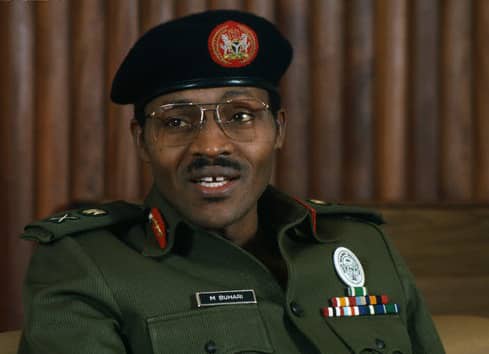
Former President Shehu Shagari once intervened to reverse a secret plot by key members of his cabinet to humiliate late former President Muhammadu Buhari and force him out of the Nigerian Army during the Second Republic.
According to Buhari’s newly released authorised biography, top government figures including the Minister of Defence, Professor Iya Abubakar, and the Minister of Transport, Alhaji Umaru Dikko, feared the then-Brigadier might stage a coup and quietly engineered his removal from command.
The book, Buhari: The Authorised Biography, written by Dr Udu Yakubu, quoted Shagari as expressing shock when confronted over the abrupt redeployment, telling Buhari, “I did not know who did this. I did not know what happened,” in Volume One of the biography titled The Phenomenon.
In Chapter 14 of the book, titled “The Second Republic and the Soldier’s Shadow,” Dr Yakubu detailed how the crisis began in August 1980 shortly after Buhari completed his course at the War College and was appointed General Officer Commanding the 4th Infantry Division.
The biographer noted that upon returning to Nigeria, Buhari took the traditional salute as GOC of the Lagos-based garrison formation, only for Abubakar and Dikko to raise questions about his instinct and temperament before the president.
According to the book, the ministers argued that Buhari’s continued presence in the armed forces posed a risk to the fledgling republic and urged Shagari to retire him immediately.
Yakubu wrote that although Shagari neither accepted their recommendation nor dismissed it outright, Buhari soon received sudden instructions redeploying him to a non-command posting in Lagos.
Buhari was said to have viewed the unexplained reversal as a calculated slight designed to strip him of operational authority, embarrass him publicly, and compel him to resign from the service.
Stung by the development, Buhari sought a direct audience with the president and declared that he would rather retire with dignity than accept what he described as “a humiliation” after formally assuming command of his troops.
The book revealed that Shagari appeared genuinely taken aback by the complaint, disowned the redeployment directive, and instructed Buhari to disregard the confusion and return to his post.
Explaining why civilian leaders were wary of the young commander, Dr Yakubu noted that suspicion against Buhari dated back to his logistical roles in the 1966 counter-coup and his activities surrounding the 1975 military takeover.
However, the biographer pointed out that removing Buhari was no simple administrative exercise because several other active senior officers had also participated in those earlier military interventions.
The book listed officers such as Ibrahim Babangida, Tunde Idiagbon, Aliyu Gusau, Joe Garba, Mamman Vatsa, Mohammed Magoro, Sambo Dasuki, Halilu Akilu, David Mark, and Tunde Ogbeha among those with similar histories, noting that singling out Buhari risked triggering demands for a broader purge and unsettling discipline across the army.
Following the aborted removal plot, Buhari went on to command three of the army’s four divisions within roughly three years, moving from the 4th Division in Lagos to the 2nd Division in Ibadan, and later the 3rd Armoured Division in Jos.
Yakubu added that while Buhari’s strict discipline, fair handling of courts-martial, and improvements to soldier welfare earned him deep admiration across the ranks, his growing profile and reputation within government as being “too firm, too disciplined, and too independent” kept Second Republic officials on edge.