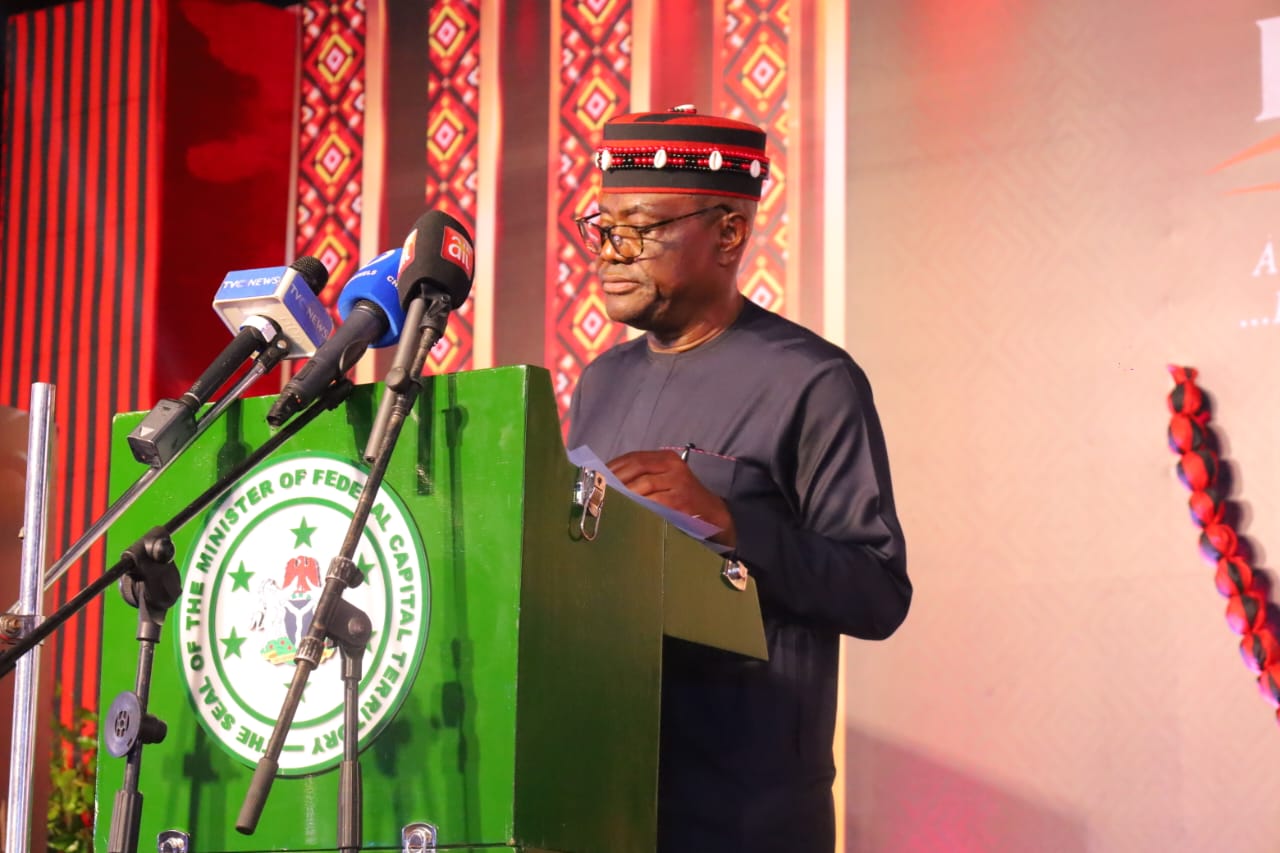
FCT Minister Nyesom Wike, has asked Nigerian leaders to move beyond the politics of ethnic grievances and power-sharing, insisting that equitable representation must translate into competent leadership, effective service delivery and accountability.
Wike made the call on Thursday in Abuja while delivering a keynote address at the Idoma Centenary Plus celebrations, where he spoke on “People, Politics and Power Play in Nigeria: The Agitation for Equity and Fairness.”
He argued that while agitation against marginalisation remains a legitimate part of democratic life, it should lead to stronger institutions and better governance rather than deepen divisions or fuel an endless contest over access to political power.
The minister said Nigeria must move away from a political culture centred on whose turn it is to occupy public office and embrace one that places greater emphasis on what leaders can deliver to the people.
“We must move from the politics of ‘our turn’ to the politics of ‘our responsibility.
“’Our turn’ asks: When will our people get power?
“’Our responsibility’ asks: What will we do with power when it comes?
“’Our turn’ asks: How much of the national cake belongs to us? ‘Our responsibility’ asks: How do we make the cake larger, and how do we distribute it fairly?”
Wike maintained that representation should create opportunities for inclusion without weakening the demand for competence in public office.
“A Nigerian should not be excluded from public office because of where he or she comes from; neither should competence become irrelevant once a candidate’s identity satisfies a representational expectation.
“Representation matters, but representation cannot be the destination.
“It must be a pathway to public value, and consummate service delivery in the polity,” he stated.
He urged political leaders at all levels to regard public office as a trust rather than personal property or regional spoils, stressing the need to prioritise performance and public service over rhetoric.
The minister also expressed concern over declining voter participation in recent general elections, urging political parties to treat citizens as partners in governance rather than temporary instruments for securing electoral power.
He said the country’s pursuit of national unity would remain difficult unless political power was understood as a temporary responsibility exercised for the benefit of all Nigerians, irrespective of ethnicity or religion.
Wike’s message centred on the need to reconcile equity with accountability, arguing that inclusion in governance must ultimately produce public value, strengthen democratic institutions and improve the welfare of citizens.