CEE-HOPE and Nigeria Association of Women Journalists, NAWOJ, have renewed calls for stronger protection, unionisation and inclusion of domestic workers in Nigeria’s formal labour system, stressing the need for sustained media engagement to curb widespread abuse and exploitation.
Recall that in July 2024, CEE-HOPE appeared before the Senate at a public hearing on the Bill for an Act to Provide for the Documentation and Protection of Domestic Workers and Employers and for Other Matters Connected Therewith, 2024, where the organisation submitted a memorandum advocating legal safeguards and formal recognition of domestic workers’ rights.
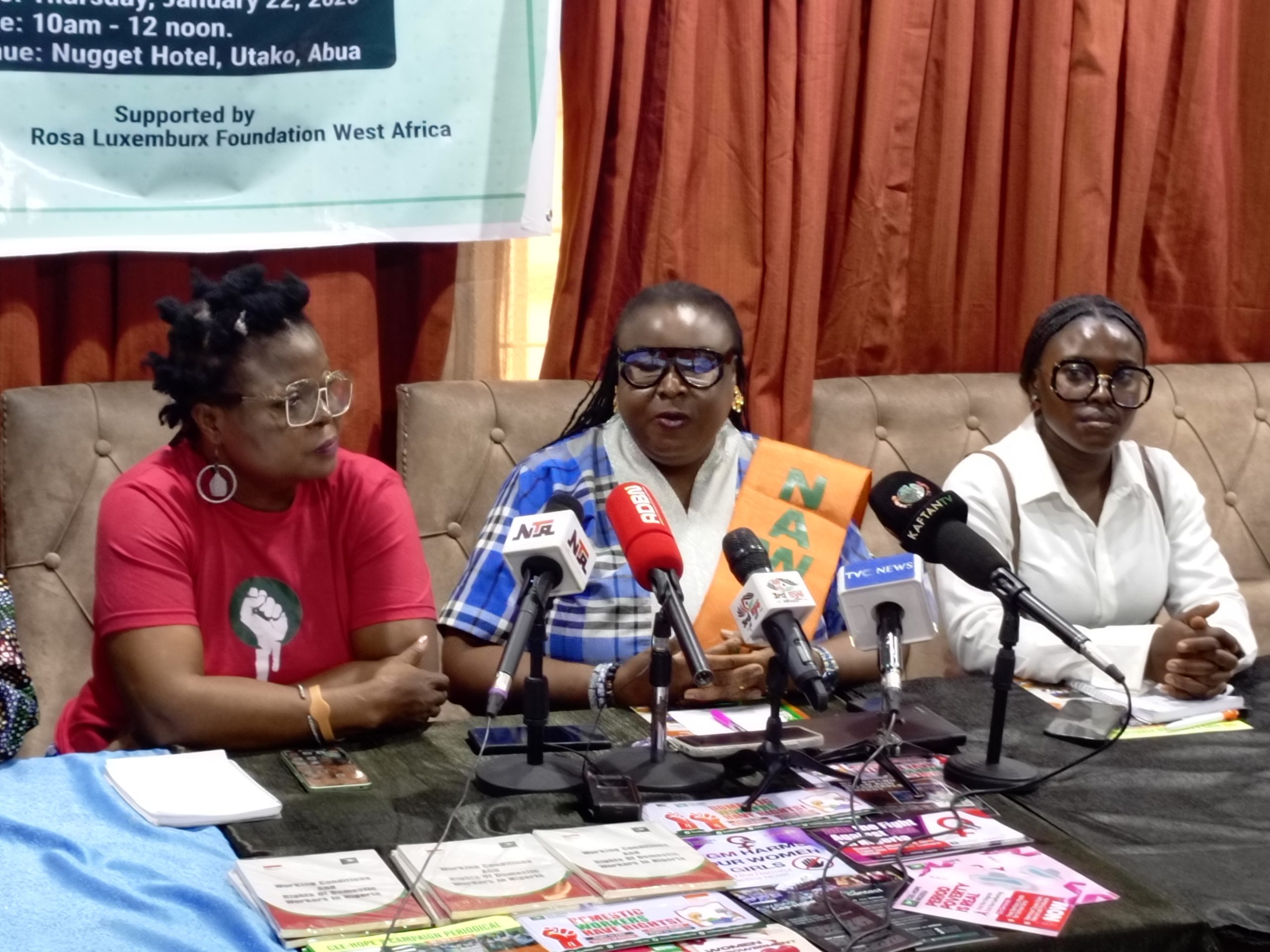
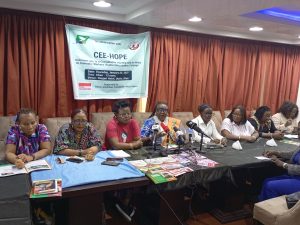
The advocacy was reinforced on Thursday, Abuja during a one-day consultative meeting with journalists organised by CEE-HOPE in collaboration with NAWOJ Zone D.
Speaking at the meeting, the Executive Director of CEE-HOPE, Betty Abah, described domestic workers as one of the most vulnerable and dehumanised groups in Nigeria, noting that many suffer physical abuse, sexual violence, economic exploitation and, in extreme cases, death.
Abah recounted several cases handled by her organisation, including incidents involving teenage domestic workers who were raped by employers, as well as a case during the COVID-19 lockdown in Lagos where a 15-year-old domestic worker from Benue State was allegedly beaten to death by her employer after being locked indoors without food.
She explained that investigations later confirmed the case as homicide, adding that the employer and her husband are currently serving jail terms at Kirikiri Correctional Centre.
According to Abah, such abuses persist largely because domestic workers lack awareness of their rights and do not belong to any structured labour union that could provide protection, legal backing and collective bargaining power.
She noted that while many occupations in Nigeria are unionised, domestic work remains largely informal, despite Nigeria having one of the largest domestic worker populations in Africa.
Abah pointed out that countries such as Ghana, Kenya and South Africa have functional domestic workers’ unions guided by International Labour Organization Convention 189, which spells out work hours, wages, roles and the right to organise.
She added that unionisation would help address issues such as excessive working hours, undefined job roles, poor wages and the widespread use of underage children as domestic workers.
Abah also highlighted the prevalence of child domestic labour, particularly in urban centres, noting that CEE-HOPE had intervened by enrolling nearly 200 affected children in schools while working with guardians to strike a balance between education and livelihood.
In her remarks, the Vice President of NAWOJ Zone D, Chizoba Ogbeche, said the campaign aligns with the association’s commitment to human rights reporting and social justice, stressing that the media must go beyond routine coverage to sustained investigation and follow-up.
Ogbeche described the abuse of domestic workers, especially children, as a societal problem rooted in poor attitudes, ignorance of the law and weak enforcement mechanisms.
She said many households knowingly exploit domestic workers, even though they would never subject their own children to similar treatment, warning that such practices reinforce cycles of abuse across generations.
Ogbeche also raised concerns about the use of labour agencies, describing the practice of paying domestic workers through agents rather than directly as a form of exploitation and, in some cases, trafficking.
According to her, NAWOJ has embraced the campaign and will leverage its chapters across the 36 states and the FCT to document cases, support investigations and ensure reported abuses are followed through to logical conclusions.
She added that the association plans to engage religious institutions, schools and community platforms to help drive mindset change, stressing that legislation alone would not end abuse without a shift in social attitudes.
Ogbeche expressed optimism that the passage of the domestic workers’ bill by the Senate, once assented to by the President and effectively enforced, would strengthen accountability and provide a clearer legal framework for protecting domestic workers.
Both organisations expressed confidence that sustained media attention would amplify the voices of domestic workers and contribute to improved working conditions, fair wages and respect for their dignity.