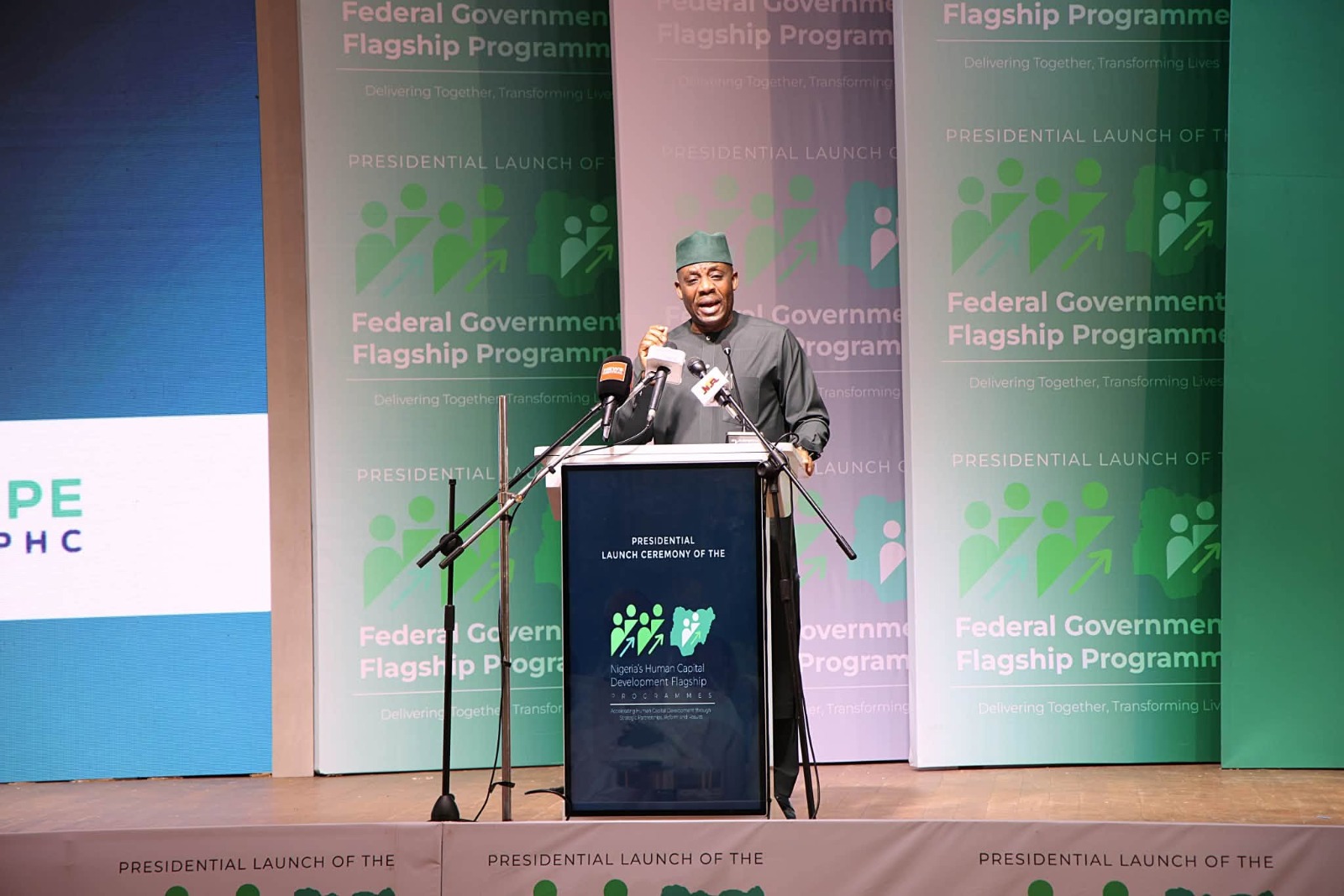
The Federal Government has reaffirmed that education remains at the heart of President Bola Ahmed Tinubu’s Renewed Hope Agenda with the launch of five flagship, World Bank-supported programmes designed to accelerate human capital development, reduce poverty, strengthen healthcare, improve governance and expand economic opportunities across Nigeria.
The programmes, unveiled on Friday at the State House Conference Centre in Abuja, are expected to translate the administration’s economic reforms into tangible benefits for Nigerians through strategic investments in education, healthcare, social protection and institutional development.
In a statement issued by the Director of Press and Public Relations, Mrs. Boriowo Folasade, the Federal Ministry of Education said the initiatives underscore the Federal Government’s commitment to building a more prosperous and inclusive nation through sustained investment in human capital.
President Bola Tinubu, represented at the event by the Minister of Finance and Coordinating Minister of the Economy, Mr. Taiwo Oyedele, described the programmes as a major step towards improving the quality of life of Nigerians.
He stressed that education remains central to national development, declaring that, “No nation can rise above the quality of its education,” while adding that “real prosperity means no Nigerian will be left behind.”
Minister of Education, Dr. Maruf Tunji Alausa, described education as Nigeria’s most strategic investment, noting that the Human Capital Opportunities for Prosperity and Equity for Quality Basic Education for All, HOPE-EDU, Programme represents a transformative investment of approximately 552.18 million dollars, jointly funded by the World Bank and the Global Partnership for Education, GPE.
According to the minister, the programme will strengthen foundational literacy and numeracy, improve the quality of teaching, expand access to quality basic education and enhance education management systems across the country.
He disclosed that nearly 30 million children will benefit directly from the initiative, while 500,000 public primary school teachers will receive professional development support.
In addition, more than 65,000 public primary schools and their School-Based Management Committees nationwide are expected to benefit from improved teaching and learning resources.
Alausa explained that the programme, which covers all 36 states and the Federal Capital Territory, is built on a results-based financing model that rewards measurable improvements in learning outcomes.
He added that it would reduce learning poverty, strengthen teacher effectiveness, improve accountability through robust education data systems and promote evidence-based planning and efficient resource allocation.
The minister emphasised that investments in education, nutrition and skills development are critical to economic growth and national prosperity.
He described teachers as the foundation of nation-building and urged all implementing partners to utilise the resources provided under the programme to deliver measurable improvements in learning outcomes.
The government reaffirmed its commitment to providing effective policy direction, coordination and oversight for the successful implementation of the HOPE-EDU programme, describing it as one of the country’s most significant investments in children, teachers, schools and the future workforce.
It added that the initiative would play a critical role in developing the skilled human capital needed to drive sustainable economic growth in line with the Renewed Hope Agenda.
Speaking on behalf of the Nigeria Governors’ Forum, Ondo State Governor, Hon. Lucky Orimisan Aiyedatiwa, pledged the commitment of the 36 state governments and the Federal Capital Territory to work closely with the Federal Government, the World Bank and other development partners to ensure the successful implementation of the programmes.
He stressed that accountability, institutional strengthening and improved service delivery are essential to achieving inclusive growth and sustainable national development.
Aiyedatiwa also commended the World Bank for its continued support, noting that the collaboration has strengthened social protection, governance, agriculture and public service delivery across the country.
The Minister of Budget and Economic Planning, Senator Abubakar Atiku Bagudu, described the NG-CARES, SOLID and HOPE programmes as complementary interventions that provide a comprehensive framework for tackling poverty, strengthening resilience and accelerating human capital development.
He said effective coordination, transparency and prudent resource management would be crucial to achieving the desired outcomes.
Also speaking, the World Bank Country Director for Nigeria, Mr. Mathew Verghis, commended the Federal Government’s commitment to human capital development, saying the programmes were designed to improve education and healthcare, strengthen social protection, expand economic opportunities and support vulnerable communities.