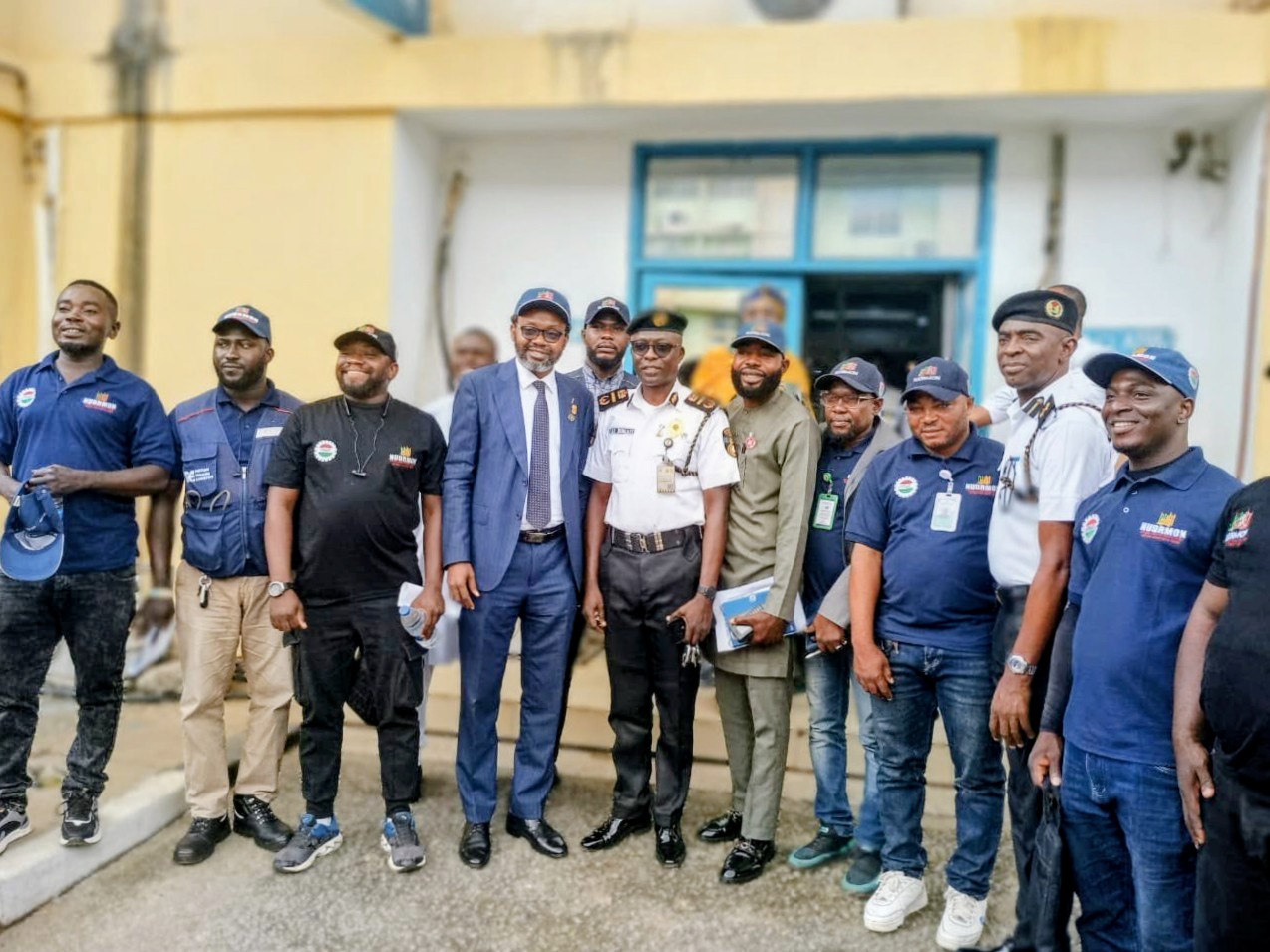
A new identification system for dispatch riders operating in Abuja is set to help the authorities distinguish legitimate operators from criminals using the profession to perpetrate crimes.
The initiative, developed by the National Union of Dispatch Riders and Mail Operators of Nigeria, NUDRMON, comprises a membership database, an online portal and unique identification numbers for registered riders.
The Transportation Secretariat of the Federal Capital Territory Administration is partnering with the union to use the system to identify genuine riders and fish out unidentified operators who may be carrying illegal items in their delivery boxes.
Mandate Secretary of the secretariat, Chinedum Elechi, disclosed this on Wednesday at a meeting with members of the union in Abuja, where he commended the initiative as a means of improving security and accountability within the sector.
Elechi said the database would make it easier for the government to distinguish legitimate dispatch riders from criminal elements who could otherwise tarnish the image of the profession.
He described the initiative as “crucial in differentiating genuine riders from the bad eggs”.
The mandate secretary pledged the support of FCT Minister Nyesom Wike and the Transportation Secretariat, while urging the union to maintain close collaboration with the government.
“With this initiative, now we can isolate the bad eggs because it is usually common to paint people with one brush.
“Now the bad ones can be fetched out. Congratulations on this initiative. Our doors are open and ready to work with you in whatever way.
“We are happy to partner with you. After today we can say we are partners with dispatch riders. We can only protect those we have a relationship with,” he said.
Earlier, NUDRMON National President, Emmanuella Kwaghdega, said the database and body-number system was designed to give every registered rider a unique and verifiable identity.
Kwaghdega said dispatch riding had become a major source of livelihood for thousands of Nigerian youths since the COVID-19 pandemic, with riders providing delivery services to restaurants, pharmacies, e-commerce platforms, financial institutions, businesses and households.
He, however, said the sector was facing growing challenges, including the activities of criminal elements, security concerns, traffic violations, accidents, multiple operational permits and the absence of a unified identification system.
“We realised that we cannot continue like this. If we want government to protect us, government must know us; if we want the public to trust us, the public must be able to identify us.
“Also, if we want to hold bad operators accountable, we must distinguish them from genuine riders. Our vision is: one ride, one identity and one verifiable body number.
“With credible data, we can improve security, promote responsible riding, strengthen accountability, support accident and welfare interventions, engage estates and businesses, and provide government with reliable information for better planning and regulation.
“We also believe this database can provide the foundation for addressing challenges such as multiple operational permits, through engagement towards a more harmonised and rider-friendly framework,” he said.
Kwaghdega said government ownership of the initiative would also make it a broader solution to security and transportation challenges in the FCT, rather than an internal union project.
“It becomes a collaborative solution to a shared FCT transportation and security challenge.
“We, therefore, appreciate the FCTA Transportation Secretariat for believing in this initiative and for choosing collaboration over confrontation and organisation over uncertainty,” he said.