By Martins Odeh, Ph.D.
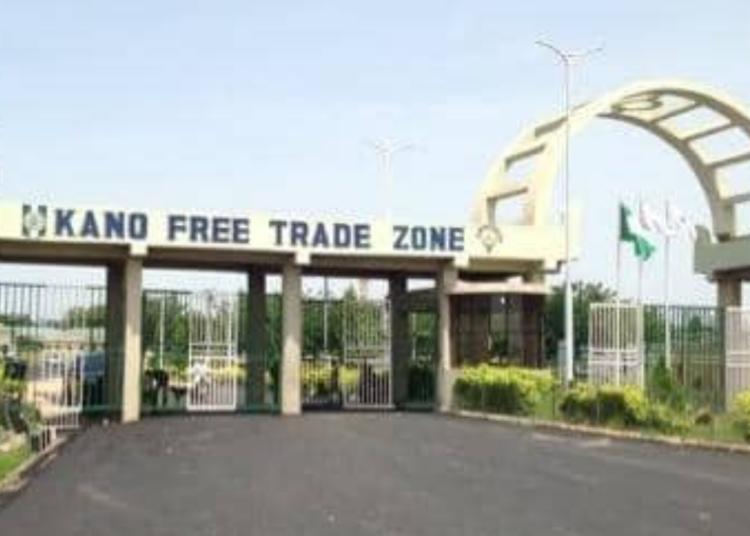
On the morning of Thursday, 12th August, 2026, long before the sun had burned off the haze over the savannah, the access road into the Kano Free Trade Zone was already a slow-moving column of trucks. Some were hauling containers into the customs territory, bound for the border post leading to the Maghreb region.
Others arrived with raw shea nuts, soya, cotton lint, cashews, and hides collected from farms and aggregation centers across the northern belt.
Inside the perimeter fence, the sounds are industrial and constant: the hiss of pneumatic presses in a garment plant, the rumble of a cashew de-shelling line, and the beeping of forklifts stacking pallets in a bonded warehouse. This landscape was largely scrubland decades ago.
Today, the zone is home to 87 operating enterprises, including wholly foreign-owned manufacturers, joint ventures, and indigenous firms. It has quietly become one of the country’s most consequential pieces of economic infrastructure, thanks to President Bola Ahmed Tinubu’s insistence on maximum funding for this Federal Government-owned industrial estate.
The Zone’s Director, Mr. Solomon Topa, and his Assistant, Deputy Director Mr. Richard Bassey, who served as Head of the Zone and guided business reporters from the Commerce and Industry Correspondents Association (CICAN), were clear about the zone’s operations and financial figures.
The figures indicated that enterprises operating within the zone accounted for an appreciable share of national non-traditional exports in the last fiscal year, with customs collections surpassing N36 billion by August 2026, up from N24 billion the previous year.
The zone’s activity has created 3,000 to 5,000 direct jobs for local workers, with dozens of active enterprises focused on manufacturing, processing, and trading. This has undoubtedly boosted local small businesses through supply chains and technology transfer, facilitated by collaboration with expatriates.
“When you look at the movement in the national export index over the past years, a significant share of that momentum comes from these 87 companies.”
“The composition of what leaves the gates matters as much as the volume. Where the country once shipped raw commodities, the zone’s factories now assemble and export cars, electrical cables, specialized food for malnourished children, processed shea butter, refined vegetable oil, cashew kernels, ginned cotton and yams, leather goods, agrochemicals, pharmaceuticals, and light electronics assemblies, products that carry substantially higher unit value,” Topa said.
Topa also said: “The zone covers 262 hectares and hosts enterprises that consistently engage in meaningful export-oriented production.’’
According to him, the zone creates jobs through 87 operational enterprises and supports technology transfer and local manufacturing while attracting local and foreign investment.
“It is important to note that a total of 113 enterprises were granted licenses to operate in the zone, but at this time, 87 of them are operational while the remaining 46 are at various stages of development,” he stated.
Topa again identified technology transfer as another major benefit of the free trade zone, particularly through expatriates transferring high-tech skills to local employees.
“These foreign companies come in here, establish their enterprises and factories, and employ Nigerians, who work with them and thereby gain knowledge. At the end of the day, skills and technology are being transferred,” he said.
The Director also highlighted foreign direct investment as a major contribution of the zone, noting that investors bring capital into the country to establish and operate businesses, and that their contributions are sustaining the Northern economy much more.
He added that the Kano Free Trade Zone has also become a busy economic gateway to the Maghreb countries through exports, noting that products from the zone reach as far as Egypt, Algeria, Morocco, and Libya.
Bassey, the Deputy Director of the Zone, said the revenue gains followed closer collaboration between the zone’s management and the Nigeria Customs Service, with both agencies working to collect revenue without undermining incentives available to investors.
He explained that manufacturers importing raw materials into the zone operated under suspended duty arrangements, under which duties applied only when finished products entered Nigeria’s domestic customs territory.
Bassey said the collaboration with Customs also introduced an inventory procedure to ensure manufacturers pay duty only on imported raw materials actually used in production.
“The inventory procedure allows you to pay duty for only the raw materials you have used and waste is excluded,” Bassey said.
He explained that goods brought into the zone for warehousing and then released into Nigeria were subject to full duty, whereas goods exported to other countries were not taxed.
“It is important to note the strategic contribution of the zone to global efforts to combat child malnutrition across Nigeria and Africa through Nutri-K Limited, a manufacturer of ready-to-use therapeutic food for malnourished children. This has significantly increased the zone’s export index,” he said.
Relatedly, the tour included a detailed discussion with the Nigeria Customs Service (NCS) in the zone. The discussion revealed that the NCS generated 40 billion naira from the zone as of August 2026, reflecting a steady increase in collected duties.
The Deputy Comptroller of Customs for the zone, Mr. Isah Bala, said the revenue figure was monitored via a live dashboard that refreshed every 15 minutes and that the technology has eliminated human discretion.
Interestingly, the revenue figure rose from N39 billion to N40 billion on this fateful day, as journalists witnessed, thereby proving the reliability of the technology customs uses to track and collect duties in the zone.
“Congratulations. We have now seen the automated tax collection board increase to N40 billion.”
“It was reading N39.6 billion when you came in. You could see it update as additional duties were collected. That was a display of rigid transparency and accountability,” Bala said.
Bala noted that the customs operation within the free trade zone was guided by three major principles, namely trade facilitation, monitoring and compliance, and accountability.
He attributed the current improvement not only to customs-reform operations but also to the close working relationship between the service and the Nigeria Export Processing Zones Authority (NEPZA).
Aminu Mohammed, the Assistant Comptroller of the Nigeria Immigration Service in the zone, credited the zone’s success to cooperation and collaboration among the key government agencies operating there.
He also linked ongoing reforms by the Nigerian Government, particularly the digitization of immigration services by the Ministry of Interior and the Nigeria Immigration Service, to the improved process.
“We are implementing a simplified process for expatriates employed by companies operating in the zone, allowing only qualified expatriates to obtain residence permits before entering the free trade zone. The measure is intended to facilitate investment and accelerate industrial development,” Mohammed said.
This tour revealed a widening trade footprint, with the zone’s enterprises currently exporting to about 12 countries across the African Continental Free Trade Area corridor, Europe, the Middle East, and Asia.
In conclusion, these achievements were made possible by the intervention of the administration of President Bola Tinubu, GCFR, which provided NEPZA with a new, workable policy direction to accelerate the free trade zone scheme’s impact on the national economy.
The Managing Director/CEO, Dr. Olufemi Ogunyemi, has executed this duty quite well over the past three years.
Dr. Martins Odeh is Head, Corporate Communications, NEPZA