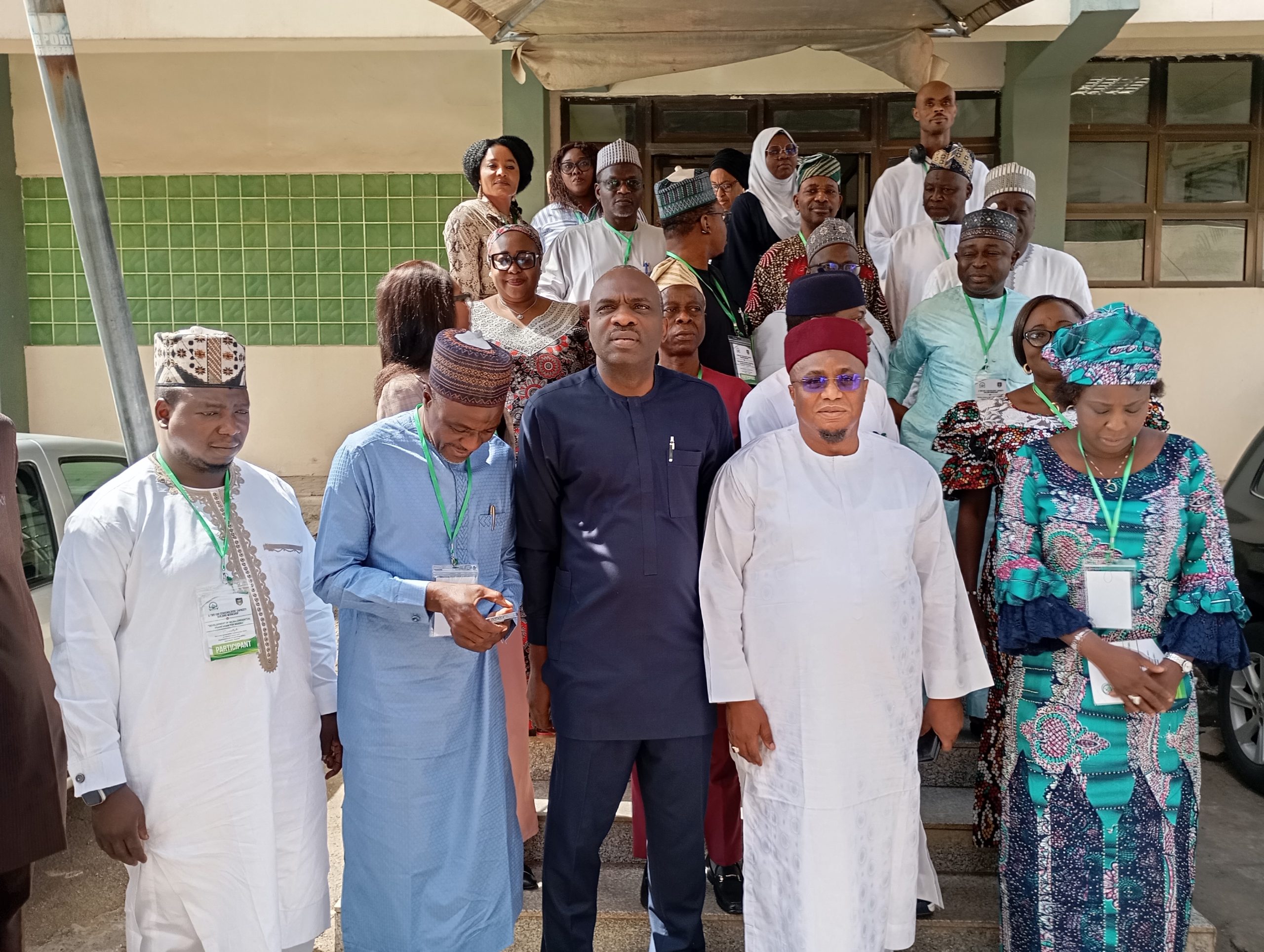
The National Universities Commission, NUC, in partnership with the Commonwealth of Learning, COL, has convened key stakeholders in Abuja to begin efforts towards establishing a National Micro-Credential Framework for Nigeria, aimed at strengthening skills development and lifelong learning.
Speaking at the opening of the 2-Day Stakeholders’ Capacity Building Workshop on Monday, the Executive Secretary of NUC, Prof. Abdullahi Ribadu, said traditional academic programmes alone can no longer meet the country’s growing need for continuous upskilling and reskilling in a rapidly changing global workforce.
Represented by the Director of Research, Innovation and Information Technology at NUC, Malam Lawal Farouk, Ribadu noted that the initiative aligns with Nigeria’s National Policy on Education, which emphasizes functional and relevant education capable of equipping citizens with practical skills and competencies needed for national development.
According to Ribadu, the Commission appreciates COL’s continued partnership in advancing reforms that enhance quality, access, relevance, and lifelong learning in Nigeria’s higher education sector.
He recalled earlier collaborations, including efforts to improve graduate employability and promote the mainstreaming of Open Educational Resources in universities.
The NUC boss explained that while the Commission has pursued reforms such as the Core Curriculum Minimum Academic Standards, CCMAS, to improve learning outcomes, entrepreneurship, digital literacy, and employability, evolving workplace demands now require more flexible learning options.
He described micro-credentials as short, outcome-based learning programmes designed to equip learners with specific competencies required in the labour market.
He stressed, however, that such programmes are not intended to replace degree programmes but to complement them by offering flexible learning pathways that enhance access and strengthen the link between higher education and employment.
Ribadu said the workshop aims to develop a framework that aligns with national education policies while preserving regulatory standards and quality assurance in Nigerian universities.
The framework is expected to provide guidance on programme design, delivery, assessment, certification, and pathways for credit accumulation and transfer.
Participants at the workshop are expected to deliberate on issues including the conceptualisation of micro-credentials within Nigeria’s higher education system, quality assurance requirements, credit transfer mechanisms, institutional readiness, and the contribution of micro-credentials to employability and lifelong learning.
He urged participants drawn from regulatory agencies, universities, polytechnics, colleges, and industry to ensure that the framework produced is practical, credible, and aligned with national development priorities.
Also speaking, the President and Chief Executive Officer of COL, Prof. Peter Scott, in a recorded video to participants, reaffirmed the organisation’s commitment to supporting Nigeria in developing a credible national framework for micro-credentials to strengthen skills development and lifelong learning.
Scott said the initiative builds on regional consultations held across Asia, Africa, the Mediterranean, the Caribbean, the Americas and the Pacific in 2025, aimed at shaping a Commonwealth-wide micro-credential framework.
He noted that Nigeria is among pilot countries moving from regional dialogue to national implementation of a trusted micro-credential system designed to enhance workforce readiness and promote flexible learning opportunities.
Scott commended NUC for convening a broad range of stakeholders to deliberate on approaches for developing a nationally owned framework aligned with labour-market demands and existing qualification systems.
He explained that micro-credentials, typically earned through short, assessed courses, enable learners to acquire targeted competencies quickly, supporting upskilling, reskilling and improved employability.
Scott urged stakeholders to leverage their expertise to co-create a framework that promotes learner mobility, strengthens trust in qualifications and enhances Nigeria’s capacity to respond to emerging skills demands.
Earlier, the Director of Open, Distance and e-Learning at NUC, Dr. Funmilayo Morebise, stressed that Nigeria must urgently adopt micro-credential programmes to remain competitive in skills development and workforce preparation.
Welcoming participants to the stakeholders’ workshop, Morebise described the initiative as timely and essential for strengthening Nigeria’s education system and aligning learning with labour-market needs.
She said the workshop aims to deepen institutional and regulatory understanding of micro-credentials and their role in lifelong learning, examine international best practices, and address issues relating to quality assurance, credit transfer, and recognition within Nigeria’s higher education system.
According to her, the meeting is also expected to produce a draft framework suitable for adoption by universities and other approved tertiary institutions.