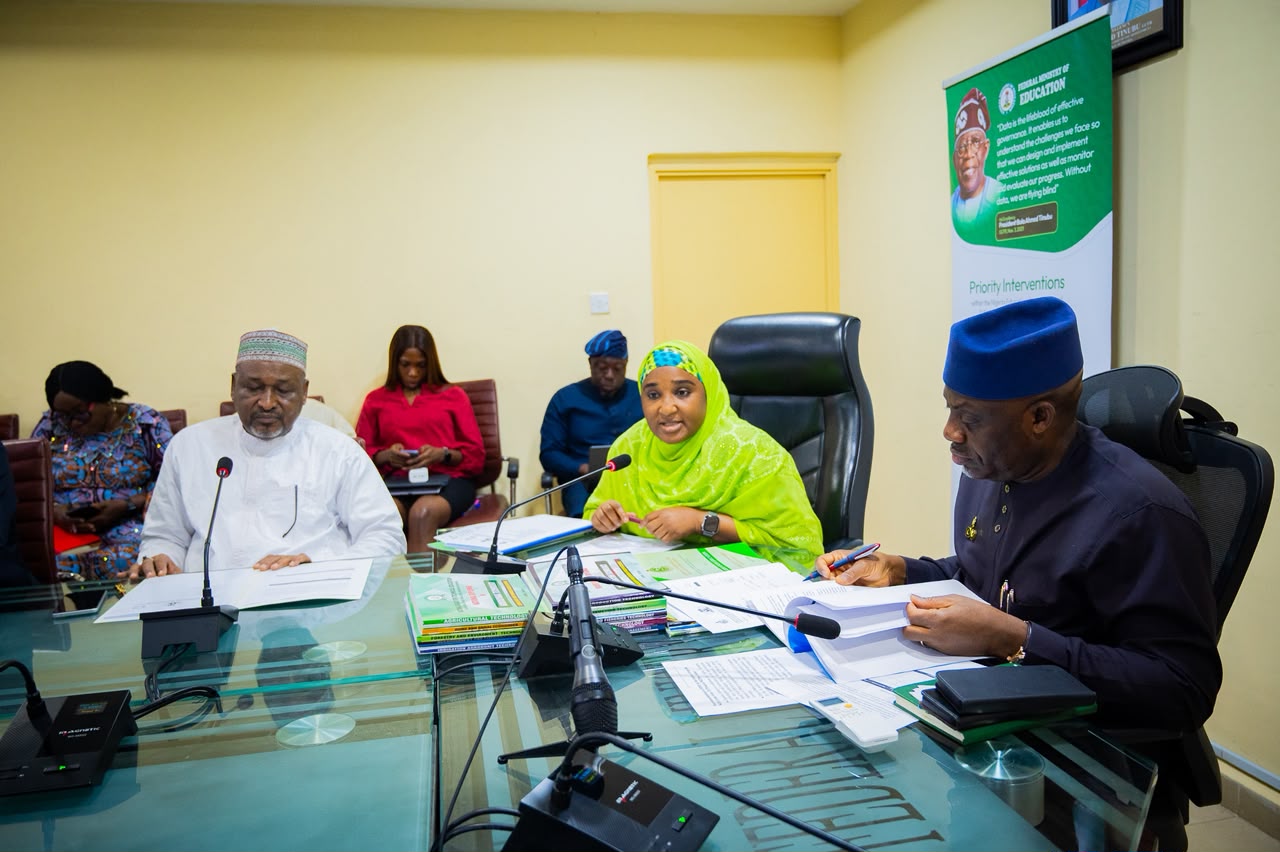
The Minister of Education, Dr Tunji Alausa, has initiated a far-reaching transformation of the National Board for Technical Education, NBTE, aimed at repositioning the agency as a high-performing regulator and strategic enabler of Nigeria’s Technical and Vocational Education and Training, TVET, ecosystem.
The reform is designed to strengthen NBTE’s institutional effectiveness, governance architecture and operational capacity, enabling it to more effectively regulate, coordinate and support polytechnics, monotechnics and other technical institutions, while aligning skills development with Nigeria’s economic and workforce priorities.
According to a statement by the Special Adviser on Media and Communications to the Minister, Mr. Ikharo Attah, the initiative was part of the Federal Ministry of Education’s broader effort to reposition technical and vocational education as a critical driver of national development and President Bola Ahmed Tinubu’s Renewed Hope Agenda.
As part of the reform, the Ministry has engaged KPMG Advisory Services to undertake a comprehensive institutional assessment and develop a future-fit organisational structure, governance model and operating framework to enhance NBTE’s capacity to deliver on its mandate.
Alausa said the engagement reflects the Ministry’s commitment to ensuring that institutions responsible for driving technical education are appropriately structured, adequately resourced and positioned to provide effective leadership for the country’s skills development agenda.
“The success of Nigeria’s TVET reforms depends not only on curriculum and infrastructure, but also on the strength and effectiveness of the institutions responsible for implementation and oversight,” the Minister said.
He stressed that a strengthened NBTE was critical to the realisation of President Tinubu’s Renewed Hope Agenda and the broader objective of developing a skilled, productive and globally competitive workforce capable of supporting industrialisation, innovation and sustainable economic growth.
Alausa said the restructuring exercise went beyond administrative reform, describing it as a strategic intervention to reposition NBTE as a modern, agile and fit-for-purpose institution capable of driving nationwide transformation in technical and vocational education.
He explained that the assessment would identify institutional gaps and opportunities for improvement in governance, organisational design, operating processes, workforce capability and service delivery, with recommendations aimed at enhancing effectiveness, accountability and impact.
The resulting transformation roadmap, he said, would provide a clear framework for aligning NBTE’s structure and operations with its statutory responsibilities and the Federal Government’s broader TVET reform agenda.
The Minister reiterated that polytechnic education remained an integral component of Nigeria’s wider TVET ecosystem and must therefore be managed within a framework that prioritises skills acquisition, employability, innovation and enterprise development.
“Technical and vocational education is fundamentally about skills. Everything within the polytechnic system is ultimately geared towards developing competencies that create pathways to employment, entrepreneurship and productivity,” he stated.
Alausa said this philosophy was guiding the ongoing review of polytechnic curricula and the development of National Occupational Standards, NOS, to ensure that training programmes remained relevant to industry needs, technological advancements and emerging economic opportunities.
Supported by a N1 billion intervention from the Tertiary Education Trust Fund, TETFund, the curriculum modernisation programme has produced 27 new National Occupational Standards and updated four existing standards, bringing the total number of reviewed standards to 31.
The standards establish a more coherent and integrated skills development pathway across the education system, spanning artisan-level training, National Certificates, Ordinary National Diploma, OND, and Higher National Diploma, HND, programmes.
The Minister stressed that the reforms were aimed at ensuring that technical education graduates acquire practical, market-relevant competencies that enhance employability, foster entrepreneurship and improve national productivity.
While providing an industry perspective, Oluwole Adelokun, Partner, Strategy and Customer Solutions at KPMG Africa and KPMG in Nigeria, said the firm’s assessment highlighted both the structural challenges confronting Nigeria’s TVET landscape and the significant opportunities to unlock its potential through targeted reforms and institutional strengthening.
Adelokun noted that approximately 93 per cent of Nigeria’s workforce operates within the informal economy, while nearly 12 per cent of young people are not engaged in education, employment or skills training, underscoring the need for a more inclusive and responsive skills development system.
Despite these challenges, he said Nigeria performed strongly in the employability of TVET graduates, ranking second only to Singapore among the countries assessed.
According to him, the finding underscored the significant potential of the TVET system to produce industry-ready talent capable of meeting labour market demands.
He further identified curriculum modernisation as a critical priority, noting that more than 55 per cent of assessed curricula across disciplines, including engineering, science, arts and design, were outdated.
Adelokun identified funding limitations and the existing five-year curriculum review cycle as key constraints affecting curriculum responsiveness, while commending the recent revision of the agriculture curriculum as a positive example of progress.
Responding to the findings, Alausa said insights from the KPMG engagement, alongside ongoing curriculum and skills development reforms, would provide a robust foundation for repositioning NBTE as a more effective catalyst for technical and vocational education in Nigeria.
He noted that a restructured NBTE would be better positioned to strengthen oversight of institutions under its mandate, improve quality assurance and accountability, deepen industry collaboration and ensure that technical education remained responsive to evolving workforce and economic needs.
Alausa reaffirmed the Federal Ministry of Education’s commitment to developing a TVET system anchored on industry relevance, practical competence, innovation, employability and productivity, describing the transformation of NBTE as a critical pillar of Nigeria’s human capital development strategy.
“The ultimate objective is to build a more agile, effective and future-ready institution capable of delivering on its mandate and supporting the realisation of President Tinubu’s vision of a highly skilled, productive and globally competitive Nigerian workforce,” he said.