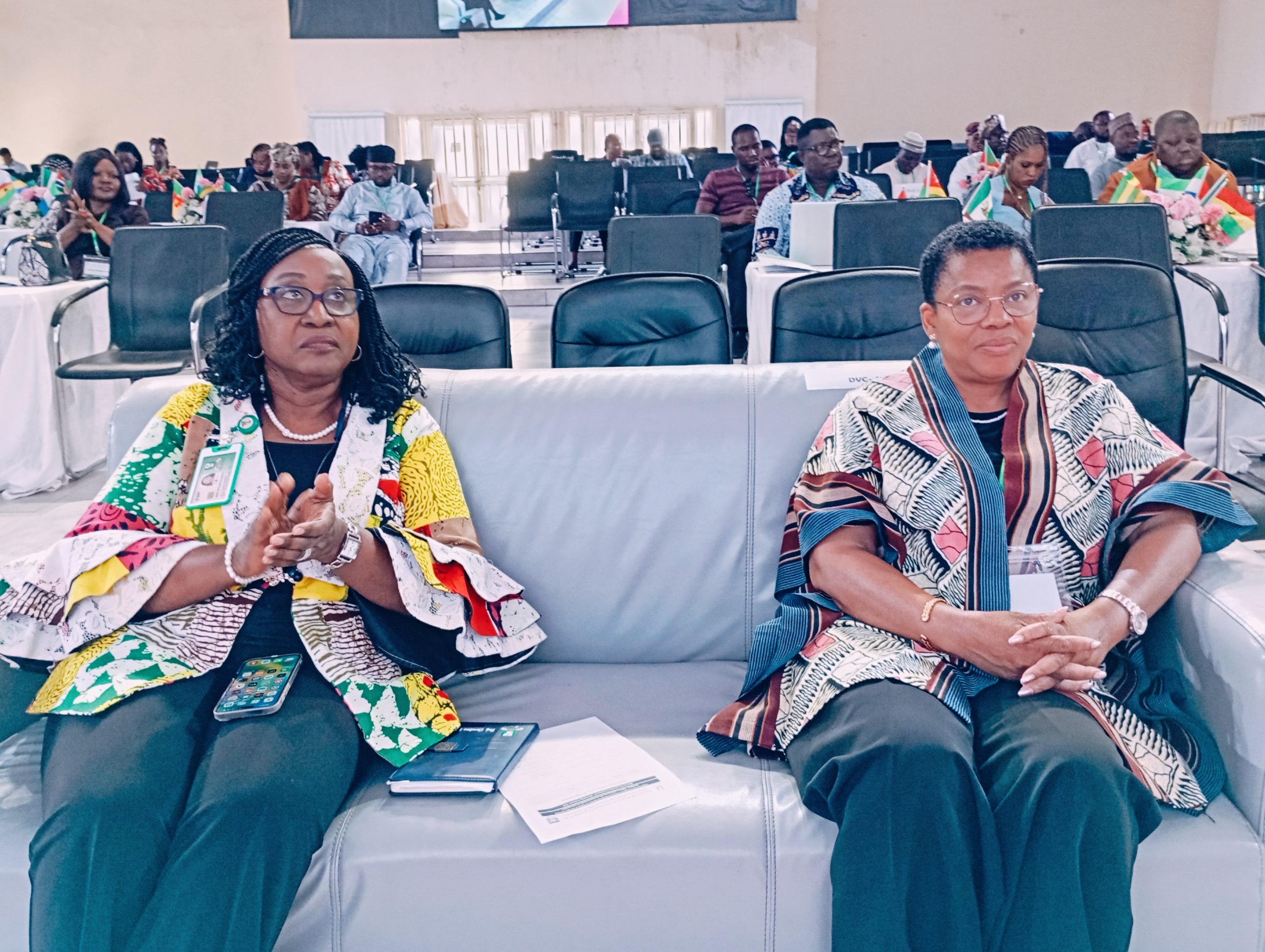
The Commonwealth of Learning, COL, and the National Open University of Nigeria, NOUN, have urged higher education institutions across West Africa to adopt assistive technologies to promote inclusive, accessible and equitable education for learners with disabilities.
Both organizations made the call on Tuesday at a two-day regional workshop on assistive technologies for differently-abled learners in open and distance learning, ODL, institutions in West Africa, organised by the Regional Training and Research Institute for Distance and Open Learning, RETRIDOL, NOUN, in collaboration with COL.
Speaking at the workshop, COL Advisor on Higher Education, Prof. Jane-Frances Agbu, said although open and distance learning had expanded educational opportunities beyond geographical boundaries, significant barriers remained for learners with disabilities.
She noted that inaccessible learning environments, technologies and educational practices continued to limit the participation of some learners despite progress in widening access to education. 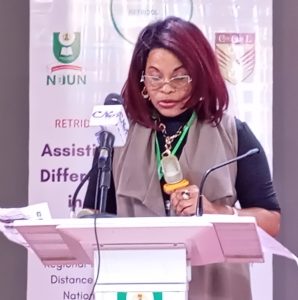
“We may have overcome some barriers of distance learning, but we have not done enough to overcome the barriers created by inaccessible learning environments, technologies and educational practices,” she said.
Agbu said assistive technologies, including screen readers, speech-to-text applications, captioning tools, adaptive devices, accessible digital platforms and emerging artificial intelligence applications, could help learners access information, engage with learning materials and participate more independently in their educational journeys.
According to her, the success of open education should not be measured solely by the number of learners reached but also by how effectively they are supported to participate, learn and realise their potential.
“Ultimately, the true measure of open education is not simply by how many learners we reach, but how many we enable to participate meaningfully, learn with dignity, realise their potential and succeed,” she said.
She urged institutions to place learners with disabilities at the centre of efforts to develop inclusive education policies and solutions, stressing that their experiences should inform decisions on the design and implementation of assistive technologies.
“We must not simply design solutions for them. We must listen to them and involve them in shaping these solutions,” Agbu said.
She added that the workshop provided an opportunity for stakeholders to exchange experiences, examine existing practices and identify practical and sustainable approaches to improving inclusive education across the sub-region.
On his part, the Vice-Chancellor of NOUN, Prof. Uduma Oji Uduma, represented by the Deputy Vice-Chancellor in charge of Technology, Innovation and Research, Prof. Christine Ofulue, said access to education alone was insufficient without appropriate support to ensure that learners with disabilities could participate meaningfully.
He said assistive technologies could reduce barriers to learning but cautioned that technology alone could not guarantee inclusion without proper selection and integration into teaching and learning.
“Technology alone cannot guarantee inclusion. We need to think about appropriate technology and how it can be effectively integrated into teaching and learning,” he said.
According to him, institutions must complement assistive technologies with appropriate policies, accessible learning materials and responsive learner support services to ensure that students with disabilities benefit fully from educational opportunities.
The vice-chancellor said NOUN had taken steps to promote inclusive education through the adoption of a policy on learners with special needs, the establishment of a Special Needs Unit within the Directorate of Learner Support Services and the launch of an interdisciplinary network on inclusive education.
He said the initiatives reflected the university’s commitment to widening access to education but acknowledged that more needed to be done to strengthen support for learners with disabilities.
Uduma commended COL for its continued partnership with NOUN in promoting innovation, capacity development, knowledge sharing and inclusive education across West Africa.
Earlier, the Director of RETRIDOL, Professor Dorothy Ofoha, said the workshop was designed to strengthen the capacity of higher education institutions to integrate assistive technologies into their open and distance learning programmes.
She said RETRIDOL, established in 2003 through a collaboration between NOUN and COL, was mandated to advance open and distance learning and promote regional cooperation across West Africa.
Ofoha said the institute had continued to support capacity-building and research initiatives across the sub-region, including in Cameroon, Gabon, The Gambia, Ghana, Nigeria, Sierra Leone and Togo.
She stressed that access to education would remain incomplete if learners with disabilities could not participate fully in learning activities or benefit from the opportunities provided by their institutions.
“Access to education is not meaningful unless all learners are able to participate fully and benefit from the learning opportunities provided,” she said.
According to her, assistive technologies offered opportunities to reduce barriers associated with learning materials, digital platforms, communication channels and assessment activities.