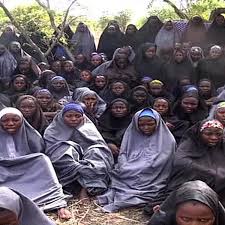
Abduction and kidnapping for ransom has gradually become endemic in Nigeria with hundreds of people reportedly kidnapped on a near-daily basis.
Since the abduction of 276 students from Government Secondary School Chibok, Borno state, in April 2014, the pace of kidnapping for ransom has since morphed into a lucrative industry and an alternative to armed robbery and banditry.
The crime is also a major form of funding for terrorist organizations, as it is reportedly the second largest source of funding for terrorist organizations, falling only behind direct state sponsorship.
Ransom payments are often in the hundreds of thousands or millions of naira with the potential to fund large-scale deadly attacks.
In 2008, Nigeria was placed sixth on the global kidnap index by an online tourism site. This rating puts the country among countries with serious kidnapping problems behind Philippines, Venezuela, Columbia, Brazil, and Mexico. Though many question the credibility of the report due to the lack of accurate statistical data, the impact of such report cannot be undermined as it has affected Nigeria’s image before the global community.
Government’s response to kidnapping as part of the Niger-Delta militancy was in the form of amnesty, in return for public renunciation by offenders. Insurgents in the northern part of Nigeria have also employed the tactics of kidnapping as a means of pressing home their demands.
However, post-amnesty kidnapping has received a legalistic approach by the enactment of various anti-kidnapping state laws and commissioning of more crime fighting equipment, and training for law enforcement agents.
Over the years there has been some attempt by Nigeria to create new legislation and to strengthen existing legislation in relation to terrorism financing. In 2013, the government signed the Terrorism Prevention (Amendment) Act which served to amend the 2011 Act of the same name, yet the crime seems to be thriving, taking victims from every strata of society including minors like the toddlers kidnapped from a Koranic School in Tegina, Niger state in June 2021.
Despite the emotional and financial burden kidnap victims and their families go through, the Nigerian Senate on Wednesday, April 27, 2022, passed a Bill imposing jail terms of at least 15 years for paying a ransom to free abducted person.
The Bill, which amends Nigeria’s terrorism law, also mandates the death penalty for convicted kidnappers where the abduction leads to loss of life and life imprisonment in other cases.
Opeyemi Bamidele, Chairman of the Senate’s Judiciary, Human Rights, and Legal Committee, was quoted as saying that making ransom payment punishable with lengthy jail sentences would “discourage the rising spate of kidnapping and abduction for ransom in Nigeria, which is fast spreading across the country.”
Critics say the bill which is awaiting presidential approval is unfair, as it incriminates people who are desperate to free their relatives.
If passed into law, families and supporters of hostage victims will be forced to make difficult decisions to either cooperate and negotiate a ransom payment with the hostage takers, or support the government’s policy of not paying ransoms and risk negotiating their release via other means. Families may face an additional legal predicament and may be accused of financing a terrorist organization.
Obviously the bill fails to take into cognisance the trauma and pain of having a loved one in the hands of unreasonable people who can kill and maim at will. The lawmakers also failed to see that the kidnapping is a failure of the security apparatus which has failed to protect the people it ought to protect in the first place.
So for the bill to have the desired impact, the best course of action is to improve the response time from security agencies and communication between government agencies and families of kidnap victims.
While acknowledging that hostage payment has a broader implication of underlining the cooperation of states endeavoring to prevent future acts of hostage taking and their efforts to starve terrorists of a critical source of funding, government should know that the onus of protection of lives and properties of the citizens’ rest on them. They must therefore do all they can to check the thriving kidnapping business that is gradually becoming an industry financing terrorism in Nigeria.
The United Nations Security Council in June 2014 adopted Resolution 2161 calling on member states to secure the safe release of hostages without ransom payments or political concessions. Whilst ensuring that Nigerian law is compatible with its international obligations, the country must however ensure that reform of the financing of terrorism legislation must balance the countries counter-terrorism agenda with safeguarding individuals not intended for prosecution under the terrorism legislation.
While we understand the pains of hostage victims’ families, they should also understand that terrorist groups depend on financing to maintain operations and carry out attacks. Families and relatives of victims should reject payment of ransom to kidnappers, because ransom payment has been noted to act as a motivational factor for the actions/operations of the criminal activities.
Effective and well-equipped anti-hostage or kidnapping agencies should be set up by the government in order to give stiff resistance to the perpetrators of such crimes.
The joint security forces instituted to check kidnapping should be sustained and given free role to report kidnapper’s hideouts. When they are rendered homeless, it will be difficult for them to carry-out their regular criminal operations.
Also, the on-going sim card registration programme by telecommunication operators in Nigeria should be enforced to the later. Subscriber’s passport photographs, finger prints, residential /working addresses should be recorded adequately. This will aid the security agencies to check the crime, since kidnapping involves the use of phones for effective perpetration.