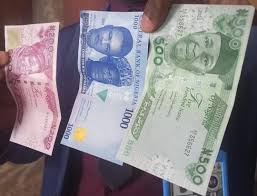
Nigeria is on a precipice. Its citizens are in a struggle for survival, wriggling under the wreck of a failed fiscal policy. As if gripped by a chokehold, for nearly two weeks, the country’s financial crisis has precipitated a new kind of hardship.
Circulation of Naira notes dropped significantly since the Central Bank of Nigeria, CBN, extended its January 31, 2023 deadline to face out old naira notes, to February 10. Banks were also fingered in a widespread heist funneling daily allocations of new currencies from CBN to bidding political bigwigs.
Daily, thousands of citizens throng cash points in the early hours of the day to withdraw their hard-earned money through Automatic Teller Machines, ATMs, but endlessly wait in queues without success, and left at the mercy of ruthless POS operators.
To make matters worse, this artificial scarcity is coming at a time Nigerians are still grappling with the naira’s free fall in foreign exchange, and the seeming lack of direction by regulating authorities to reverse the trend.
A similar scarcity is also witnessed in petrol stations where a litre of fuel sells for about N300, well above the official pump price of N185. These economic woes combined, have a strangulating effect on ordinary Nigerians and the pain is grueling and hopeless.
While the country groans, government appears exhausted on ideas and fitting action to assuage the suffering in the land. Rather, it has continued to explore the naira swap policy as the only alternative for a transparent, free, fair, credible and inclusive 2023 general election.
That the crisis has dragged on for over a week, speaks to the ruthless disposition of those in authority and their protégé in the banking sector, who have inadvertently celebrated, as it were, the suffering of Nigerians. No doubt, insensitivity and cold-heartedness resonate with some persons in public office, and widespread suffering pacifies them.
Of course, CBN’s Act of 2007 empowers it to issue and redesign the naira. While not throwing away the gains that the policy promises to bring, the outcome of the implementation arguably ranks with some of the most shamefully executed public policies in recent history.
The CBN Governor, Mr. Godwin Emefiele, is credited for presiding over the most volatile banking sector in the country’s history; a sector characterised by arbitrary deductions from customers’ accounts, frivolous charges and other anomalies that exude blatant nonchalance while Nigerians choke and gasp for survival.
When the President Muhammadu Buhari-led administration announced its Naira redesign policy, it was apparent that the policy was to address the flagrant monetisation of politics in Nigeria, a practice that proponents of the policy themselves have been beneficiaries.
However, the policy now strikes from below the nadir of society where the less powerful are made to bear the brunt and the powerful hijack currency allocations to financial institutions without let.
Assuming government carried out proper planning before implementation of its naira redesign policy, it is glaring that while planning, it did not take the size of the country and its economy into cognisance. Or how would you explain the fact that CBN mopped up over N2 trillion old notes but printed only N300 billion new ones?
From all readings, the apex bank and its officials either lacked the capacity to properly estimate the consumer strength of Nigeria’s banking sector and the dependence of over 230 million Nigerians on its services. Or perhaps, someone simply turned a blind eye to the plight of people directly impacted by the drawing effect of this policy.
CBN’s failure to slam sanctions on erring banks and their officials, elicit suspicion that some persons in the financial sector want the situation to play into the hands of political anarchists who are willing to seize any bad situation to cause social disorder.
Already, at bank branches nationwide, there are reports of customers exchanging fisticuffs, engaging in breaking and entering, and cutting corners in their desperation to get at the few naira notes available. Time is ticking away and even the most civil Nigerians are losing their cool.
For the record, the United Kingdom recently embarked on currency redesign from the portrait and inscription of late Queen Elizabeth to those of King Charles. However, there have not been crisis as to currency swap or shortage of pounds as the case is here. Isn’t it a standard practice to peer-review successful financial policies like that of the UK’s pounds redesign to prevent these hitches?
We, therefore, submit that President Muhammadu Buhari should call the CBN governor to order and allow old and new notes to simultaneously subsist as legal tender till the end of 2023, while the Nigeria Printing and Minting Company ensures the printing and circulation of notes proportionate to the size of the country’s economy. That way, old naira notes will naturally face out of the system while new notes are kept in circulation.