By Laraba MUREY
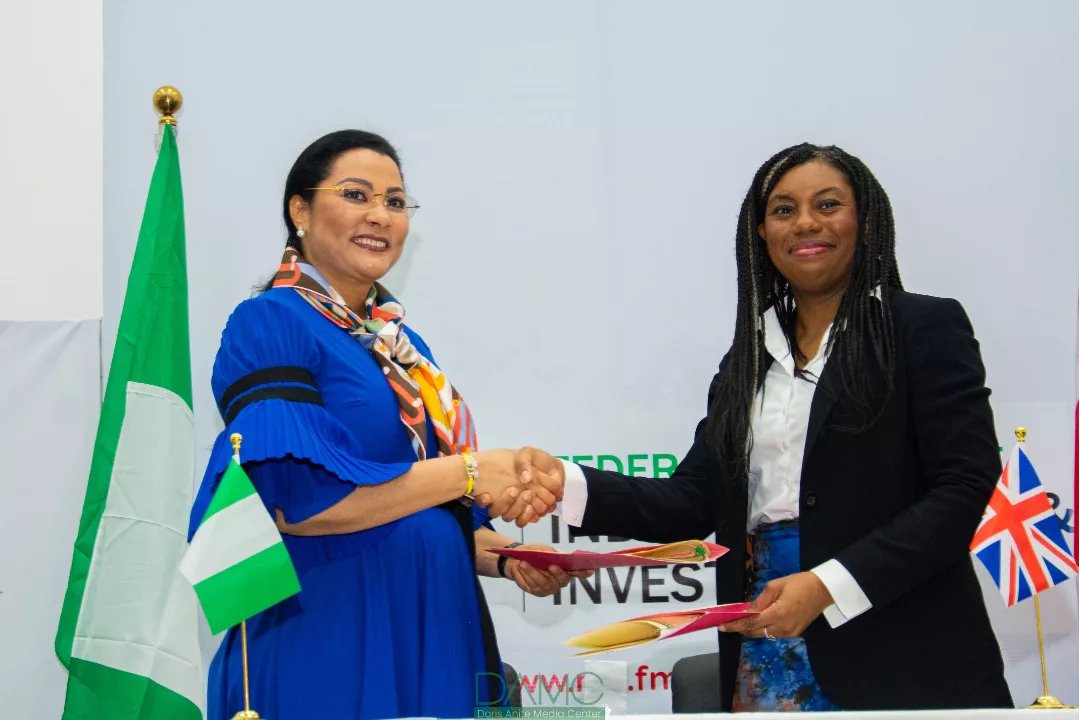
Nigeria and the United Kingdom have signed an Enhanced Trade and Investment Partnership, ETIP, to strengthen economic ties and create new opportunities for businesses.
The agreement, signed by Secretary of State for Business and Trade, Kemi Badenoch, and Nigerian Trade Minister, Doris Anite, in Abuja, aims to boost trade and investment between the two nations.
Bilateral trade between the UK and Nigeria already stands at £7 billion as of September 2023, and the ETIP is expected to further enhance collaboration in sectors such as legal, financial services, and clean energy.
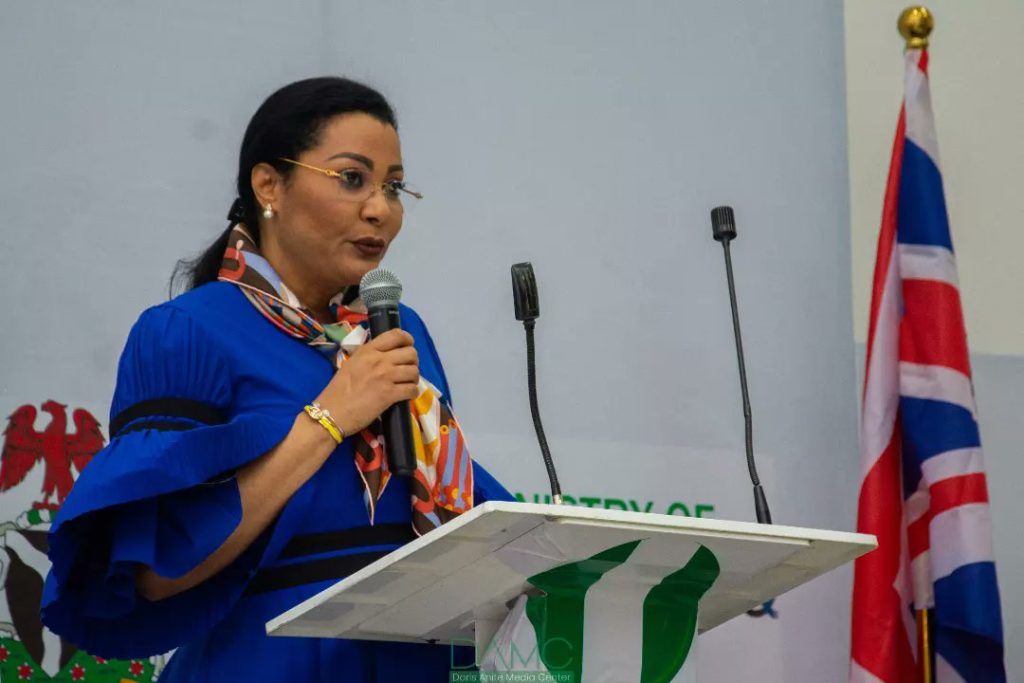
During the signing event, Anite noted that Nigeria and the UK share strong links in history, culture, and commerce. The UK is one of Nigeria’s top trade partners in Europe, with the total trade in goods and services between the countries reaching £6.7 billion in 2023.
She said, “Nigeria and the U.K. maintain strong historic, cultural, and commercial links – a shared language, geographical proximity and most importantly, a commonwealth partnership. The U.K remains one of our top trade partners in Europe, with the total trade in goods and services (exports plus imports) between both our countries pegged at £6.7 billion in 2023.”
Anite expressed confidence that the ETIP would increase this figure, aligning with President Bola Ahmed Tinubu’s economic revitalization plan.
“This figure, we envisage will increase following the implementation of the
ETIP; which stands to boost trade, investment and market access between both our countries – in line with the economic revitalization plan of His Excellency, President Bola Ahmed Tinubu.”
According to her, “The priority of the ETIP is to reduce barriers to business and trade, and both countries are focused on creating an enabling business environment and removing hindrances for local businesses.
Anite mentioned that Nigeria is currently negotiating its accession into the Africa Continental Free Trade Area, AFCFTA, Agreement, which is considered to be the world’s largest free trade area. The successful implementation of the AFCFTA is expected to lead to increase diversification of exports, improved market access, enhanced trade opportunities, and an influx of foreign direct investment.
“At the moment I’m currently negotiating our accession into the Africa Continental Free Trade Area, AFCFTA, Agreement – which is posited to be the largest free trade area in the world, with a combined GDP of $3.4 Trillion and access to a market of over 1.3 Billion people spread across 54 member states of the African Union.
“The successful implementation of the AFCFTA is expected to lead to diversification of exports, improved market access, enhanced trade opportunities and increased foreign direct investment.
“Which, in fact, is another opportunity posited by the ETIP – an increase in potential investment within and across both sides, by improving the ease of doing business and by creating an enabling business-friendly environment for businesses to grow and scale.”
Anite highlighted the importance of the volume of exports in driving economic growth, and the Nigerian Export Promotion Council, NEPC, is working to identify and address the challenges faced by Nigerian businesses in exporting their goods and services to other countries.
Similarly, the Secretary of State for Business and Trade, Kemi Badenoch said,”The UK and Nigeria are vital partners, with longstanding historical and economic ties “UK businesses are already seeing huge success in Nigeria – one of the fastest growing economies the world.”
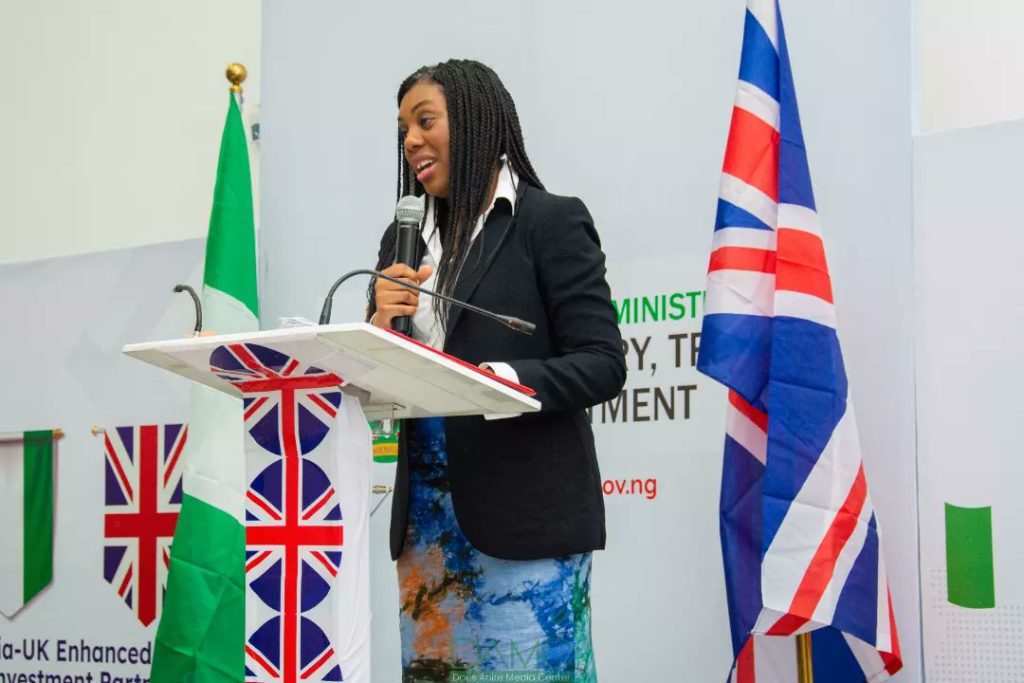
She added, “Our two countries continue to be bound by unshakeable cultural norms and shared common law system and the language of our contracts. And transactions. The trading relationship between our two nations has been strengthened in recent years. UK companies such as Diageo, or shell and even recently celebrated their centenary anniversary are among the longest established international companies in Nigeria and doing well past 100 years. And the financial backing of the City of London is being brought to bear on job creating infrastructure boosting projects in Nigeria every day.
“So for all those reasons, as the UK charts a new path outside the EU, it’s it’s fitting that Nigeria has been choosing not only as I said partner in Africa, but also one of our first blue employee partnership by this time, I think could create an agreement speaks to our unique ability to work together, building on the strength of our previous ETF partnerships in areas like legal and financial services.
“It involves future opportunities for innovation and investment in sectors like me and energy and the creative industries, whilst also highlighting our shared ambition to address reoccurring barriers, frustrating trade offers finally, it also lays the groundwork for further collaboration on EPS ambitious development funding streams, that is launched in preferential access for 3000 Nigerian products benefits include Nigerian exclusion, and UK consumers.
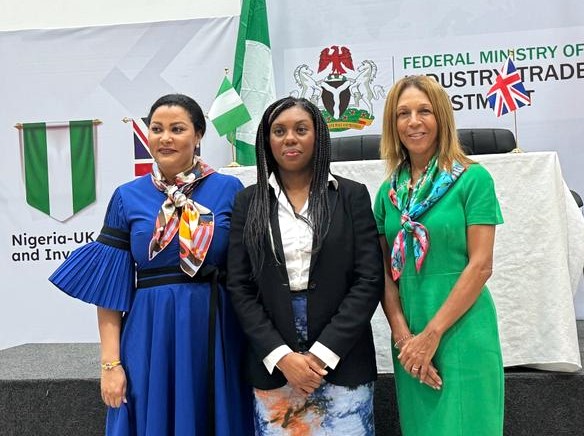
On his Part, British High Commissioner, Richard Montgomery, said “As His Excellency Ambassador, said the Memorandum of understanding has 14 areas and sectors entails the annex to the MOU. I wasn’t going to details about it. But I think you say we can we can show that we can talk the talk. We need to walk the walk. And this MOU provides a fantastic platform for our two governments to work together both to ease the restrictions on trade and investments, but also to help navigate each other’s systems. So I am very much looking forward personally to supporting the working groups that take these issues forward.”
“As British High Commission, I was really delighted that last week, we held security defense with the Federal Republic of Nigeria, very successful. And we had a partnership there too. And we are very conscious in this very difficult world. That there can be no prosperity without security, but nor can there be long term security,”he said.