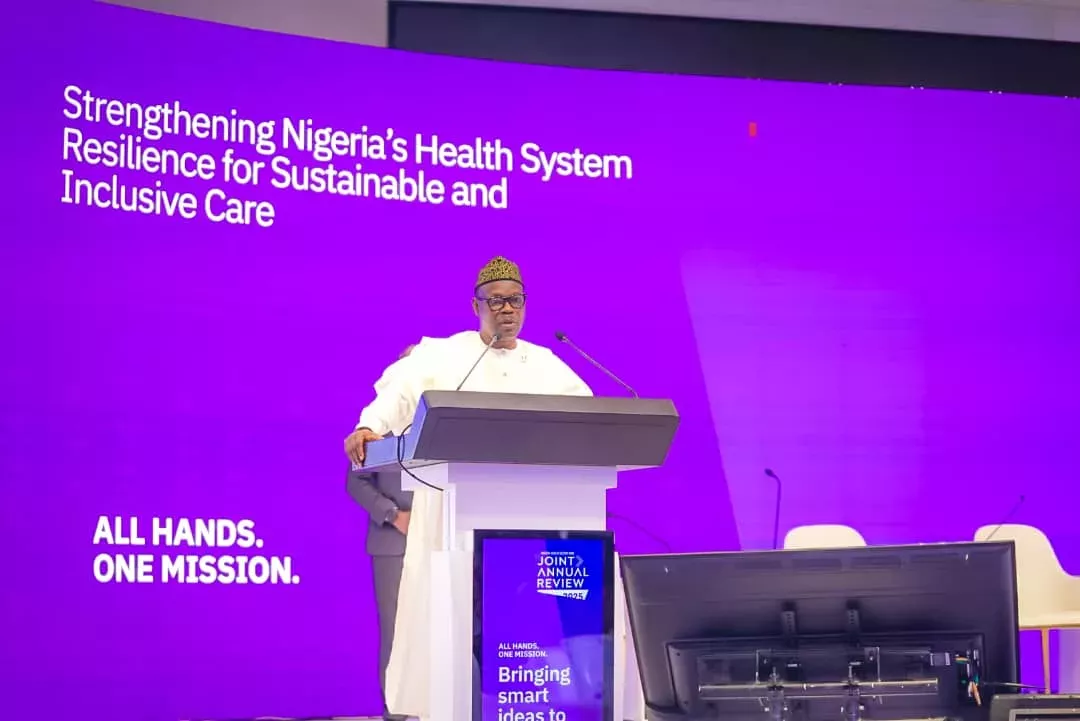
The Federal Government has renewed its commitment to strengthening Nigeria’s healthcare system, aiming to ensure quality, accessible, and inclusive care for all citizens.
The announcement came on Thursday during the second day of the 2025 Joint Annual Review Meeting, JAR, held in Abuja.
Speaking at the event, Minister of State for Health and Social Welfare, Dr. Iziaq Adekunle Salako, said the government is focused on building a health system resilient to crises and capable of delivering equitable services nationwide.
“We are determined to create a health system that protects every Nigerian, no matter where they live or their financial situation,” Salako stated.
The minister highlighted progress made in recent years, citing improved health indicators. Maternal mortality has fallen to 512 deaths per 100,000 live births, down from 576 in 2018, while under-five mortality dropped to 110 per 1,000 live births from 132. Skilled birth attendance rose to 53%, and immunisation coverage reached 39%, reflecting steady progress in primary healthcare delivery.
Despite these gains, Salako acknowledged that Nigeria’s healthcare funding remains insufficient. Government spending on health currently accounts for only 5.2% of GDP, far below the Abuja Declaration target of 15%.
Out-of-pocket payments still constitute 71% of total healthcare spending, putting millions at risk of financial hardship.
To address these challenges, the government has implemented the Nigerian Health Sector Renewal Investment Initiative (NHSRII), which coordinates efforts across federal, state, and local governments.
Through the Basic Health Care Provision Fund (BHCPF) and the National Health Insurance Authority Act 2024, over 20 million Nigerians now have access to insurance-based healthcare.
A recent executive order mandating health insurance coverage across government agencies is expected to accelerate progress further.
Dr. Salako also shared achievements in disease control, noting that 1.78 million Nigerians living with HIV are now on treatment, with 80% ART coverage and 96% coverage for preventing mother-to-child transmission.
Tuberculosis detection and treatment success rates have improved, while malaria prevention has benefited from the distribution of more than 63 million insecticide-treated nets between 2021 and 2023, preventing millions of cases annually.
On workforce development, Salako revealed that more than 37,000 health workers were recruited between 2023 and 2025, alongside a new Health Workforce Migration Policy aimed at retaining talent and engaging diaspora professionals.
“We are transforming challenges like brain drain into opportunities for national health advancement,” he said.
Infrastructure and digital innovation have also been prioritized, with over 500 high-impact health projects completed and the rollout of the Power for Health Initiative ensuring consistent electricity for medical facilities.
The Nigeria Digital Health Initiative has further integrated data systems to support evidence-based decision-making and improve nationwide healthcare coordination.
Despite progress, Salako noted ongoing obstacles including funding gaps, staff shortages, and disparities in access between urban and rural areas.
“Our goal is to leave no Nigerian behind. We will continue to strengthen the system and ensure that every citizen receives the care they deserve,” he said.
The meeting concluded with a call for continued collaboration among government agencies, health workers, and development partners to sustain momentum toward universal health coverage.
“A healthy population is the foundation of a prosperous nation. Together, we can achieve that vision,” Salako added.