The resignation of the former Minister of Defence, Mohammed Badaru Abubakar, and the immediate appointment of General Christopher Musa (rtd.) may appear, on the surface, as a decisive shake-up in Nigeria’s security architecture. But the reality is far more complex.
While leadership matters, the country’s persistent insecurity cannot be solved by changing the face at the helm. The crisis is structural, institutional, and political, and until these root causes are addressed, ministerial reshuffles will offer only fleeting hope.
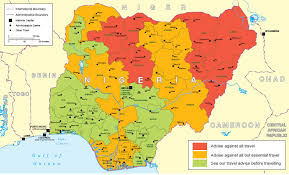
Since Badaru’s tenure began in August 2023, northern and central Nigeria have been plagued by relentless violence.
In November 2025 alone, 25 students were kidnapped in Kebbi State, roughly 300 in Niger State, while a bride and her companions were abducted in Sokoto and three immigration officers were killed at a checkpoint in Katsina.
Also, Brigadier General Musa Uba was captured and executed by ISWAP in Borno State, and later 38 worshipers, including a pastor, were kidnapped during an attack on the Christ Apostolic Church, CAC, in Eruku, Kwara State.
Beyond these headline-grabbing incidents, communities have long been terrorized, markets shuttered, and farmers too afraid to tend their fields, thereby exacerbating hunger and economic disruption.
Each attack chips away at the confidence of citizens, leaving communities paralyzed and dependent on the promise of protection from an often-absent state.
Though Badaru’s resignation was officially attributed to health concerns, many Nigerians however doubted this excuse, as there has been reports of alleged clash between the minister and his minister of state counterpart, Bello Matawalle, a man whose appointment was met with widespread criticisms over his handling of banditry in his Zamfara state when he presided as governor.
Badaru himself was not free of controversies. For instance, he recently drew public backlash after a BBC Hausa interview in which he claimed some terrorists were difficult to target because their forest hideouts were “too dense for bombs to reach.”
A ministry led by individuals compromised in such ways inevitably loses both public trust and operational coherence, leaving troops demoralized and citizens skeptical of the government’s intentions.
Moreover, the systemic flaws extend beyond personalities. Reports have long indicated that previous administrations may have obstructed or undermined investigations into terrorism financing, allowing networks that fund Boko Haram and other terrorist groups to operate with impunity.
Allegations suggest that tens of millions of dollars meant to disrupt these networks were released, cases were quietly downgraded, and suspects who were once detained or charged were ultimately allowed to resume their activities.
This structural compromise where political and bureaucratic considerations derail counterterrorism operations, suggest that the problem is not merely a matter of appointing competent ministers; it is about ensuring institutions are empowered, transparent, and accountable.
Without such institutional integrity, even the most capable military leadership will struggle to achieve lasting results.
The appointment of General Musa, a seasoned military officer, is a positive signal. His appointment, welcomed across various sectors, is expected to further strengthen defence operations, with many citing his record of firm and innovative leadership as defence chief between 2023 and 2025.
Thankfully Musa, during his screening at the Senate pledged to overhaul military professionalism and launch a defence of the nation’s capacity to defeat its internal adversaries. He assured Nigerians that, “I pledge to do my best to ensure that Nigeria is secure and safe. We need the support of everyone, every Nigerian, working together as a team because it’s going to be a team effort,” he stated.
These assurances reflect a command-driven, professional approach to security. Yet Musa’s success depends on the alignment of strategy across the entire security establishment.
The tension between a combat-oriented military perspective and the government’s non-kinetic, appeasement-focused policies may present a fundamental obstacle. The army cannot operate effectively if field operations are undercut by political directives that prioritize negotiation over decisive action.
Troops on ground, already exposed to high risk, may question the seriousness of orders, undermining morale and operational efficiency. As the Bible reminds us, “Can two walk together unless they are agreed?” Indeed, Nigerian security forces cannot succeed unless strategic alignment exists at the highest levels.
Ultimately, Nigeria’s insecurity is a governance challenge. It demands not only capable personnel but also depoliticized institutions, transparent oversight, and a willingness to confront the networks that sustain terror.
Government must understand that for every day that the system remains compromised by political interference, factionalism, or ethical lapses, the lives of Nigerians are at risk, and the credibility of the state erodes.
Therefore, ministerial reshuffles, while necessary, are insufficient. Structural reform, strategic clarity, and unwavering political commitment are the only path to restoring security, confidence, and trust. Failure to act decisively signals impunity to criminal networks and erodes the public’s faith in both government and military institutions.
As the nation mourns lost lives and fears further attacks, it is imperative for President Tinubu and his administration to look beyond individual appointments. They should know that the question is no longer who leads the Ministry of Defence, rather it is whether Nigeria has the institutional backbone and political resolve to fight terror decisively, transparently, and sustainably.
Effective leadership must be matched with clear accountability, robust intelligence operations, and comprehensive policies that cut across financial, military, and social dimensions of insecurity. Until then, the cycle of violence, abductions, and instability will persist, no matter who sits in the ministerial chair.