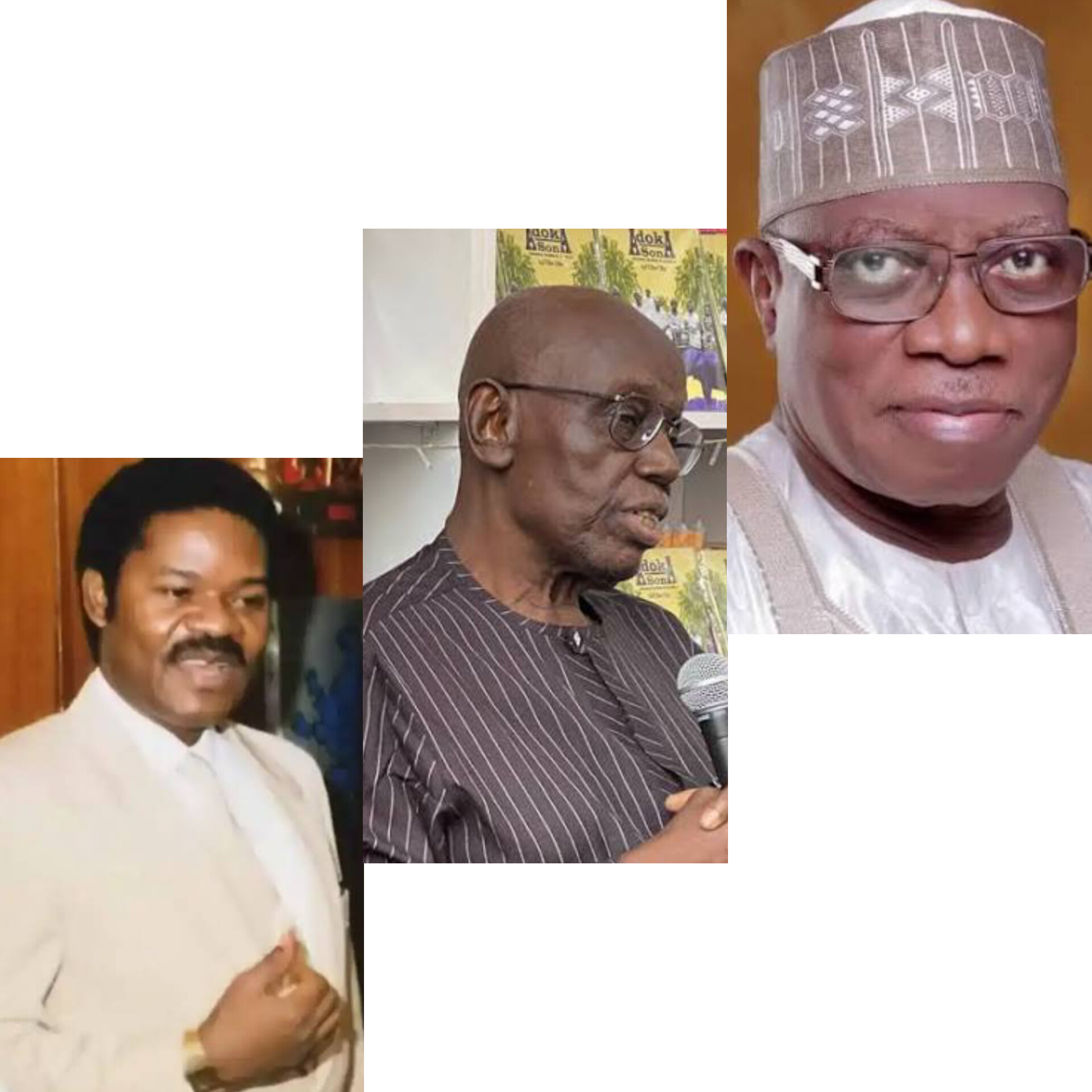
By Shu’aibu Usman Leman
Some losses do not announce themselves loudly. They arrive quietly, like the dimming of a lamp you had assumed would always be on. That is how it feels to realise that Dele Giwa is gone, Dan Agbese is gone, Yakubu Mohammed is gone—and only Ray Ekpu remains of the founding editors of Newswatch magazine.
A quartet that once stood shoulder to shoulder against fear, intimidation, and brute power has now been reduced to a solitary witness.
To remember them is to remember a time when journalism in Nigeria was not merely a profession but an act of defiance.
Dele Giwa’s death still burns in the national memory. A parcel bomb. A living room. A life extinguished in a moment of calculated cruelty. It was not just an assassination; it was a warning written in fire, that this is what happens when you ask too many questions. Yet even that horror did not silence the newsroom. Instead, it deepened the resolve of those who survived him. Dan Agbese, Yakubu Mohammed, and Ray Ekpu carried on, fully aware that the line between intimidation and death had already been crossed.
They worked in an atmosphere thick with fear—phones tapped, offices watched, colleagues detained, publications proscribed. Every edition was a risk. Every headline carried consequences. And yet, week after week, Newswatch appeared, insisting on facts when lies were easier, insisting on context when propaganda demanded obedience.
In 1994, the state came for them openly. Ray Ekpu, Dan Agbese, and Yakubu Mohammed were arrested over an article that dared to call General Sani Abacha’s takeover what it was – a putsch against democracy. For that single phrase—accurate, restrained, journalistically sound—they were accused of sedition and of seeking to cause fear and public disorder. In the twisted logic of military rule, truth itself was a disturbance of the peace.
The charges were eventually dropped, but the message lingered. Power would tolerate journalists only on its own terms. Write carefully. Speak softly. Know your place. Yet these men never truly complied. Even when forced to go underground, even when economic hardship loomed, even when fear followed them home, they continued to publish. Sometimes clandestinely. Sometimes defiantly. Always professionally.
What made them exceptional was not recklessness, but moral clarity. They understood that journalism was not about personal safety or comfort; it was about public memory. They provided Nigerians with alternative accounts of their own country at a time when official narratives were carefully engineered to erase doubt, dissent, and dignity. They gave voice to those who had none—workers, students, activists, ordinary citizens crushed beneath decrees and boots.
Dan Agbese brought intellectual depth and moral seriousness. Yakubu Mohammed brought quiet strength and unwavering commitment. Ray Ekpu brought fire, elegance, and an unshakable belief in the power of words. Together, they formed a newsroom culture that treated truth as sacred and courage as non-negotiable.
Now, only Ray Ekpu remains. Living not just as a man, but as memory. As testimony. As proof that a generation once stood up and refused to bow.
To honour them today is not an exercise in nostalgia. It is a moral reckoning. In a time when journalism can be casual, transactional, or timid, their lives ask uncomfortable questions. What are we willing to risk for truth? What are we prepared to lose for accountability? What does courage look like when power is angry and armed?
Dele Giwa paid with his life. Dan Agbese and Yakubu Mohammed paid with years of pressure, fear, and sacrifice. Ray Ekpu continues to carry the weight of survival and remembrance.
They held the line when it mattered most. Nigeria is freer—however imperfectly—because they did. And history must not be allowed to forget that freedom was once written by men who knew the cost, and paid it anyway.
—- Shu’aibu Usman Leman is a former National Secretary of the Nigeria Union of Journalists-NUJ