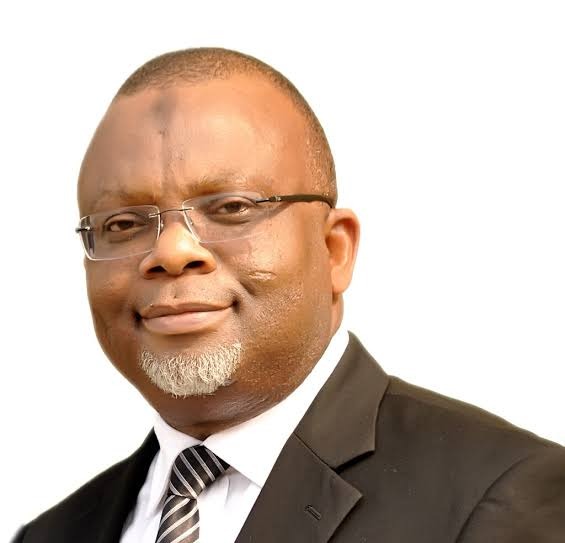
As Nigeria navigates complex challenges ranging from insecurity to political fragmentation, the Amir and National Head of the Ahmadiyya Muslim Jama’at of Nigeria, Bar. Alatoye Abdulazeez, has called for a new direction driven by unity, faith, and purposeful leadership—highlighting the role of young Nigerians in shaping that future, with figures like Adewole Adebayo emerging as potential rallying points. In this interview, Abdulazeez blends religious principles with socio-political realities.
While offering a balanced assessment of the administration of President Bola Ahmed Tinubu, Abdulazeez maintains that Nigeria’s true progress will depend not only on those in power but also on the collective resolve of its citizens—particularly the younger generation—to redefine the nation’s trajectory. Excerpts:
What does the Ahmadiyya Muslim Jama’at of Nigeria and its motto ‘Love For All & Hatred for None’ represent?
The Ahmadiyya Muslim Jama’at Community worldwide has a logo which states ‘Love For All, Hatred for None,’ and this is deeply rooted in our faith in Almighty Allah. Religion consists of two parts. The first part is to worship Allah. We sometimes limit the scope of worship to Solat alone, but no. Worship of Allah means that we dedicate ourselves to serving Allah, to peaceful coexistence, and to all of Allah’s creatures for the sake of Allah.
In the Holy Quran, we are taught that Allah created and owns everything. When you are providing food, medical care, making peace, or involved in disaster recovery for the subjects of Allah who are under trial, you are doing all these for the sake of Almighty Allah. All these acts put together are called acts of worship, though the highest act of worship is the remembrance of Allah Himself.
The second aspect is to love your neighbour as yourself. Various social amenities like hospitals, schools, and essential services provided by the Ahmadiyya community across Nigeria are not for Muslims alone but for all of humanity. We have Christians on our staff.
Therefore, we should always do good to all of Allah’s creatures irrespective of their level, class, colour, or religion and eschew evil. We must also know that we must serve God in the right way so that He will love us. If we do good to His creatures, He will be happy with us. If we do evil, He will not be happy. That is where the concept of reward and punishment in this life and the Hereafter comes in.
Are you saying Islam is a religion of peace?
As far as the religion of Islam is concerned, the Ahmadiyya Muslim community believes that the religion of Islam is a religion of peace which has come to teach humanity knowledge, love, and love for all the creations of God. People attacked the Holy Prophet Muhammad (SAW) on this, but he had the right to self-defence, which exists in all religions all over the world and is part of the concept of humanity.
If somebody is doing what is not right, there are law enforcement agencies that can be reported to.
Therefore, Islam means peace with God and peace with mankind, and that is what Ahmadiyya has come to preach. That is why we say Islam is a religion of love, because that is what Muhammad taught us, and that is what Ahmadiyya is doing right now.
If Islam means peace with God and humanity as you have explained, why are Boko Haram insurgents killing, kidnapping, and terrorising people in Nigeria in the name of religion?
The terrorists are so ungodly; they do not know God at all. If they knew God, they would have known that the whole world belongs to God. Second, they are powerfully ignorant — there is no doubt about that — because they do not know that they are being used. They are being used under the guise of religion. They tell these groups that if they fight jihad, they will go straight to heaven.
However, Allah said if you kill one person, it is as if you have killed the whole of God’s creation. They burn churches, yet God said nobody should destroy any place of worship that belongs to Him.
With due respect, terrorism has nothing to do with Islam. The pillars of Islam are five. The first is to believe in Almighty Allah. Second, a Muslim must pray five times daily so that they do not remain dirty. The next is to pay Zakat — you should give to the underprivileged, take care of the oppressed, and love your neighbour. Then fasting. The fifth pillar of Islam is to travel for the sake of Allah, and that is the Hajj. Which of these pillars says we should kill anyone? None. Have you ever seen a terrorist building a mosque and calling it a Boko Haram mosque?
The challenge of terrorism is for economic purposes; they are only giving it a religious coloration. Most of these terrorists do not know what Islam is all about. They are simply lured with money. However, it is getting clearer now as analysts say that all terrorists worldwide were created by the United States of America’s CIA, and the essence is for solid minerals and oil. After the terrorists sack a whole village, the next thing is mining, and also to upstage any government that does not agree with them.
Those being used for terrorism do not know God at all.
What is the way out of these insecurity challenges?
Government at all levels should focus on national orientation so that people can be enlightened properly. History and moral education subjects should be reintroduced into our school curriculum. Our leaders should also remember that we will be remembered for what we do. They are not in positions to amass wealth but to use various offices to better the lives of Nigerians. It is also said that the fear of God is the beginning of wisdom.
Religious leaders should also educate their followers to shun materialism and fear God. There is nothing you can tell someone who does not believe in God; such a person will only think of money, and money is the root of evil. There should be education on value systems — family values, societal values — both in the family and in schools.
The youths need to learn the art of hard work, desist from fraudulent activities, believe in this country, shun all acts of violence, and think of how they can transform the country positively.
Presently we have someone like Adewole Adebayo of the SDP, who is a lawyer and businessman., what do you make of him and 2027?
Well, someone like Adewole Adebayo can be identified by the youths as their leader, and they can agree to vote for him. It is the youths who vote for the APC, PDP, ADC, or whatever party. All they need to do is organise themselves.
In the last presidential election, I remember we had about four youths who contested for the presidency, although they would have grown beyond the youthful age by now. They lost to the old generation because they could not come together to form a strong alliance. It is still the same thing right now.
If the younger generation is sure that Adewole Adebayo can deliver, they should team up with him, get things right, encourage other youths from various tribes, see themselves as one, avoid tribalism, and not allow themselves to be induced with money. Then we can now start the real country. Because as it is presently, with all due respect, we are yet to start as a performing country. We have been formed as a country. Now we are at the second stage, which is the storming stage. Maybe at the end of storming, we will form a national norm. What we have now is a northerner norm, a southern norm, and an eastern norm. After the norming stage, we then move to the performing stage, and the youths have a serious role to play at this very critical stage. We must form a national norm, not a norm of O’dua Nation, IPOB, or that of the North, Arewa. Nigeria cannot perform at her storming stage.
My plea to the youth is that it is time we move from where we are; otherwise, we will keep moving in the same direction. Let’s move out of the woods and move to the next stage, which is the norming stage, and begin to move ahead as a nation. In the next 30 years, we will forget that we suffered as a nation.
What is your take on the current administration over the past three years?
I must admit that President Tinubu has taken bold steps in some areas. Even if we brought an angel down to Nigeria right now, that angel would struggle to administer anything given the state of things. We need to start by acknowledging the credit of what someone has done and then encourage him in areas that need attention. That is the policy of our Jama’at, which emphasizes preaching and praying for our leaders—supplicating for their guidance, wisdom, and righteousness—rather than cursing them or promoting rebellion.
The President is trying his best, but we must understand that he cannot effect changes all at once. We really need to pray for him. For instance, the removal of the fuel subsidy that people criticize has freed up a lot of money. However, how that money is being spent is where he needs to pay closer attention. We have the coastal road from Lagos to Calabar…
He should pay close attention to the challenge of power. Without reliable electricity, Nigeria cannot move forward economically. He should appoint someone who truly understands the power sector to handle it. My honest view is that Mr. President is doing his best. Other grey areas should be looked into, and the followers should cooperate with him to succeed.