Minister of the Federal Capital Territory, Nyesom Wike, is confident that President Bola Ahmed Tinubu will secure a landslide victory in the 2027 presidential election, pointing to what he described as the unprecedented scale of infrastructural development spreading across satellite towns and rural communities of the FCT.
For decades, electoral votes from the capital have swung toward opposition candidates. But the minister, on Tuesday, said the pattern is “about to change,” insisting that residents are already responding to visible governance and expanded access to long-neglected services.
Wike, pointed to the March 2026 Area Council elections as the clearest early indicator of what he calls a “major realignment” ahead of the next presidential poll.
According to Wike, “We already saw signs of change during the Area Council elections, where, for the first time, the ruling party won in places it had never won before. What the people want is simple—they want to feel the impact of governance. It is not about magic.”
He argued that voting behaviour in the capital has always reflected the gap between political promises and the lived reality of residents, especially outside the city centre. According to him, the equation is now different.
“People simply ask: ‘This is what we need. Have you provided it?’ Nigerians are interested in good governance. They are interested in infrastructure, electricity, and improved living conditions,” he said.
With dozens of projects spread across satellite districts and rural communities, Wike said he believes Tinubu will not only secure the constitutionally required 25 percent in the FCT, but will “win comfortably.”
“What reason would people have not to vote for Mr. President now? How many governments before now have been able to impact the satellite towns the way this administration is doing? This is the first time people are seeing development extend beyond the city centre into the satellite towns,” he said.
He cited the commissioning of the A2 to Pai Road in Kwali, which he described as the first time a sitting President visited such a rural corridor for a project launch. “This time around, we are also taking development projects to rural communities through roads and water projects. That is governance in action. That is the real test—positive impact on the lives of the people.”
“So yes, we believe there will be a change from what used to happen in terms of voting patterns,” he said.
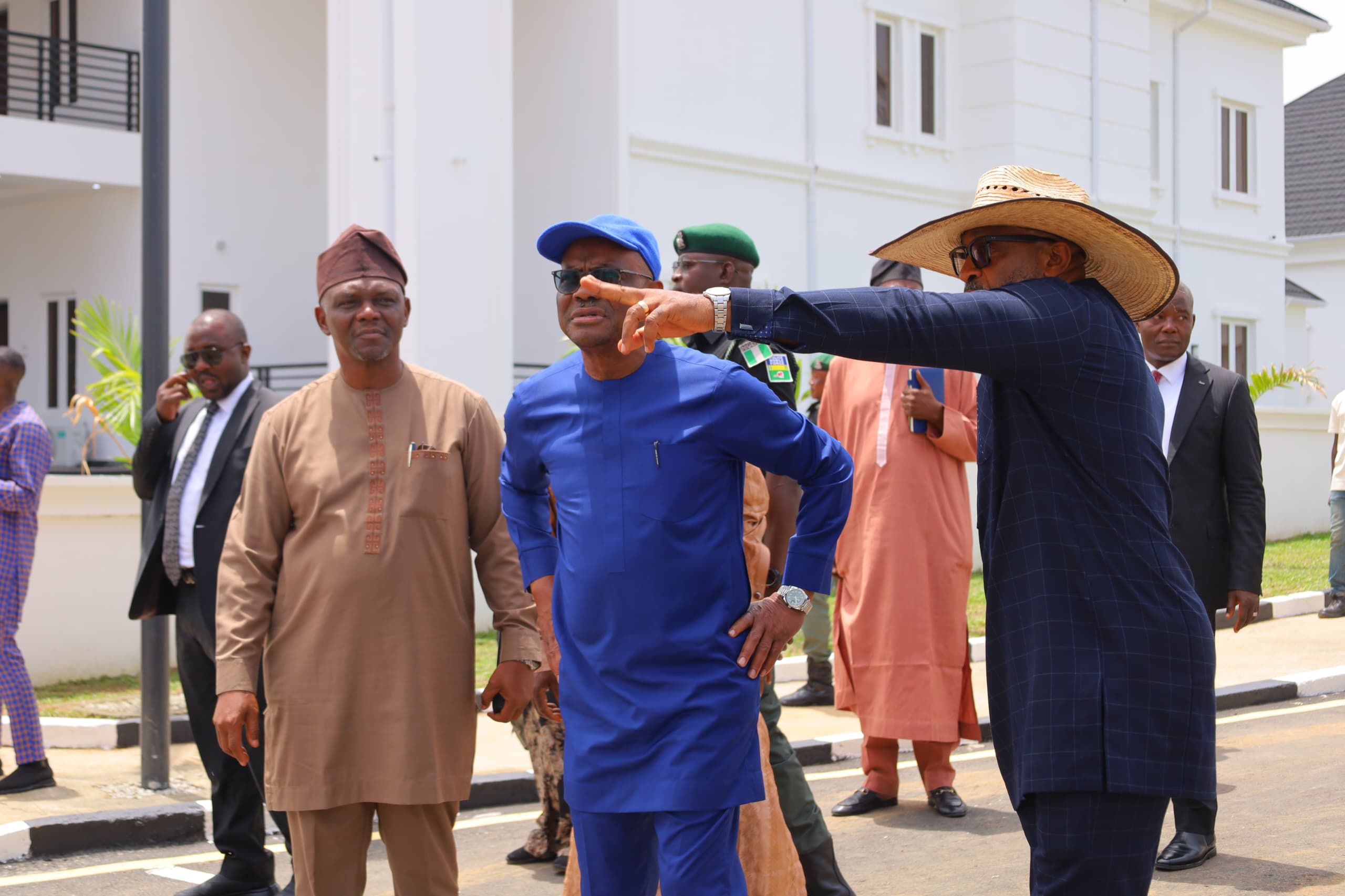
Meanwhile, the minister who inspected ongoing projects in Dakibiyu, Gaduwa, Kabusa and the proposed relocation site for the Apo Mechanic Village, said the projects reflect the administration’s push to take development to “where people actually live.”
At the Appeal Court rehabilitation site in Dakibiyu, Wike reported “almost 70 percent completion,” with internal works, fittings and utilities already in place. The Judges’ Quarters for the Court of Appeal, FCT High Court and Federal High Court, he said, were “almost fully completed and polished,” with foundation work set to begin for the Industrial Court residences and Code of Conduct Tribunal units.
Streetlights, walkways and final wearing courses were being laid across Gaduwa and Kabusa, while the vast informal-sector hub for the relocation of Apo mechanics had completed roads and lighting. “Can you imagine what this place will look like when the Apo mechanics are relocated here? That is what the current government is trying to achieve,” he said.
On the exact tally of projects scheduled for commissioning to mark President Tinubu’s third anniversary, Wike disclosed that more than 20 projects were ready, excluding additional water projects in Bwari and Karu, and ongoing works across AMAC, Bwari Area Council, the Pai–Gomani corridor, Gwagwalada, and the Nyanya axis.