Laraba MUREY
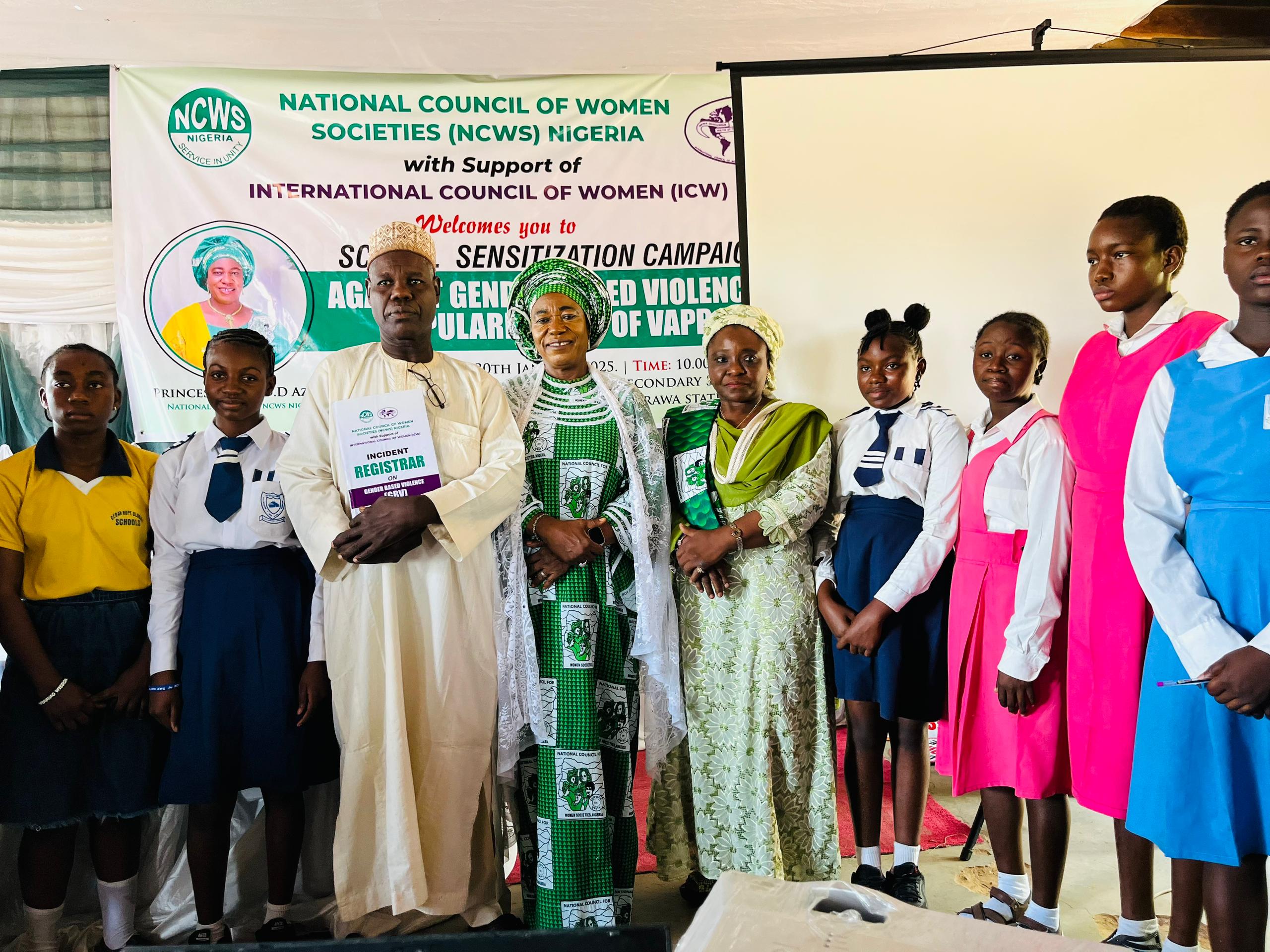
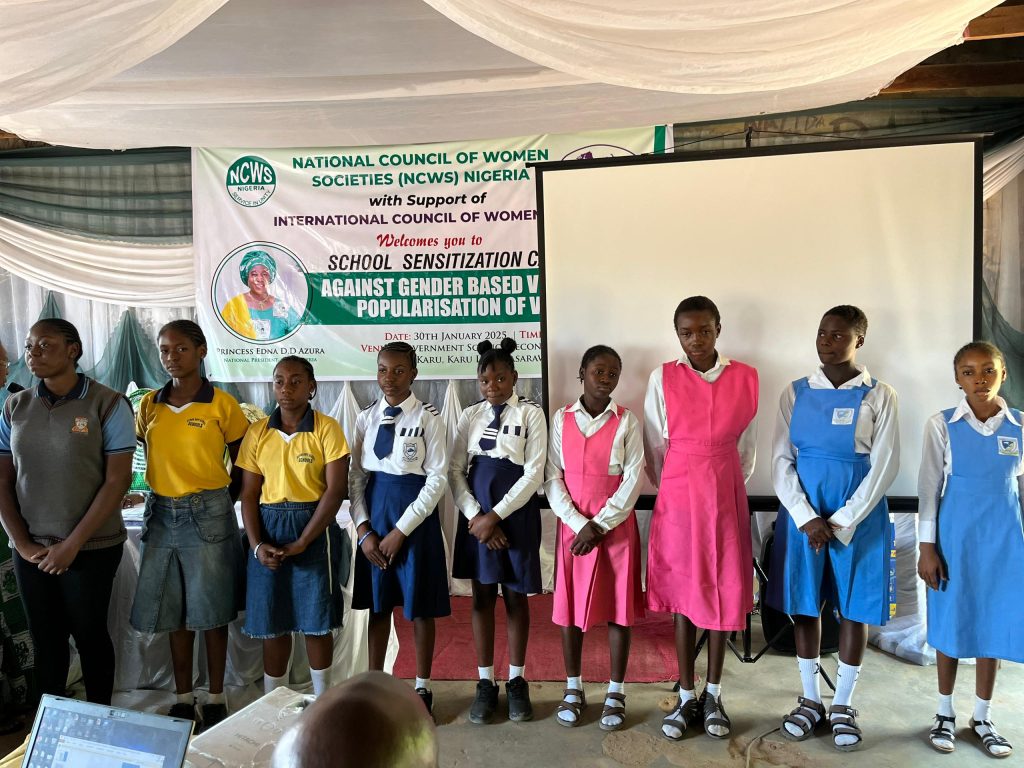
The National Council of Women Societies, NCWS, has taken its campaign against Gender-Based Violence, GBV, to schools in Karu Local Government Area of Nassarawa State.
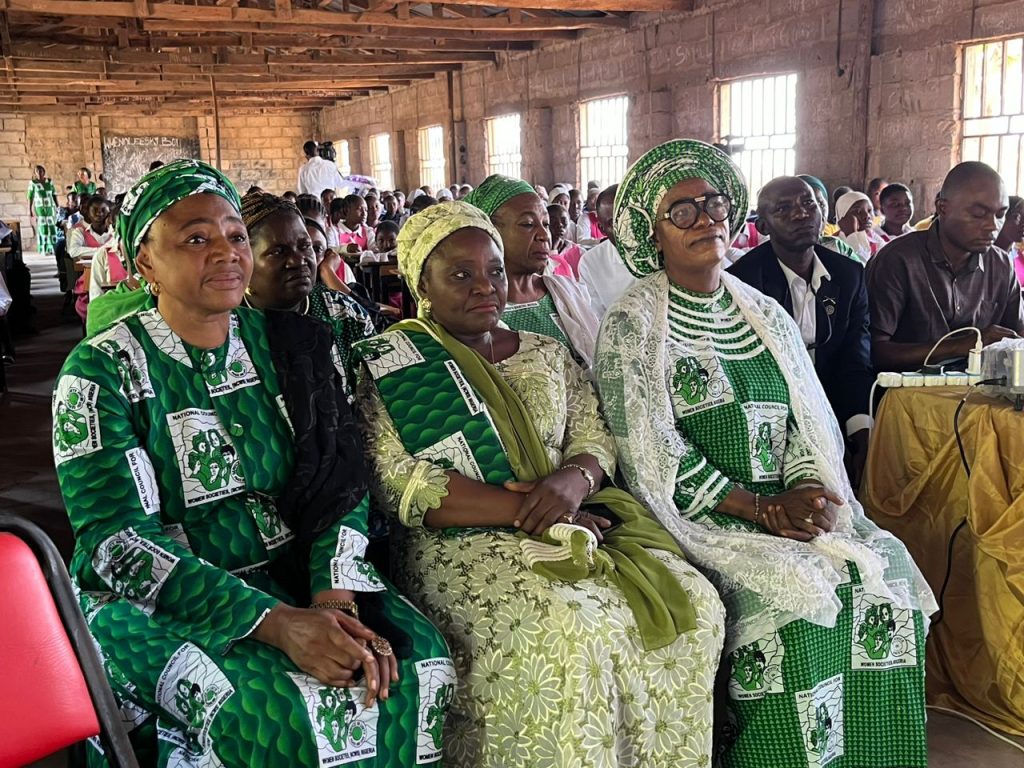
Speaking during the sensitization campaign at Government Science Secondary School, New Karu, the National President of NCWS, Edna Azura, emphasized the importance of creating a society free from GBV.
She said, “GBV is a pervasive issue that affects millions of people worldwide, including Nigeria. It is a violation of human rights, a betrayal of trust, and a threat to our collective well-being. GBV can take many forms, including physical, emotional, and psychological abuse, and it can occur in any setting, including our homes, schools, and communities.
“As future leaders, it is essential that you understand the root causes of GBV and the importance of promoting gender equality and respect for all individuals. You must recognize that GBV is not just a women’s issue, but a human rights issue that requires a collective response.”
The NCWS president also highlighted the importance of the Violence Against Persons, Prohibition Act, VAPP Act, which aims to prevent and respond to GBV in Nigeria
“The Violence Against Persons (Prohibition) Act, VAPP Act, is a critical legislation that aims to prevent and respond to GBV in Nigeria. The Act provides a framework for protecting victims of GBV and holding perpetrators accountable. As students, it is essential that you understand your rights and responsibilities under the VAPP Act and how you can contribute to creating a society free from GBV, she said.”
She charged the students to take action against GBV, stressing that it is a collective problem that requires a collective response.
“Let us work together to create a society where everyone can live free from violence and abuse. Remember that GBV is a collective problem that requires a collective response,” Azura urged.
“Today, we gather to sensitize and educate you, our future leaders, about the dangers of GBV and the importance of promoting a culture of respect, tolerance, and equality. We are proud to collaborate with the International Council of Women to bring this vital message to your school community.”
Students who attended the sensitization campaign expressed their gratitude for the initiative, sharing their own experiences and lessons learned.
A student, Destiny Kunkar, said, “I have learnt so many things though, and I learnt that if you are being bullied, you should not keep quiet and just sit down. You should at least open up. I feel like nobody will do anything about it. So it’s a privilege for them encouraging me that it’s not good to stay quiet when other kind of things happen.”
Another student, Indudim Rejoice, shared her personal experience with GBV.
“I’ve actually been a victim of gender-based violence, but now I’ve really learnt to speak up. I’m relieved that at least now I can, I know what to do when I’m being abused and I know how to help.”
Rejoice recounted how she was bullied by seniors in her former school, who would beat her and her peers in front of their juniors, making them do chores at night and belittling them.
“It really hurts me a lot, so I really feel relieved now hearing that okay, this is what I should have done, but next time I’ll take corrections,” she said.
Also speaking, Principal Government Science Secondary School, New Karu, Alhbu Sanusi, commended the initiative, saying it was a great achievement not only for the school but for the entire local government and the state.
“This is a great achievement. Not even to the school, but to the entire local government and the state in general,” Sanusi said.
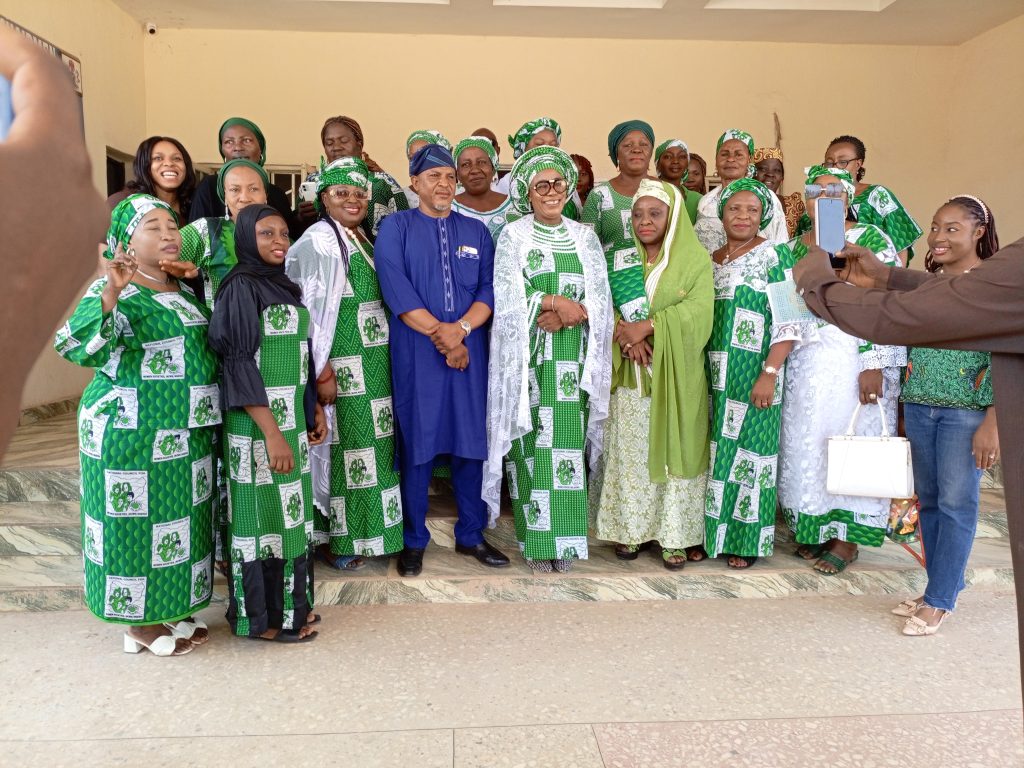
Earlier, the president of NCWS and her team led an Anti-GBV advocacy visit to the Chairman of Karu Local Government Barrister, Abubakar Madaki, who was represented by the Vice Chairman, Ibrahim Bulus.