The push for a technology-driven security architecture in the Federal Capital Territory gained fresh momentum at the weekend, as senior police officials and academics called for a shift from manpower-heavy operations, to intelligence-led and innovation-driven policing.
The call comes amid ongoing reforms by the FCT Minister, Nyesom Wike, with stakeholders stressing that strengthening intellectual capacity within the system is key to addressing Abuja’s evolving urban security threats.
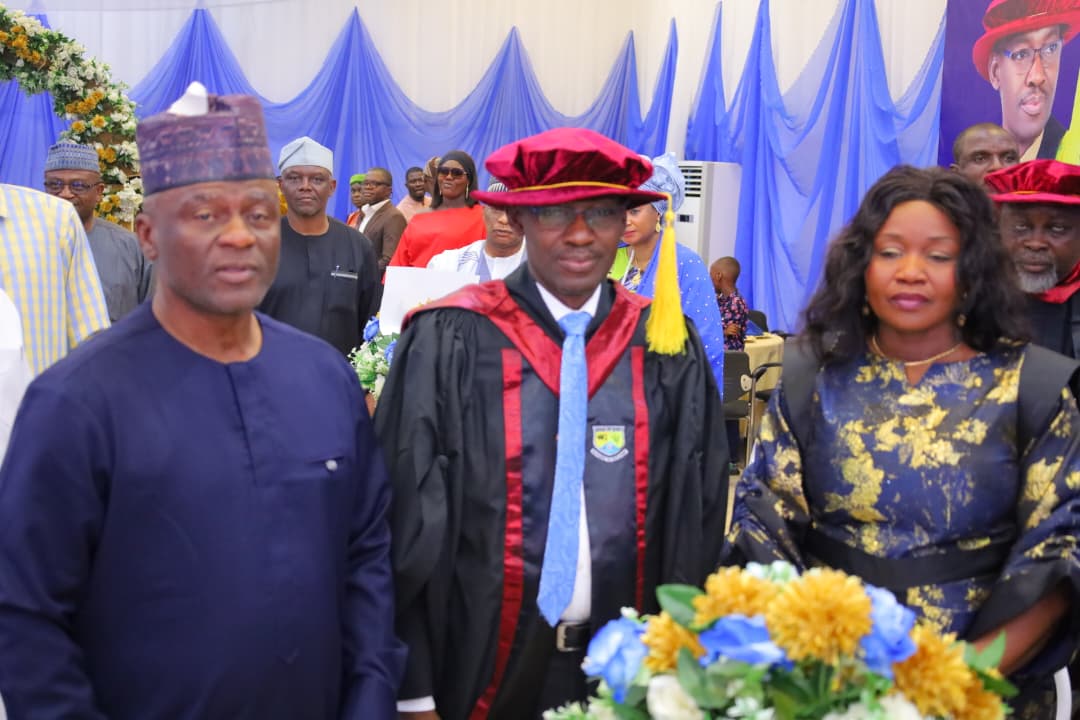
The commendations were made at an event held in honour of Dr. Peter Olumuji’s attainment of a PhD in Security and Strategic Studies from Nasarawa State University, which brought together security chiefs, academics and policy actors.
Speaking at the event, the Inspector General of Police, Olatunji Disu, said modern policing now requires officers to be professionally certified and properly equipped for specialised roles, noting that academic grounding has become critical to effective service delivery.
The Police boss while commending the work ethics of the celebrant which had earned him the moniker, “Sharp Sharp” recounted his experience working with Olumuji during his tenure as FCT Commissioner of Police.
According to the IGP, “I thought it had to do with something shady. But I found out that he is someone who ensures that the job is done. Whenever there is a task, he stays on your neck to ensure it is completed. I learned from him: start a job, put a plan to it, and follow it to the last.”
Also speaking, Director of the FCTA Security Services Department, Adamu Gwary, said the administration is building a more intellectually driven security structure, linking the effort to the ongoing reforms in the territory.
“This presupposes that security matters will be handled with innovative responsiveness. With the current security situation, this intellectual capacity ensures we have the organization needed to provide top-tier administration for the FCT,” Gwary stated.
Academic leaders at the event stressed the growing relevance of specialised training in Security and Strategic Studies, as threats become more complex and require proactive, research-based solutions.
The Vice Chancellor of Bingham University, Professor Haruna Kuje Ayuba, said expanding such programmes is essential to “nip security challenges in the bud” as they scale across the country.
“While some students want to get a degree by any means, Dr. Olumuji was ready to learn. We didn’t just work together; we published research together,” he said.
Similarly, Dr. Stephen Okore of Nigerian Army University Biu described Olumuji as a “gentleman leader,” citing his honesty and leadership during their academic programmes.
Responding, Dr. Olumuji said his research focuses on reducing dependence on physical manpower through the deployment of modern security technology.
“One thing we are going to do is look at modern ways of tackling insecurity, especially in urban areas.
“By introducing more technology, we reduce the reliance on manpower. This is more effective and, crucially, saves the lives of our gallant men and women in the military and law enforcement who face risks in the field,” he said.