Laraba MUREY
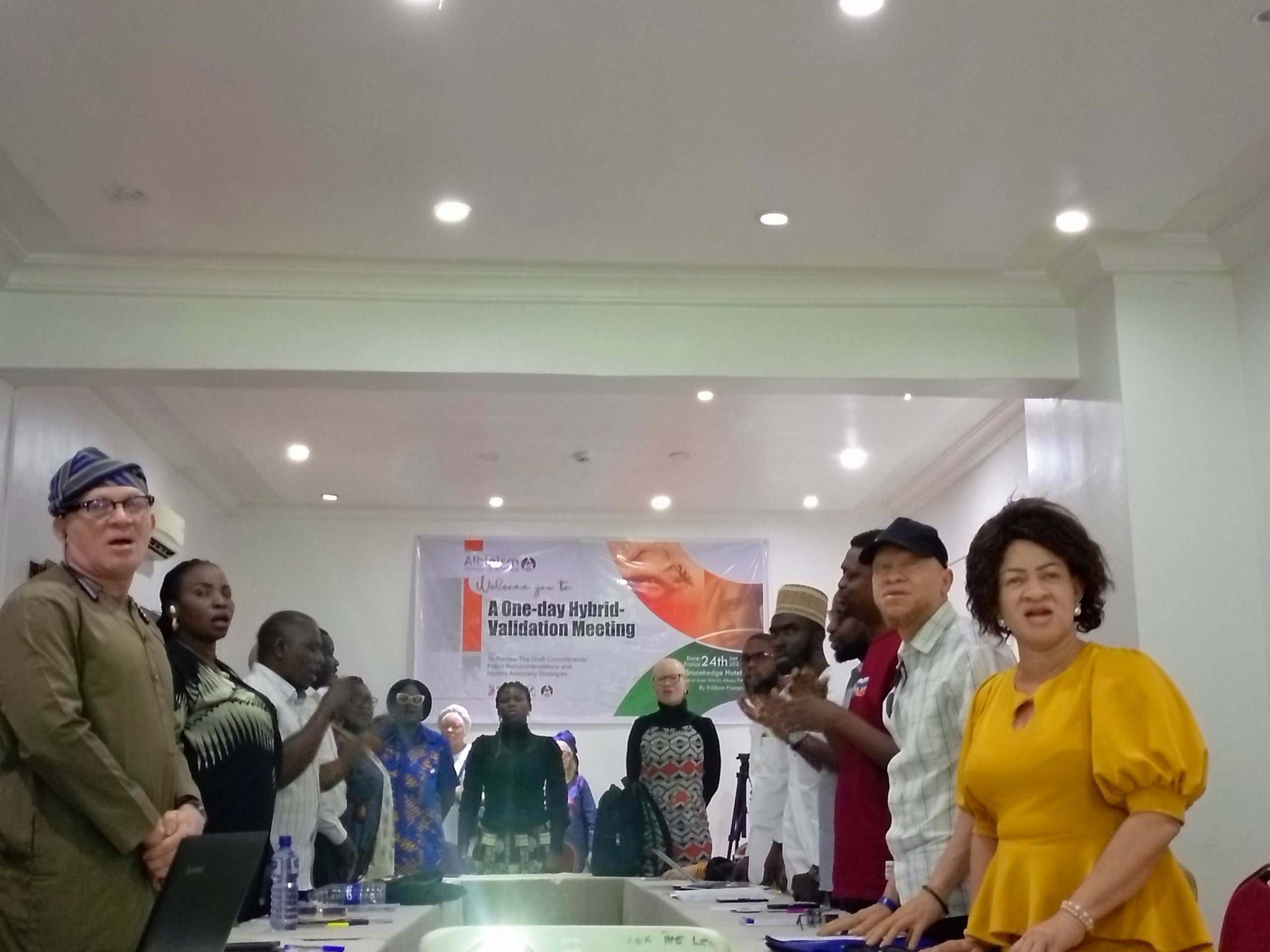
Ahead of the Global Disability Summit, GDS, in Germany this April, the Albinism Association of Nigeria has held a workshop to finalize its demands for the Nigerian government.
The one- day hybrid-validation meeting with marginalized groups to review the Draft Commitment Policy Recommendations and Identify Advocacy Strategies , is funded by the Disability Rights Fund, DRF, was organized in collaboration with the Joint National Association of Persons with Disabilities, JONAPWD, aimed to harmonize the demands of various disability clusters, including the intellectually disabled, little people, deaf, and blind communities.
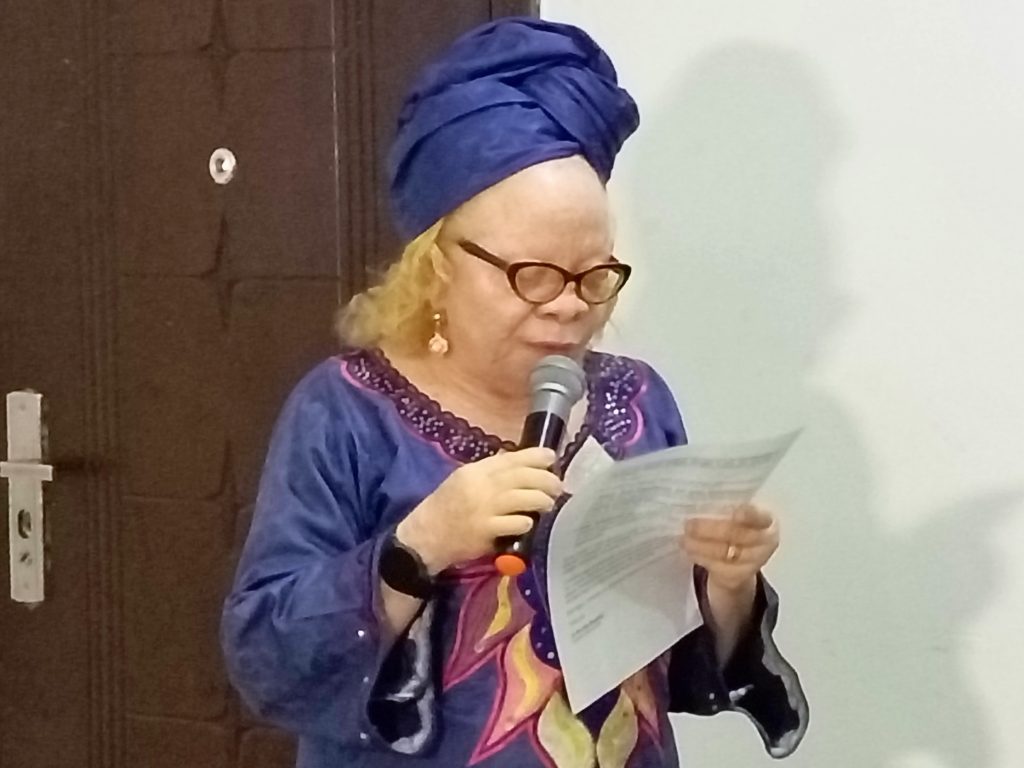
Speaking at the event, the National President of the Abilism Association of Nigeria, AAN, Dr. Bisi Bamishe, described the summit as an opportunity to hold governments accountable.
“The Global Disability Summit is where all nations make commitments. We want our government to go with specific commitments made by the disability community, especially marginalized groups like the Persons with Albinism, intellectually disabled, little people, the blind, and the deaf. These are clusters that have been neglected for too long,” she said.
“These are clusters that we have brought together for them to open up and tell the government their challenges, their priorities, and their needs.
“All these will be made into their commitments, which we present in conjunction with the umbrella body of the disability community in Nigeria, that’s the Joint National Association of Persons with Disabilities, JONAPWD.
“The National Commission for Persons with Disabilities, the regulatory body for the community, is also participating in the meeting to discuss evaluation, implementation, monitoring, and other issues.”
She added that, “We are believing that, we will force the government to make more commitments in the area of implementation, so that when we come back, we are going to have a press conference and tell the whole world that this is the commitment our government has made, so that they can also know about it, and then we can now enforce government to make sure that they carry out their commitment as stated at the GDS 2025.”
*We extend our deepest gratitude to the Disability Rights Fund, (DRF) for their unwavering belief in our vision.
“We also appreciate the steadfast collaboration of key stakeholders such as the Joint National Association of Persons with Disabilities (JONAPWD) and the National Commission for Persons with Disabilities (NCPWD).
“we commend the resilience of marginalized groups, especially the albinism communities, whose lived experiences are the cornerstone of our work.
Their commitment inspires our advocacy efforts and informs strategies to foster collaboration, validate proposed advocacy initiatives, and review draft policy recommendations that drive meaningful change.”
Also Speaking, Organizational Development Consultant for the Association of Albinism Nigeria, Opeyemi Oladimeji, stressed the importance of government intervention to address the challenges faced by persons with disabilities.
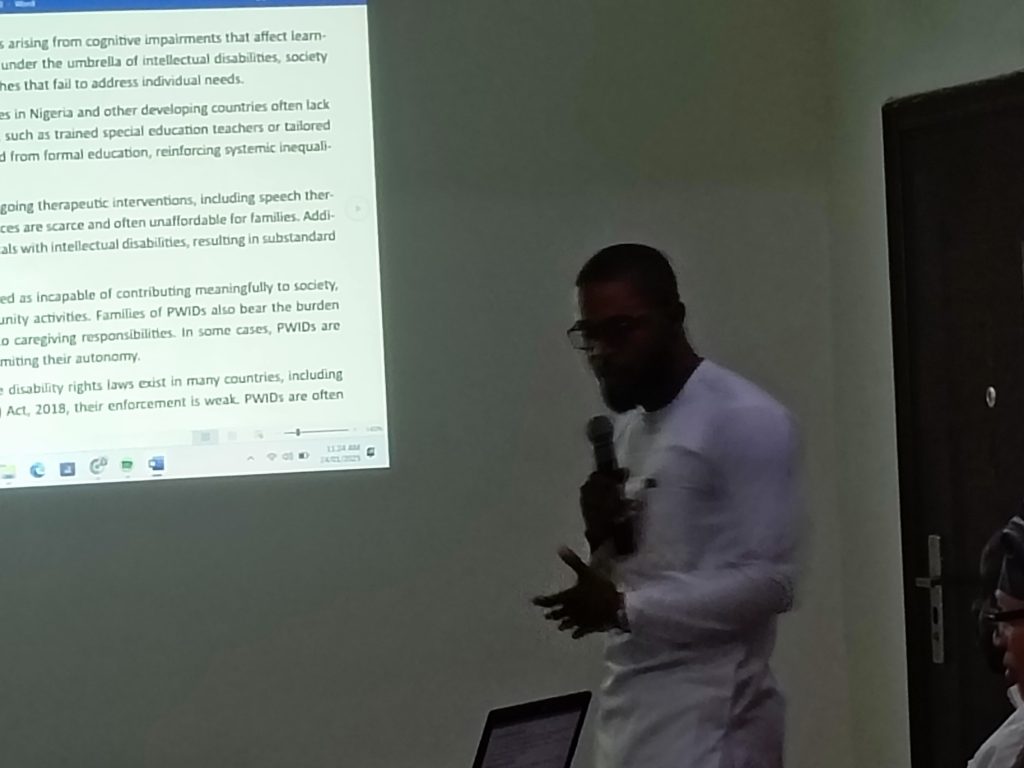
“We want to bring these conversations to the table and let the government know how they need to help persons with disabilities in terms of health because that is one of the primary reasons why this commitment is important,” he said.
He also highlighted other critical issues such as education, economic opportunities, and the persistent social stigmatization faced by persons with disabilities.
Oladimeji expressed concern about the lack of implementation of legal frameworks, particularly the National Disability Act.
“We just have a lot of laws, a bunch of commitments, which have not been fulfilled over time. Let’s look at the National Disability Act, for example, that states very, very beautiful provisions to safeguard the rights of persons with disabilities. But what we find out over time, almost five years now, almost nothing has happened,” he explained.
He noted that while federal implementation is lacking, state governments are even further behind, with only about 15% of states domesticating the Act.
Highlighting the need for accountability, Oladimeji said, “If you’re saying the federal government is not doing something, that means state governments are not even ready to do anything, and we have to hold them accountable.”
He called for collective action to ensure that the Act, which is applicable nationwide, is fully implemented. “This is not for us; this is a law that is generally applicable in the whole of Nigeria, and everybody must see to it,” he said.