By Dauda Yakubu Musa
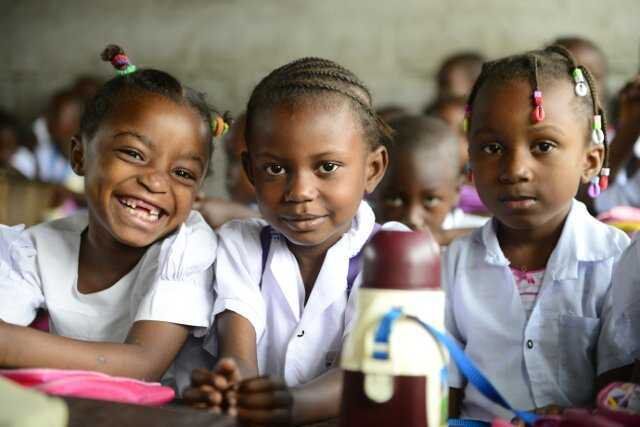
The girl-child is a biological female offspring from birth to 18 years of age. This is the age before one becomes a young adult. This period covers the creche, nursery or early childhood (0-5 year), primary (6-12 years) and secondary (12-18 years). During this period, the young child is totally under the care of the adult who may be parents or guardians. Which means she is dependent on the significant of others.
Education is the process of providing information to an inexperienced person to help him or her develop physically, mentally, socially, emotionally, spiritually, politically and economically. Education is the process through which individuals are made functional members of their society. It is a process through which an individual acquire knowledge and realises his or her potentialities and uses them for self-actualisation, to be useful to themselves and others. It is a means of preserving, transmitting and improving the culture of the society.
To educate a girl-child means to train her mind, character and abilities. Education is fundamental human right that should be availed to every girl child irrespective of the age and nationality. The importance of education in the life of a girl child can never be over-emphasised.
In both spiritual and temporal mundane aspects of human existence, education is paramount. It is the light that shows the way by removing the darkness of ignorance; salt that gives the taste of life; the medicine that cures and the key which open doors. The greatest favour a girl-child can get is “to get education” and “to give others education.”
According to a Chinese proverb, education is the best legacy to give a child because “giving your child a skill is better than giving him or her thousand pieces of gold.” Many girls today do not have basic education past a certain age. The native traditional philosophy is that a woman’s place is in her husband’s kitchen and her primary role centres in her home. This belief has kept many girls away from the classroom.
When a girl is given out in marriage at a very tender age, her right as a human has been abused and has also been deprived of her right to education and will be condemned to a life of illiteracy if her husband does not give her the opportunity to go to school.
It has been established by researchers that enabling female education is crucial for national development, and the role of women cannot be underestimated. The general belief is that “when you educate a man, you educate one, but when you educate a woman, you educate a nation.”
This is so because the education of every child starts from the family and mother is the first teacher. Educating the girl-child produces mothers who are educated and will in turn educate their children and care for their families.
Therefore, educating the girl-child translates to better health for future generations, reduction in child mobility and mortality thus triggering a snowball effect of achieving all other sustainable development goals.
The girl-child education also prepares her to face realities in society and teaches her to be a good spouse and mother. When she is educated, she realises the full potential endowed in her; she discovers whoever and whatever she wants to be. With education, she would break the shell of ignorance and open that of self-discovery.
It is in this wise the Child’s Right Act should be strengthened and implemented in all states. This will go a long way in checkmating indiscriminate child abuse. Policy makers need to also create an enabling environment for increasing gender participation in providing a valuable pipeline for the “educated girl-child” to be transformed into women that will be agents of national transformation.
Musa, a Mass Communication student, writes from Federal Polytechnic Mubi, Adamawa state.